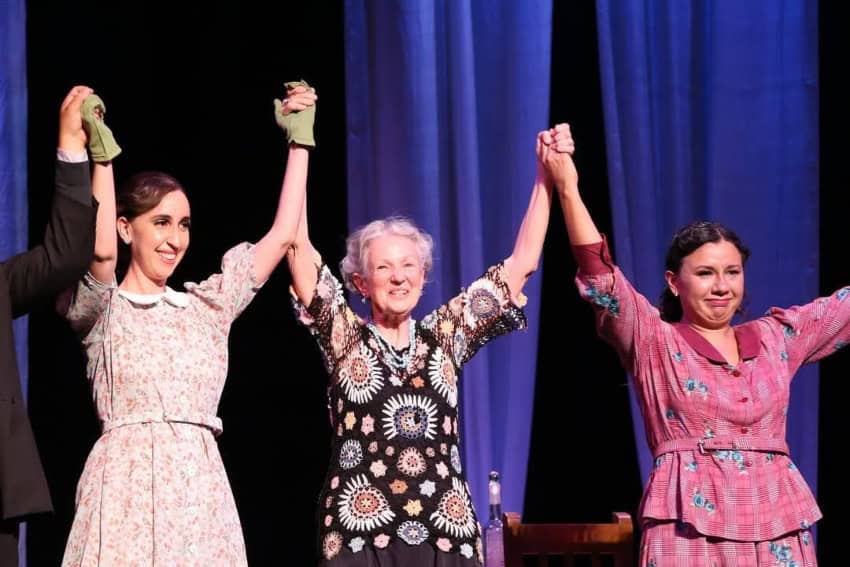
In 2009, at age 65, New York City mezzo-soprano, stage director, costume designer and high school theater teacher Kate Burt moved to the city of Guanajuato. While studying Spanish, she approached the University of Guanajuato and asked if she could audit theater and voice classes.
“Sitting in on classes that focused on voice, music and theater was my way of learning vocabulary related to things I loved,” she says. “I just listened until I could talk.”
Learning Spanish through music
After a year, she not only knew how to say “B minor” in Spanish but also had gotten to know many key people in the local performing arts community.
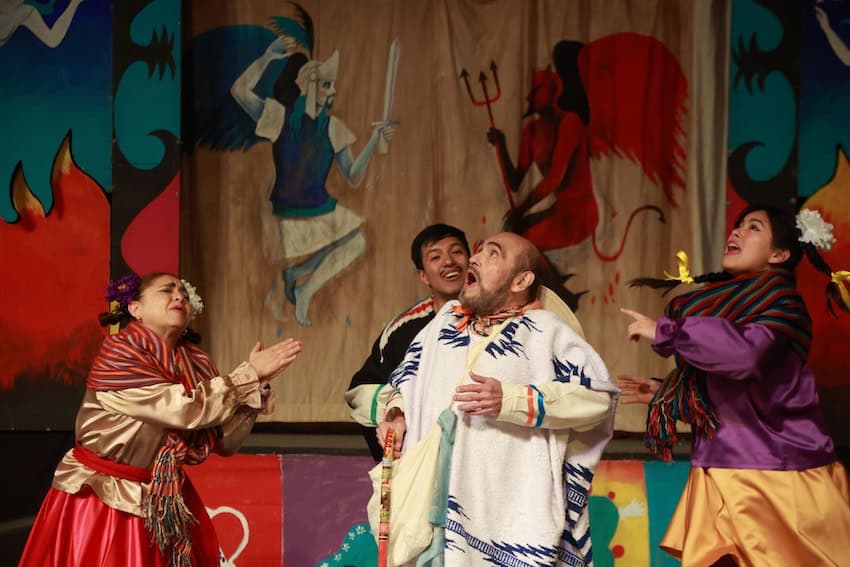
Knowing Burt had designed costumes for little theaters in the U.S., the director of a Guanajuato children’s theater workshop asked her to create angel wings for an upcoming pastorela. Burt sewed the 2-meter-high wings on her treadle sewing machine, hand-painting the cloth feathers.
When the wings were finished, she started to climb into a taxi to go to the theater and realized they wouldn’t fit, so she slipped them on over her clothes and walked across town to the theater.
“I imagine I looked muy rara,” Burt chuckled. “Lots of folks pointed and stared and asked why I was wearing them. I think it was good publicity for the pastorela.”
Getting involved in theater
On the way, she ran into the University of Guanajuato music school’s director of voice, who asked her if she would teach acting skills to voice students. Although she didn’t know it yet, teaching acting skills for three semesters would lead Burt to start directing and producing plays and operas in 2012.

The first play was one she was reading as a Spanish-learning exercise.
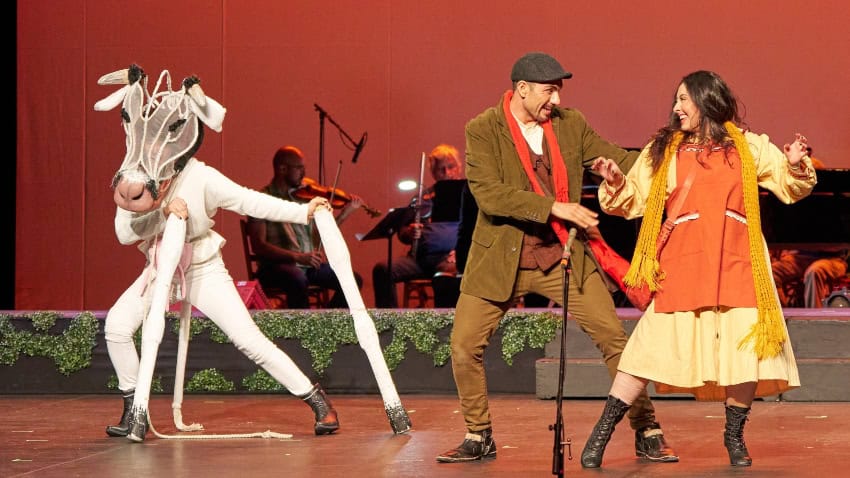
“It was so hilarious that I decided to look for actors to perform it,” she said. “I learned so much colloquial Spanish directing that play.”
When Burt came to Guanajuato, she had no plans to start an opera company.
“But it seemed strange to me that a city with so much culture, theater, a superb orchestra and beautiful venues had virtually no opportunities for singers to perform,” she said. “The organization evolved slowly. Little by little, we built scenes, did small productions — and then larger ones.”
The birth of Opera Guanajuato
Burt is now the director of Opera Guanajuato (OG), an associación civil (non-profit) that she founded in 2018, whose mission is to provide opportunities for Mexican singers, actors, musicians, dancers and designers to participate in opera and theater productions. OG also offers one or two scholarships a year to help talented singers with limited means.
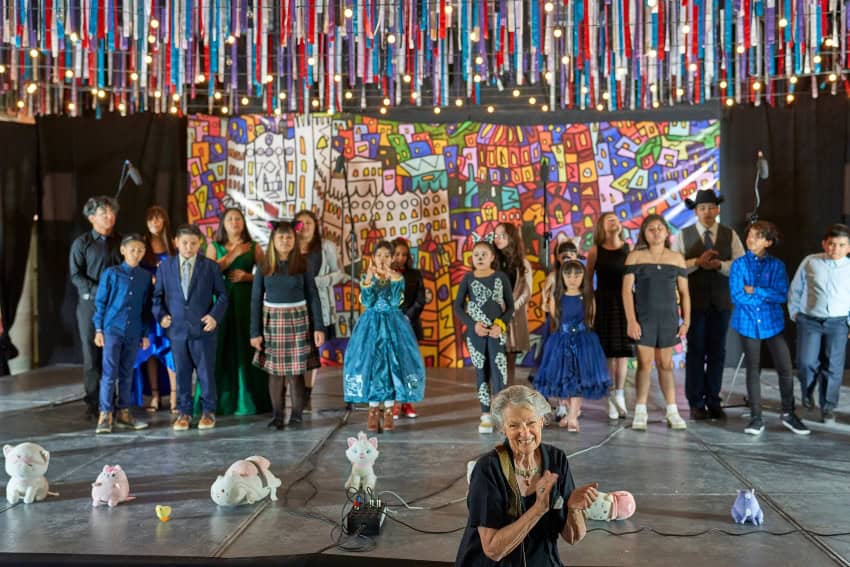
Almost all the adult and children’s choir members are Mexican, giving them the once-rare opportunity to perform. OG holds open auditions, and Burt listens to singers from all over the country. They produce two to three plays or chamber operas a year, including “Hansel and Gretel,” “The Magic Flute,” and “Amahl and the Night Visitors.” They offer the productions not just in Guanajuato but also in other towns in the state, like San Miguel de Allende and Irapuato.
Opera in the park
Burt has used her creativity in other ways as well, like offering opera scenes in Guanajuato’s Mercado Hidalgo, where singers would appear among the tortilla and cheese puestos.
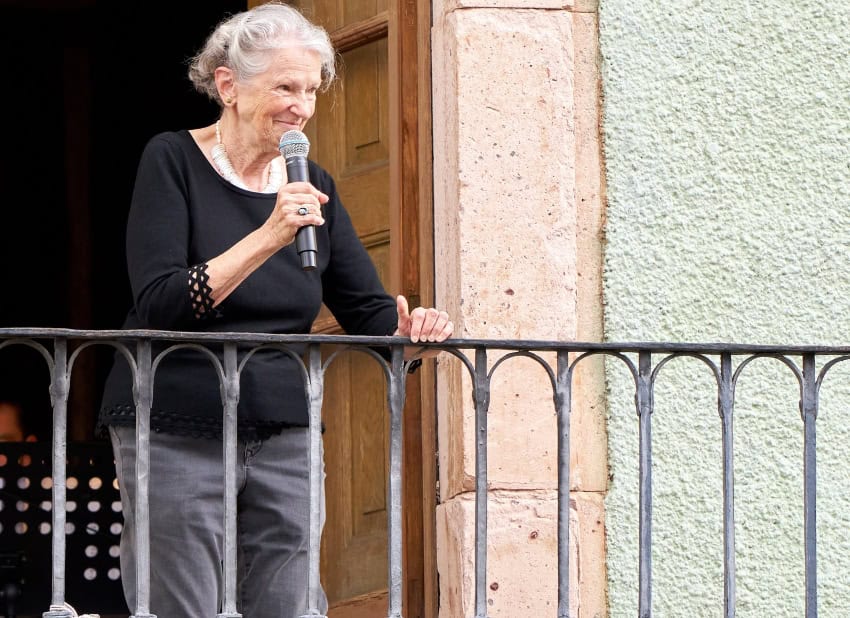
“The reaction was tremendous,” she says. “People sometimes say, ‘We can’t go to the theater — the show times don’t work for us — but please bring them back to the market.’”
She believes children are a conduit for helping the public become familiar with opera.
“When we involve children, they bring their aunts, uncles, grandparents, cousins — the whole family — to the theater. Many who had never been to an opera say, ‘Wow, I didn’t know about that. When is the next one?’”
Challenges to overcome
The biggest challenge at first, of course, was language. She chuckles over the mistakes she made, like asking a waiter for el cuento (a short story) instead of la cuenta (the check).
“The poor waiter looked terrified!” Her friend corrected her and they all had a good laugh.
After mastering Spanish, “there was the process of understanding that Mexican culture is very distinct from my culture, and requires a foreigner to listen sensitively and ask open questions.”
Another challenge has been dealing with the tax structure and administrative demands, involving extensive unanticipated paperwork. She relies on an accountant to deal with SAT, Mexico’s IRS. The accountant is one of four part-time staff, along with a choral director, an administrative assistant, and a publicist, all of whom have other full-time jobs. Soloists, pianists and orchestra musicians are also paid.
To pay their salaries, OG does private fundraising, and Burt — who owns a rental house in Colorado — invests some of her own money into the company.
“We would love to have a permanent home where we could rehearse and perform,” she says.
Taking advantage of local support
If you have an idea, she suggests getting to know local people who have an interest in your area of expertise. Find out what they’re already doing, ask open questions, listen respectfully and see where an unfilled need exists.
With local support, you, too, might start something as exciting as an opera company.
Louisa Rogers and her husband Barry Evans divide their lives between Guanajuato and Eureka, on California’s North Coast. Louisa writes articles and essays about expat life, Mexico, travel, physical and psychological health, retirement and spirituality. Her recent articles are available on her website, authory.com/LouisaRogers.