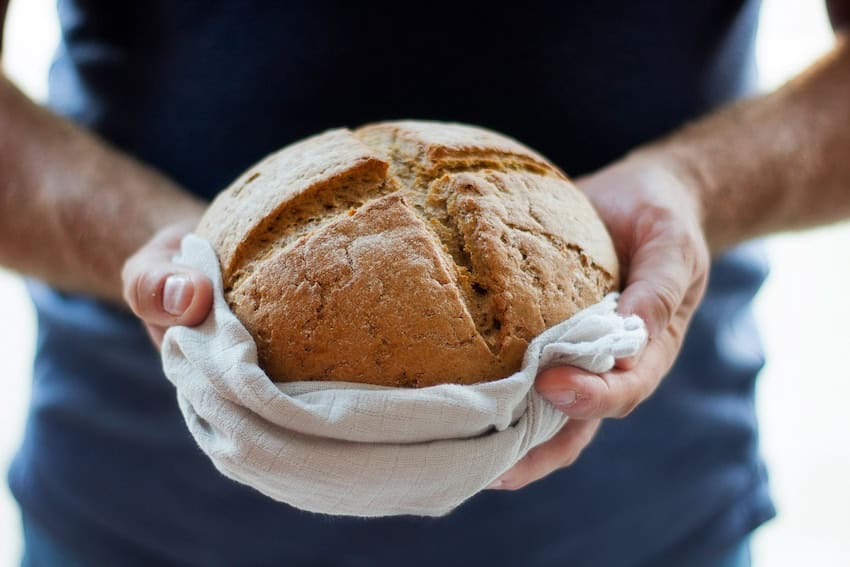
With the recent cancellation craze sweeping the Mexican nation through social media, I simply couldn’t think of a more appropriate moment to dive into the history of bread in Mexico. British baker Richard Hart faced backlash after suggesting Mexico’s bread culture could benefit from diversification — a comment that sparked heated debate about cultural appropriation and culinary colonialism (we may have mentioned this once or twice ourselves.)
This breakdown follows the leavened wonder’s journey from — you guessed it — Spain, to the fertile central valleys of New Spain around 1520. In my ongoing quest to showcase Mexico as a unique and interconnected culture born the moment Cortés shook hands with Moctezuma, one could argue that bread culture rose the same way: through indigenous and European collaboration.
Mexico’s bread culture: built on cultural exchange
Understanding bread’s journey through Mexican history reveals an important truth: Mexico’s bread culture has always been a story of adaptation and exchange. If nearly 80% of consumption is white bread, perhaps Hart’s observation about market gaps was less cultural insensitivity and more market analysis. The question isn’t whether an expat can contribute to Mexico’s bread scene, but rather why cross-cultural culinary exchange suddenly became controversial in a country whose entire bread tradition is built on it.
Today, bread makes its way into the digestive tract of millions of Mexicans thanks to an abundance of panaderías. One UNAM geographer calculated 9,806 bakeries in Mexico City and its metro area alone. So yes, Mexicans make bread — but it’s mostly white bread. CANAINPA (Cámara Nacional de la Industria Panificadora) reported in 2019 that around 70–75% of bread consumed in Mexico is white bread or pan blanco/pan de caja, including bolillo, telera, and sliced bread. Such statistics suggest there was, indeed, a gap in the bread market, and perhaps Hart wasn’t totally off-base when he said the bread culture could use a boost.
The real question is: does it really matter? Can we have our widened variety of bread and eat it too?
How wheat came to Mexico: Juan Garrido’s three grains
Prior to the Spanish conquest, the closest thing Mesoamericans had to a sandwich was the mighty tamal. Maize dough played a central role in daily consumption
In addition to maize dough’s central dietary role in Mesoamerican society, native seeds like amaranth were often ground to make alternative doughs and flat cakes. The missing ingredient — wheat — would sail its way across the Atlantic with the Spanish, adapting quickly to Mexico’s fertile central valleys.

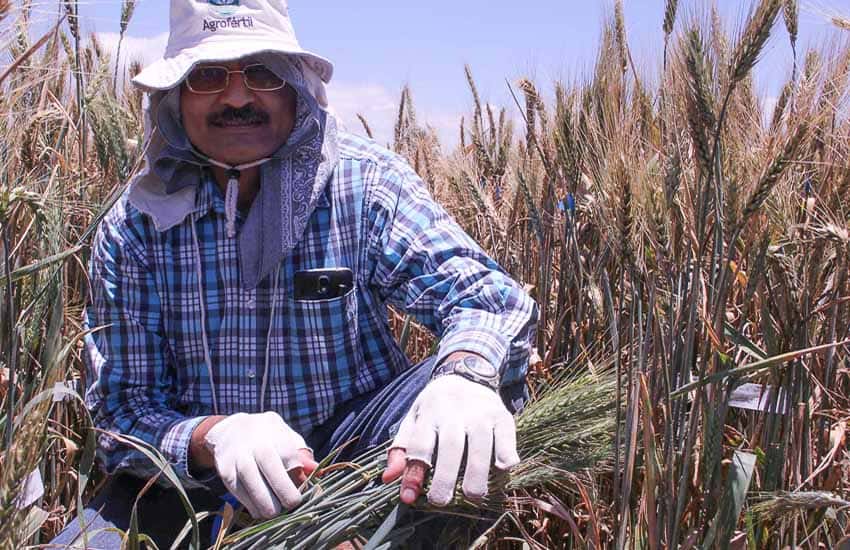
Documented petitions between Hernán Cortés and the crown mention the grain, as does local legend. Sixteenth-century chroniclers like Alexander von Humboldt credit Juan Garrido with wheat’s successful cultivation. According to the story, the Kongo-born, Afro-Spanish soldier found three stray grains of wheat mixed into a sack of rice during an expedition to New Spain. He planted the trio in a garden near Mexico City, which produced 180 more grains. Garrido replanted this seed, and before long, bread was everywhere. Was wheat’s arrival story embellished to encourage overseas investment? The answer is murky at best. Whatever the real origin, what’s certain is that Puebla quickly became “Mexico’s breadbasket,” supplying flour to Mexico City and beyond.
From Spanish elite to colonial staple
In the beginning, it was only the “upper crust” of society, in this case, the Spaniards, toasting the bun’s arrival. Reports referencing historical documents from 1559 show a viceregal decree forcing reluctant farmers to expand wheat production by requiring a portion of their taxes be paid in grain. Farming practices like this made locals more comfortable with wheat, and over the course of decades, they began incorporating bread into their daily diets.
By the late 1700s, bread was a big deal. A “gremio de panaderos” (bakers guild) was formally established and regulated by Viceroy Marqués de Croix in 1770, establishing a licensed loaf monopoly. The new regulations limited baking and selling bread to master bakers who had passed specific examinations. This framework imposed strict controls on weight, price, and most importantly, quality: selling reheated, spoiled, or underweight bread was strictly prohibited. Anyone caught doing so would be hit with a pan malo (bad bread) fine at best — guild expulsion at worst.
Yet it wasn’t just bakeries churning out loaves by day. Archaeologists have found bread ovens in convents dating back to the 16th century, showing that bread served as both a daily staple for nuns and alms for the poor. Early recipes, notably those for buñuelos from Sor Juana Inés de la Cruz’s Convent of San Jerónimo, have been discovered in convents from Mexico City to Querétaro.
The Industrial Revolution: From Stone Mills to Bimbo

During the late 19th century, Mexico’s bread industry underwent a technological revolution. Roller mills, grinding systems, and early mechanical mixers replaced traditional stone-and-hand methods. Larger flour mills could now produce significantly more dough. Mexico City’s Porfiriato saw huge waves of European immigration and urban investment, and Basque entrepreneurs opened bakeries, including La Vasconia, the city’s oldest, combining traditional handwork with modern methods.
This same era saw pan dulce explode in popularity. Sweet breads had started taking shape in convents, likely influenced by pre-Hispanic cakes made of corn and honey, but they really took off when French baking techniques met Mexican flavors in the late 19th century, resulting in pastry varieties like cuernitos, conchas, and orejas.
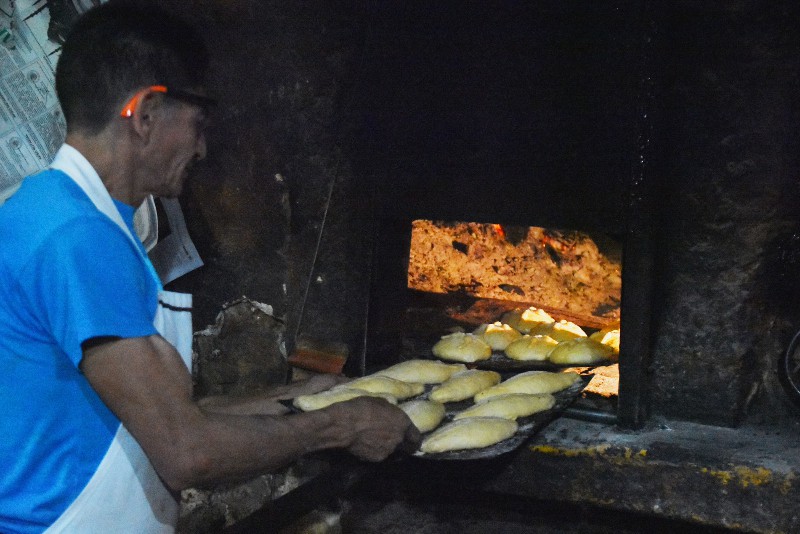
Soon, businesses in Mexico City started producing bread on a quasi-industrial scale. With the founding of Bimbo in the 1940s came fully industrial production lines with American-style tunnel ovens, and the transition to mass-produced, standardized packaged bread was complete. Traditional panaderías stuck around though, and even today they occupy the artisanal side of a dual-sector industry.
Bread vs. tortilla: Who wins in Mexico?
Without a doubt, corn still reigns as the most consumed grain in Mexico, and in the bread vs. tortilla battle, the tortilla wins by a landslide. Industry reports citing CANAINPA put bread consumption around 35–36 kg per person per year, where about 80% consists of white bread and around 20% is pan dulce. At 56–75 kg per person per year, tortilla consumption more than doubles bread intake, and can be even higher in rural areas.
A regional twist can be found in northern Mexican states like Sonora, Chihuahua, and Baja California, where wheat tortillas have all but replaced corn tortillas. Agricultural conditions in Mexico’s northern borderlands favor large-scale wheat cultivation, and the flour tortilla’s elastic texture makes it ideal for burritos and sobaqueras. If centuries of history teach us anything, it’s that outsider techniques and perspectives are often exactly what’s kneaded – while still suiting local palettes.
In a land where wheat and corn coexist peacefully, one can only hope British and Mexican bakers can too — after all, there’s plenty of dough to go around.
Bethany Platanella is a travel planner and lifestyle writer based in Mexico City. She lives for the dopamine hit that comes directly after booking a plane ticket, exploring local markets, practicing yoga and munching on fresh tortillas. Sign up to receive her Sunday Love Letters to your inbox, peruse her blog or follow her on Instagram.