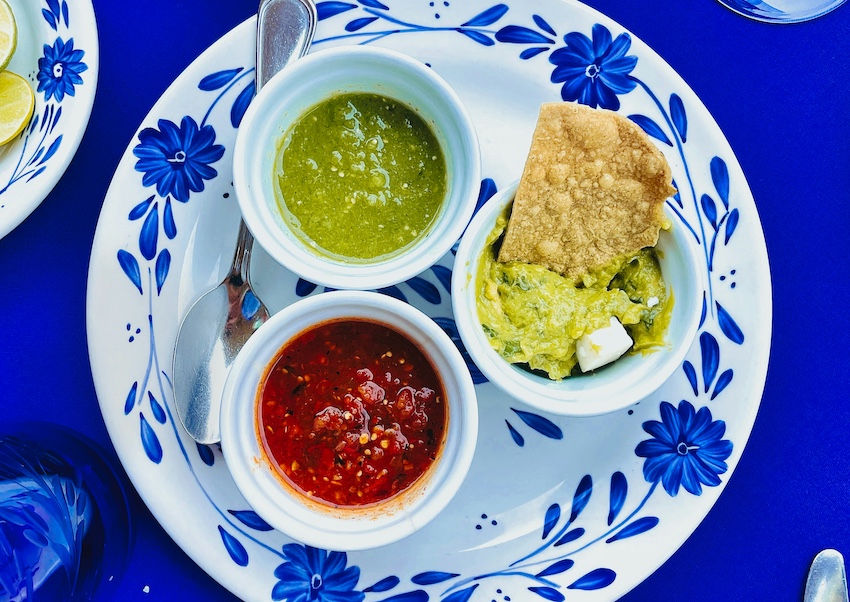
In Mexico, salsa is more than a condiment. It’s a cultural emblem that is present at every restaurant, street stall, family table, and even in fast-food chains. Wherever there’s a Mexican enjoying a meal, there’s likely a salsa nearby. Historically, grandmothers crafted their perfect blends using molcajetes; today, the frantic pace of life often pushes us to whip up versions in blenders. Every family guards their own secret recipes, and each person has a personal favorite. What’s astonishing, though, is how rarely we see a straightforward guide to the variety of Mexican salsas.
It’s no poetic exaggeration to say that salsas reflect a fundamental part of our identity — a mosaic of tomatoes, herbs, and chiles. We amplify these basic ingredients with garlic, onion, salt, pepper, oil, lime, and a host of other spices. Sometimes, exotic elements like ants, crickets, walnuts, peanuts or pumpkin seeds are added. The possibilities are virtually endless. With around 250 species of chile in Mexico, it’s safe to say there are at least that many types of salsa.
However, trying to encompass all regional varieties of salsa can feel overwhelming. The truth is, the landscape of Mexican salsa is deeply intertwined with its geography, history, and culture. Salsas from Oaxaca or Yucatán taste different from those in Chihuahua or Mexico City; coastal varieties have a different character than mountain versions. Each salsa tells its own story, a world unto itself. For our purpose, we’ll focus on those that are accessible across the country and have even found commercial success.
Chilmolli and the roots of salsa
Chile has been woven into Mexican cuisine for over 6,000 years. Although we suspect that salsa drinking was widespread among ancient Mesoamerican cultures, archaeological evidence is scarce. We do know, with certainty, that the Aztecs regularly consumed chilmolli — a chile-based salsa — as part of their daily diet.
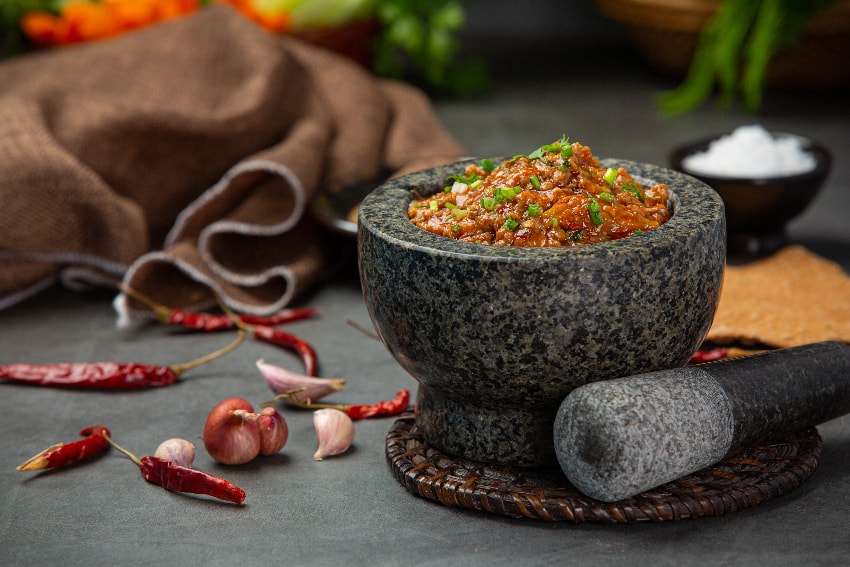
This ancient practice is demonstrated through the tools they used, particularly the molcajete (a stone mortar) and the comal (a griddle). The molcajete, invented 8,000 years ago, allows the essential oils of ingredients to be released, giving salsas a depth of flavor that modern appliances just can’t match.
The comal, meanwhile, provided a sturdy surface to roast ingredients, giving particular salsas their smoky character. Since those early times, salsas have become woven into the very fabric of Mexican cuisine.
The Salsa Spectrum


To simplify this rich universe, we can categorize the most common types of salsa:
More than just flavor
And yes, friends — enjoying salsa is not just a pleasure, but also an act deeply rooted in health. These vibrant condiments play a significant role in our well-being. If you want to maintain a healthy weight, salsas can improve glucose tolerance, increase insulin sensitivity, reverse fatty liver, and reduce pancreatic damage. They’re also allies in allergy therapies, possess antimicrobial properties — meaning street tacos soaked in salsa are not only delicious but safer (maybe) — and they improve blood circulation.
Perhaps most surprisingly, chili peppers trigger the release of endorphins — the body’s natural happiness hormones. It’s no exaggeration to say that drenching your food in salsa can boost your mood. And if you’re dealing with pain, salsa can serve as a natural analgesic — plus it’s an excellent distraction. These fiery condiments help balance your “good” and “bad” cholesterol levels, and they are anti-inflammatory and antioxidant powerhouses.
If salsa irritates your stomach, start incorporating it in microdoses and build up gradually. As my grandparents used to say, “Well-made salsas make you strong, not weak.
Amigos, for health, patriotism, and happiness — eat salsa! 😊
María Meléndez is a Mexico City food blogger and influencer.