- Friends, this article is a trap. I’m writing it in hopes that someone will call me crazy and invite me to Yucatán to prove my statement wrong: The best cochinita pibil in the world is in Mexico City.
In La Roma, Mexico City, my friend El Tigre partnered with a great friend to open a mezcalería called Escándalo, which exclusively offers high-quality mezcal. It’s not intended to be a wild spot, but rather a place where you can learn about the sacred drink, as we’ve discussed before.
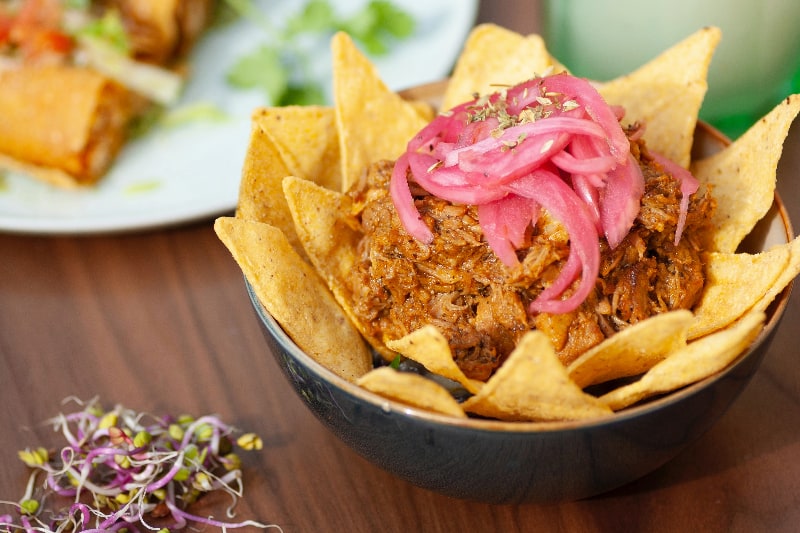
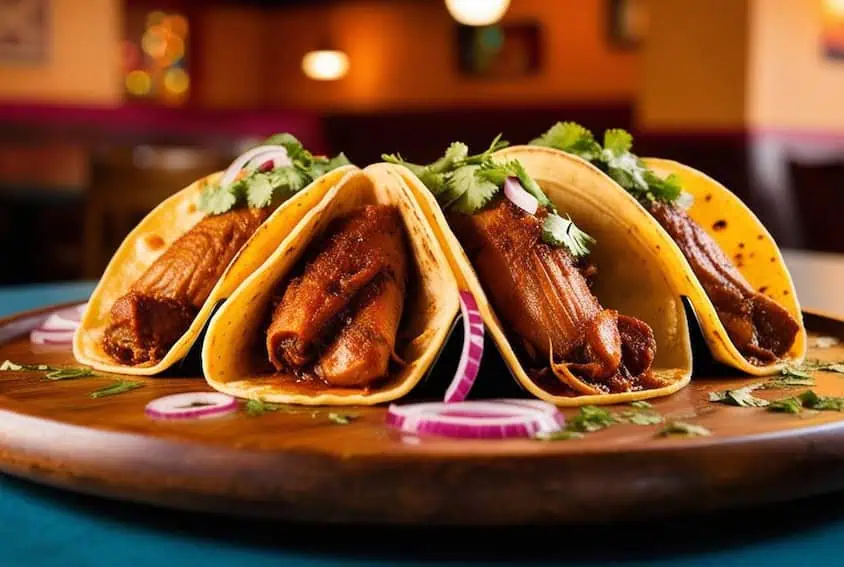
El Tigre is a bon vivant and a sybarite who not only enjoys fine spirits but also loves good food. With this in mind, he came up with an exceptionally simple yet extraordinary menu. This menu features only tacos and panuchos filled with cochinita pibil. For vegetarians, there are tacos and panuchos with mushrooms. With the combination of Yucatecan cochinita and Oaxacan mezcal, it’s puzzling why Escándalo hasn’t been named the official “Embassy of Southeastern Mexico.”
I promise I’m not exaggerating — it’s the most delicious cochinita pibil I’ve ever tasted in all of Mexico. Maybe it’s the influence of the mezcal or the music, but it truly tastes just as good cochinita should.
What is cochinita pibil?
Cochinita pibil is pork that is slow-cooked in a marinade of achiote and sour orange juice, or vinegar, along with regional spices.
Voir cette publication sur Instagram

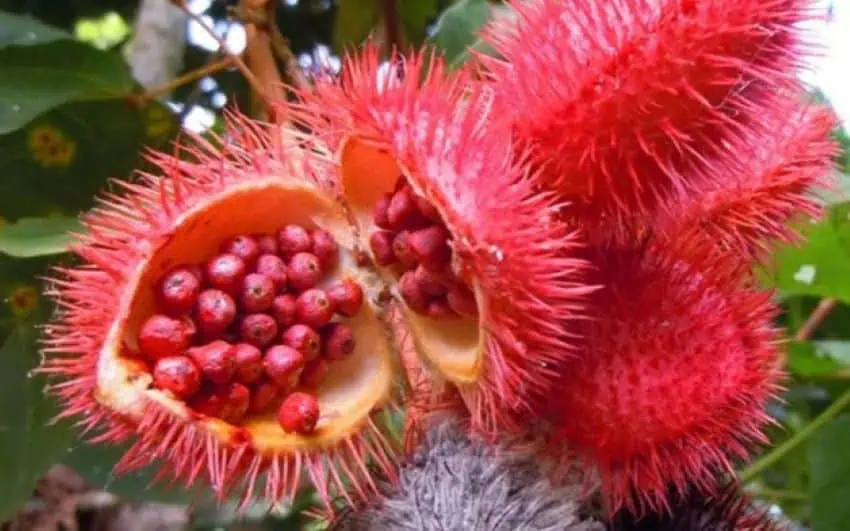
Achiote, the red gold of the Mayas
Achiote is a seed that originates from a tree of the same name and is widely used in Mexican cuisine. It boasts an intense red color, which is why the Mayas utilized it as a dye for textiles, murals, food, and ceremonial drinks. Additionally, they revered its supposed medicinal properties, believing it to be healing, antioxidant, anti-inflammatory, antiseptic and antibacterial.
Achiote held sacred significance in Maya culture; it was used in religious ceremonies and as offerings because it symbolized blood and vitality.
In cooking, the seeds are soaked to create a paste that has an earthy flavor, slightly spicy and somewhat sweet. You may have encountered this vibrant red color and flavor in dishes like tacos al pastor, which derive their characteristic taste from achiote.
Back to the pibil
In Maya culture, “pib” refers to the technique of cooking underground — similar to a barbecue — using underground ovens. The Mayans traditionally used this method to cook birds and deer. When the Spanish introduced pigs to the region, the Mayans quickly embraced this new animal and saw his potential. They marinated the pork in achiote, wrapped it in banana leaves, and placed it in the pib.
After about three hours of cooking in the pib, the pork emerges perfectly cooked — juicy and infused with the flavors of achiote, orange, and the meat itself. Since this cooking method was labor-intensive, preparing a pibil for someone is the ultimate declaration of love.
3 ways to enjoy Mexico’s best cochinita pibil:
- Visit Yucatán and immerse yourself in a cochinita tour. I recommend venturing outside Mérida to find the best traditional cochinita, prepared in a traditional pib.
- Come to Mexico City and sample the tacos and panuchos at Escándalo. While you’re there, visit the mezcal bar, ask them to explain their selection, and enjoy the music (maybe tell them I sent you).
- If you have three hours and can’t travel to Yucatán or Mexico City right now, here’s a traditional cochinita recipe, so you can finally declare your love to that special someone.
- 1 kg of pork (preferably leg or loin)
- 100 g of achiote paste
- 1 cup of sour orange juice (can be substituted with white vinegar)
- 2 garlic cloves
- 1 tablespoon of oregano
- Salt, to taste
- Banana leaves (optional, for an authentic touch)
Instructions:
- In a bowl, combine the achiote paste with orange juice, minced garlic, oregano, and salt.
- Coat the pork with this mixture and marinate it in the refrigerator for at least 8 hours, preferably overnight.
- If you’re using banana leaves, rinse and soften them by passing them over a flame. Then, wrap the marinated pork in the leaves.
- Preheat your oven to 160°C (320°F) and cook the wrapped pork for 3 to 4 hours, or until the meat is tender and easily falls apart. If you don’t have access to an underground oven, please avoid digging a hole in your yard.
- Once cooked, shred the meat and serve it with warm tortillas, pickled red onions, and a touch of habanero chili.
Did I persuade you? Is someone taking me to Yucatán to taste the best cochinita in all Mexico? Have you already tasted the cochinita at Escándalo? Am I crazy for thinking about the cochinita of Escándalo?
As always, feel free to let me know in the comments!
María Meléndez is a Mexico City food blogger and influencer.