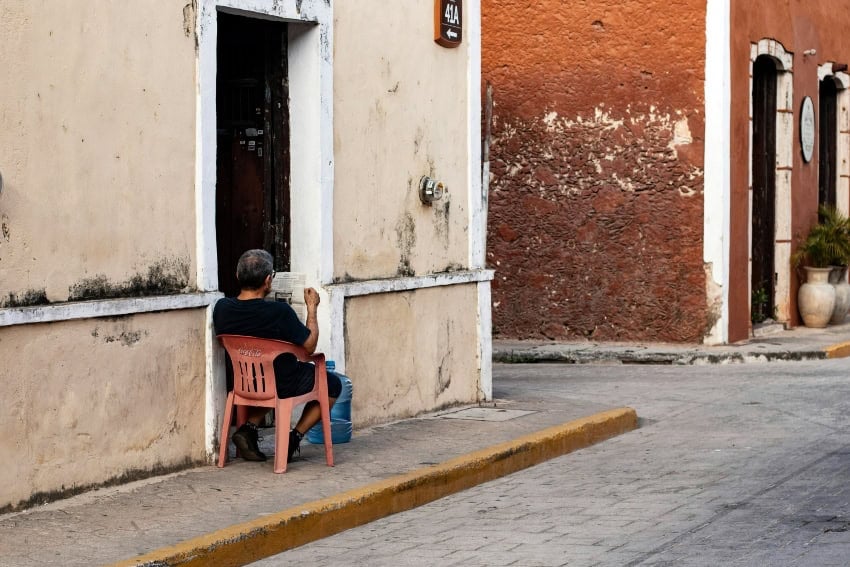
I grew up on a chair.
Not literally. That would have been weird.
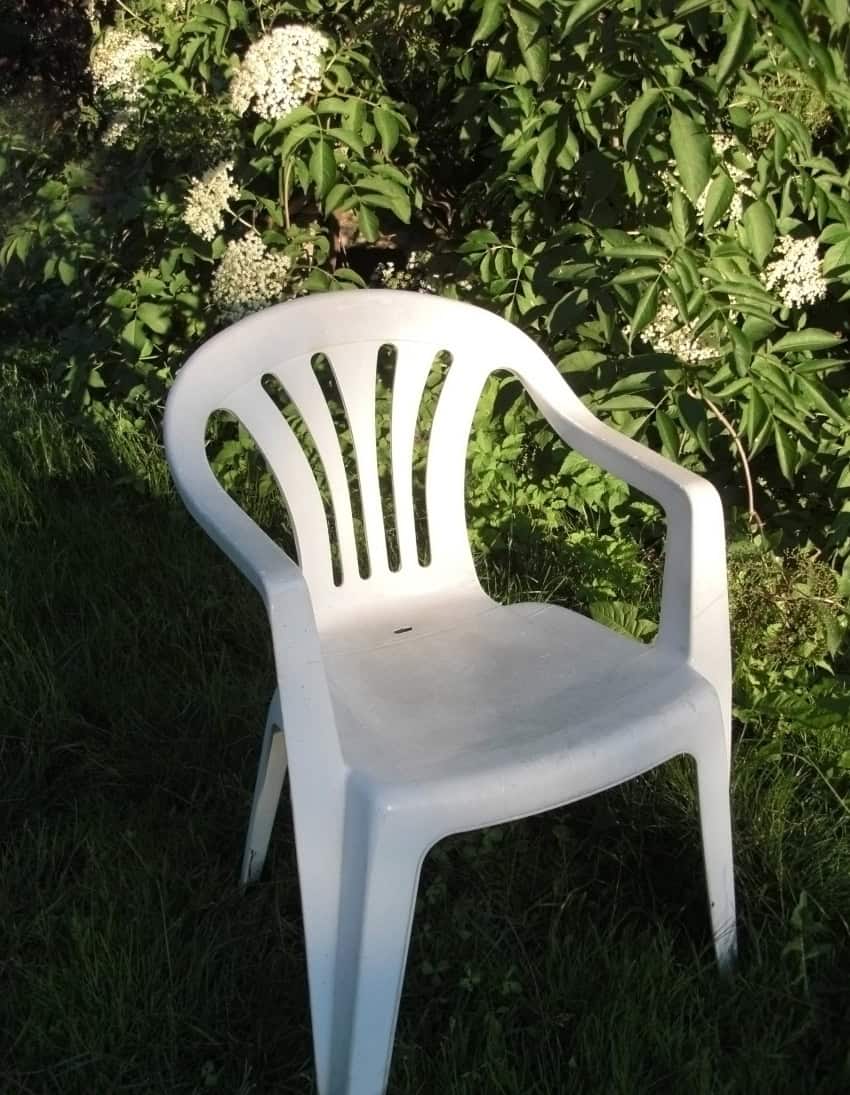
Instead, I come from an Italian family where chairs were everywhere. Sitting was merely one of their many functions.
On a good day, you sat in them and observed the family theatrics. On a bad day, they became climbing rigs for reaching my cousin’s secret stash of Nutella. They made glorious goalposts too and, when the mood was ripe, even served as Hulk Hogan-style wrestling weapons.
So perhaps it was inevitable that, when we arrived in Mexico, my attention was drawn to chairs.
Not just any chairs. Plastic ones, branded and unbranded. Stacked outside shops, scattered around taco stands and lined up for parties.
I soon realized something important: The Mexican plastic throne is bona fide everyday infrastructure.

This, of course, raised questions. Where do they come from? Who makes them and, most crucially, who tests them? Is there a government-appointed Chair Inspector whose career involves dropping heavy tíos onto spindly legs and taking notes? “Load tolerance: not bad. Man: slightly sweaty. Chair: 100% unbreakable.”
The fun and fantastical interior design of Mérida’s Chuch Estudio
Is there a Ministry of Seating with a maximum permissible wobble? And who decides the colors?
I began to suspect a secret council: 12 people in a windowless room, surrounded by polypropylene, debating whether next year’s official hue should be turquoise or something more adventurous. Perhaps they never sit, preferring to stand and nod, secretly longing for a bar stool.
The superhero of street seating
There could even be a Mexican chair superhero, but not the sort who fights crime; Mexico has enough people for that. His superpower is knowing exactly how many chairs the perfect quinceañera requires.
He arrives at the venue, surveys the courtyard, then whispers, “148 … 84 green, 36 red and 28 fuchsia.”
Nobody asks how he knows; they just start stacking.
His other powers remain classified, although rumors suggest he can identify a broken chair from 900 yards away and appear instantly whenever somebody says, “We’re going to need more chairs, dude.”
View this post on Instagram
I might be digressing.
To understand how a single injection-molded object achieved near-mythological status, I did what any self-respecting journalist would do when confronted with patio furniture: watched an unhealthy amount of completely irrelevant TikTok videos, nearly polished off a whole jar of spreadable Dulce De La Rosa Marzipan and, with the deadline looming, contacted Mexico’s academics.
First, I spent an afternoon at a taquería near my house.
One taquero used a single chair as a stepladder, cash stand and footrest in under four minutes. It didn’t flinch. It simply creaked around its torn backrest, as if puffing out its plastic chest, and muttered: “Is that all you got, hermano?”
Fascinating.
Defining community through cheap plastic
Dr. Armando Cisneros, a sociologist at UAM-Azcapotzalco, took the question considerably more seriously than I did.
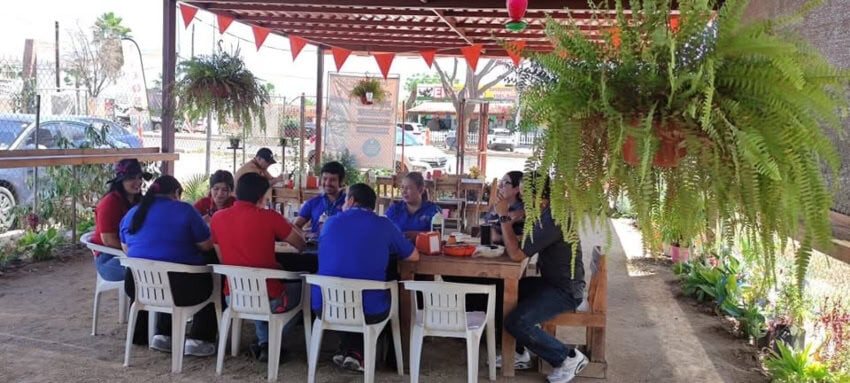
“Objects don’t just serve communities,” he told me. “They define them. The chair’s petroleum-born virtues — dirt-cheap and stubbornly durable — don’t just suit street life; they help shape it.”
Cisneros elegantly calls it a “culture of rest,” a nationwide understanding that wherever commerce or conversation happens, a place to sit will follow.
If Cisneros explained the chair’s DNA, Dr. Mario Ortiz Murillo, a sociologist at UNAM, deftly mapped its territory.
“It serves rich and poor alike, because everyone gets tired,” Ortiz Murillo told me.
But in Mexico, he explained, it does more than hold weight. It holds space.
“Tied to a lamppost, it claims a curb. Stacked in a pickup, it’s a pop-up taquería.”
View this post on Instagram
“The plastic chair,” Ortiz Murillo said, “is how Mexicans move through and confidently claim the city.”
And claim it they do.
I asked Rosa, who runs my neighborhood grocery, why she keeps three by the door.
“Honestly, I never really thought about it,” she said. “Locals like sitting and sipping sodas … that’s how they relax, or in the case of my husband, spend an inordinate amount of time gabbling nonsense with local gringos about football.”
I felt chuffed.
Built to outlive your phone
That contrast — Rosa’s practical indifference versus the chair’s actual ubiquity — led me to the broader point.
How a Tijuana ceramicist turned desert animals into an interior design concept
We live in an age of flat-pack furniture and Allen wrenches. Luckily, the Mexican plastic throne rises above all that. It arrives fully formed and morally uncomplicated. Best of all, it’s ready to be abused. Leave it in the July sun until it fades to the color of old teeth? No problem. Stack it. Drop it. Drag it. It will probably outlive your phone and possibly your career. Take that, AI.
I grew up thinking chairs were supposed to earn their keep, but in Mexico, they run the place.
So next time you’re handed a slightly warped, suspiciously wobbly plastic throne, don’t test the legs.
Just sit.
Listen to the comal sizzle. Listen to the overlapping conversations. Mexico doesn’t need Roche Bobois or Poltrona Frau to hold its people together. It has cheap polypropylene, and against all economic and gravitational odds, it works.
Besides, if a 250-pound tío can balance on it like an Olympic gymnast, so can you.
Just skip the Hulk Hogan routine. The chair will survive, but your dignity might not.
Paolo Ferrari is a contributor to Mexico News Daily.