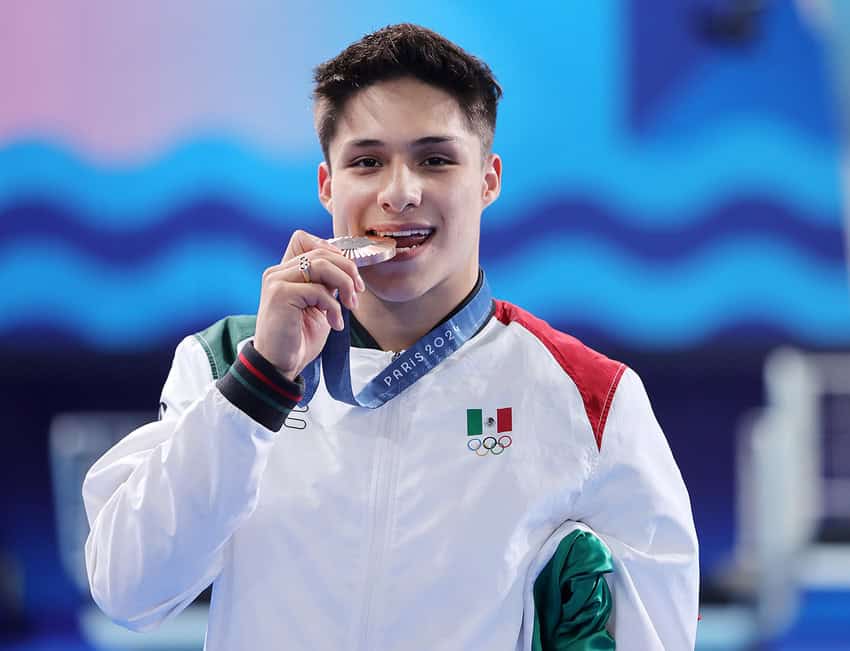
Over the past weeks, we saw thousands of athletes from all over the world compete in the Olympics games in Paris. After years of training, some of these athletes are recognized for their effort and achievement and are awarded a long-awaited and deeply cherished Olympic medal.
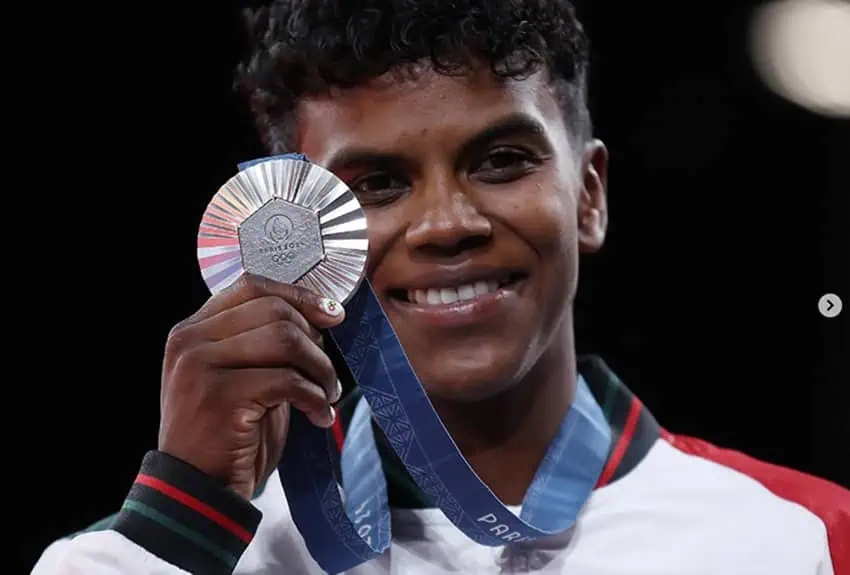
63 female and 46 male athletes representing Mexico won a total of five medals — three silver and two bronze — putting the country at the 65th spot in the Olympic rankings. Divers Osmar Olvera and Juan Celaya won a historic silver medal in the men’s 3-meter synchronized diving event, as did Prisca Awiti in women’s judo and Marco Verde in the men’s welterweight boxing event. Bronze medals were taken by the archery trio of Alejandra Valencia, Ana Paula Vázquez and Angela Ruiz, and by Osmar Olvera for individual 3m diving.
What do medalists get from the International Olympic Committee?
The International Olympic Committee (IOC) provides each winning athlete with a medal and the box we’ve seen athletes hold when they stand on the podium. This box contains an official poster of the 2024 Olympics. Additionally, the first three athletes that win in each sport received a stuffed animal of the official mascot of the 2024 Olympics: Phryge, an anthropomorphized version of the cap used by 18th-century French revolutionaries.
This year, medals have an exciting and special addition: each circular metal has an original piece of iron from the Eiffel Tower mounted on it. Apart from these items, the IOC does not bestow any further reward to athletes, leaving additional recognition in the hands of each country’s Olympic Committee.
What do Mexican athletes win?
In Mexico, athletes who win a medal get a monthly stipend for the rest of their lives, the quantity of the stipend depending on the medal. For gold, they get thirteen thousand pesos, for silver eleven thousand, and ten thousand for bronze. For group sports, each competing athlete gets the full amount of the stipend. If they get more than one medal, the price is cumulative. Osmar Olvera, for example, gets a double payout for winning both in synchronized and individual diving.
This stipend comes out of the budget of the National Commission for Physical Culture and Sport (Conade), a government agency. For this year’s Olympics, Conade has a budget of 30 million pesos for medalists. The 109 athletes that participated throughout the summer do not receive any sort of salary or award for attending and competing, only those who are able to bring home a piece of the Eiffel Tower.
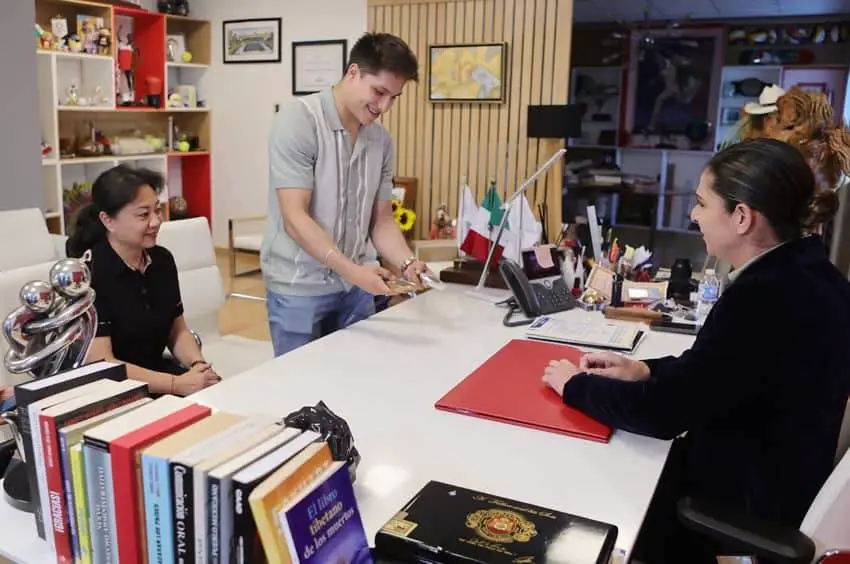
Conade was established in 1988 as part of the Secretary of Public Education (SEP) in order to promote, encourage and support sport and physical culture, but it wasn’t until the 2004 Olympics that they settled on the quantity that they would award medalists every four years. That quantity hasn’t changed since. In 2021, the Mexican Olympic Medalists Association (AMOM) requested a slight raise to the stipend, which hasn’t been approved. These prizes are legally recorded in the Physical Culture and Sports Law.

How does Mexico stack up against other national rewards?
Other countries have different policies. Spanish athletes, for example, following the same incentives they had for Tokyo 2020, will receive 94 thousand euros for gold, 48 thousand for silver and 30 thousand for bronze. Colombia measures their award in minimum salaries: gold medal recipients will receive 240 minimum salaries, currently equivalent to US $77,255.
Hong Kong and Singapore are the countries that offer their Olympic victors the highest prizes. Gold medalists in Hong Kong will receive 6 million Hong Kong dollars (US $768,000), while Singaporeans who bring home gold can receive 1 million Singapore dollars (US $745,300).
Other countries also reward athletes with non-cash prizes. In Malaysia, athletes also receive a “foreign-made car,” according to CNBC. There are also countries, like Norway, whose athletes receive nothing from their government. Sports are considered an indicator of national development, since they are directly related to the quality of life of the population. Conade’s budget of 30 million pesos is more than enough to cover Mexico’s wins in Paris 2024 — whether it’s enough to push for better social and public health policies that might give young Mexican athletes the support they need to make it to the Olympics is another matter.
Montserrat Castro Gómez is a freelance writer and translator from Querétaro, México.