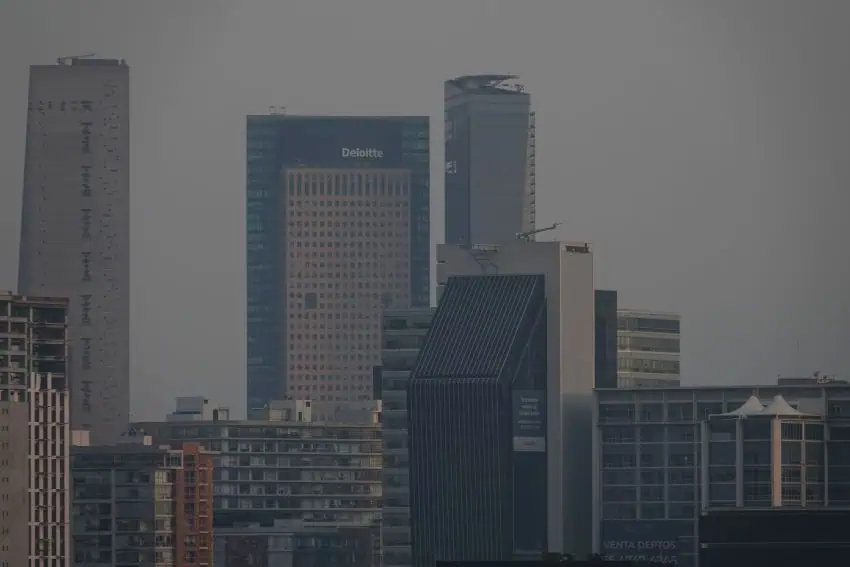
As Mexico City entered its fourth environmental contingency alert of 2025, the city’s Mayor Clara Brugada signed a public-private agreement to reduce the city’s air pollution.
The document, Agreement For a Low-Emission City, outlines a collaboration between the city and the private sector to reduce emissions.
La #CapitalDeLaTransformación da un paso histórico con el Acuerdo por una Ciudad Baja en Emisiones, un compromiso entre los sectores público, privado y ciudadanía para reducir la contaminación y enfrentar la crisis climática. Con la participación de todas y todos construiremos… pic.twitter.com/Ft96XH5nO9
— Clara Brugada Molina (@ClaraBrugadaM) April 2, 2025
Brugada, CDMX Tourism Minister Alejandra Frausto and Mexican business leaders signed the agreement Tuesday.
“This agreement addresses one of the most important tasks we face: reducing, mitigating and addressing climate change,” Brugada said.
Brugada said Mexico City contributes 4% of the country’s gas emissions. Without measures to reduce them, this figure could triple by the middle of the century, she said.

The agreement seeks to transform Mexico City into a cleaner, healthier city with lower emissions through six key actions.
- Developing integrated and sustainable mobility options, including promoting bicycle usage.
- Building homes with solar panels.
- Reducing by half the 13,000 tons of waste generated in the capital daily.
- Enhancing the city’s sustainable water management, including water recycling, recovering bodies of water and rehabilitating dams.
- Revegetation of the countryside and the city.
- Implementation of a green tax aimed at reducing emissions and promoting sustainable technologies.
Brugada’s government will also launch a call for citizen proposals to move forward in environmental matters.
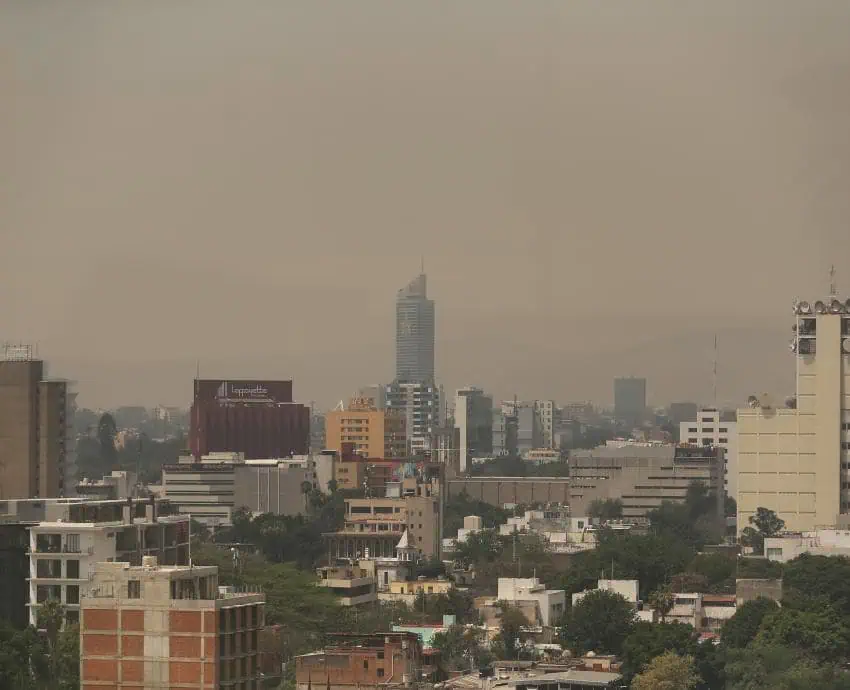
Developing a federal emissions database for Mexico’s high-pollution cities
President Claudia Sheinbaum said that the federal Environment and Natural Resources Ministry (Semarnat) and the National Autonomous University of Mexico (UNAM) are researching the metropolitan areas of the Valley of Mexico, Guadalajara and Monterrey due to high pollution levels there.
The research teams, Sheinbaum explained, are focusing on creating an emissions inventory to measure pollution levels and identify responsible parties.
Air quality awareness in schools
Mexico City’s Environment Ministry (Sedema) has launched the Air Quality School Banners program to help children recognize the ozone season’s effects on their health and learn how to protect themselves from it.
During ozone season, ozone concentrations are at their highest levels due to the lack of wind, low humidity levels, and intense radiation. In Mexico City, this happens between February and June.
The School Banners program educates children on Mexico City’s Air Quality Index, including the meaning of the flag colors associated with the initiative. The flags can be one of five different colors, each corresponding to the day’s air quality.
The flags are raised daily and remain in place depending on air quality in the school’s area.
With reports from Debate and Animal Político