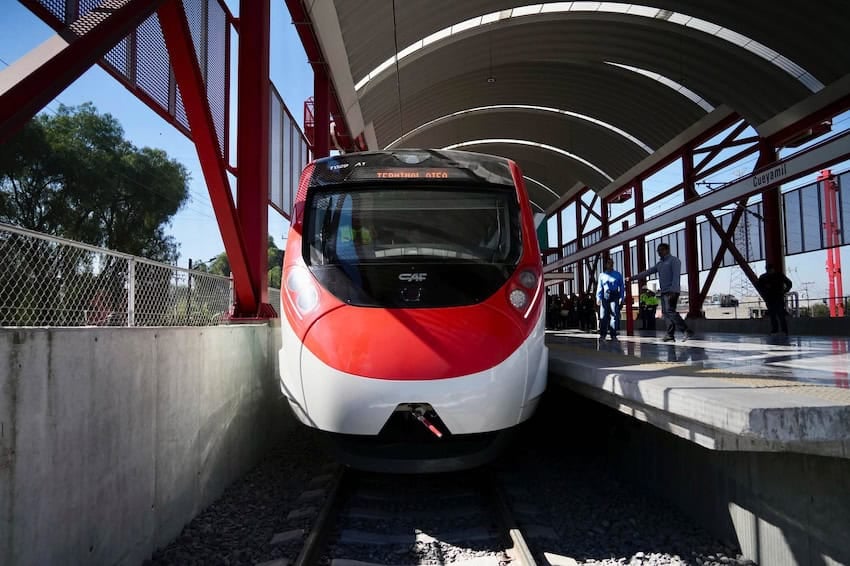
A train track runs through both entrances to the colonia where my daughter goes to school. For a while, I took aerobics classes at a gym right in front of it after dropping her off; more days than not, a train would pass by, going pretty quickly.
Because there are only two entrances (and exits) to the colonia, things can get pretty congested. As vehicles wait on narrow streets for lights that will let them get back onto the main road, it’s common for a car to be waiting right on top of the tracks. We’re scrunched up, and people are impatient to get out of there. To make matters more dramatic, the lights for going straight or turning left are incredibly short; if not everyone’s paying attention, it’s perfectly possible for only three cars to make it out at a time.
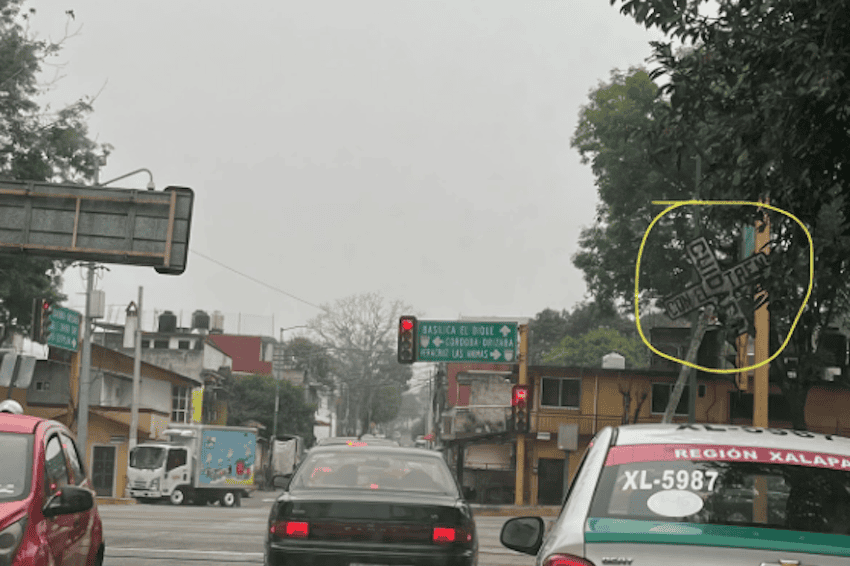
In case you’re wondering, let me put your mind at ease: no, there are no railway crossing gates. There might be a sign somewhere that indicates there’s a track there, but honestly, if there is it doesn’t stick out enough to be memorable.
Wait, I found it!
So how do you know a train is barreling down the tracks? Well, they’re usually pretty good at blowing the train whistle when they know they’re about to pass a highly-trafficked area. Also, you might see it if you turn your head. Those two indicators are about it.
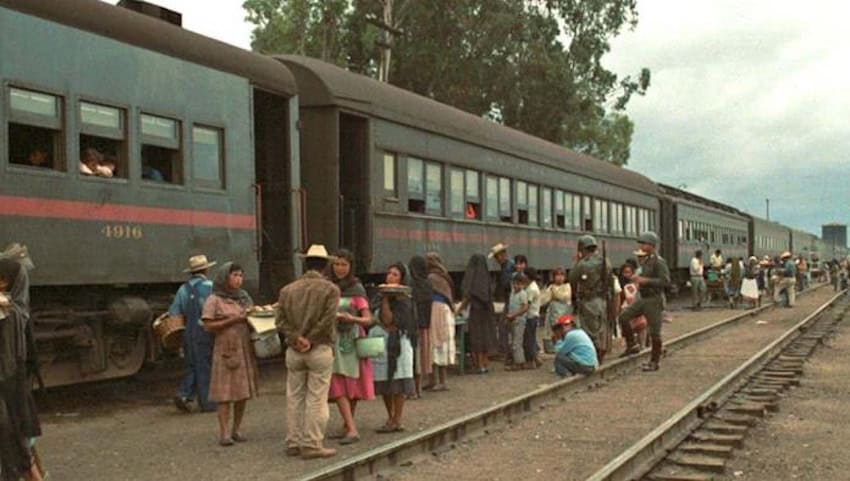
Like many countries in the Americas, passenger train service was a big deal in the 19th and 20th centuries in Mexico. In 1937, President Lázaro Cárdenas nationalized Mexico’s train service, creating the Ferrocarriles Nacionales de México (the Mexican National Railroad).
Alas, the automobile increased in popularity and affordability as the 20th century wore on, and passenger trains became less and less utilized.

Regular passenger train service ended in Mexico with the 1995 Constitutional Railway Reform. According to Infobae, “The scarcity of public resources…and the conviction that state ownership did not guarantee better management of the sector” were the main arguments in favor of privatizing the railways. Private companies would improve the now pretty decrepit rail infrastructure in ways the government couldn’t (or wouldn’t) afford to. Those private companies, however, were only interested in maintaining freight service. It was the final nail in the coffin for passenger service.
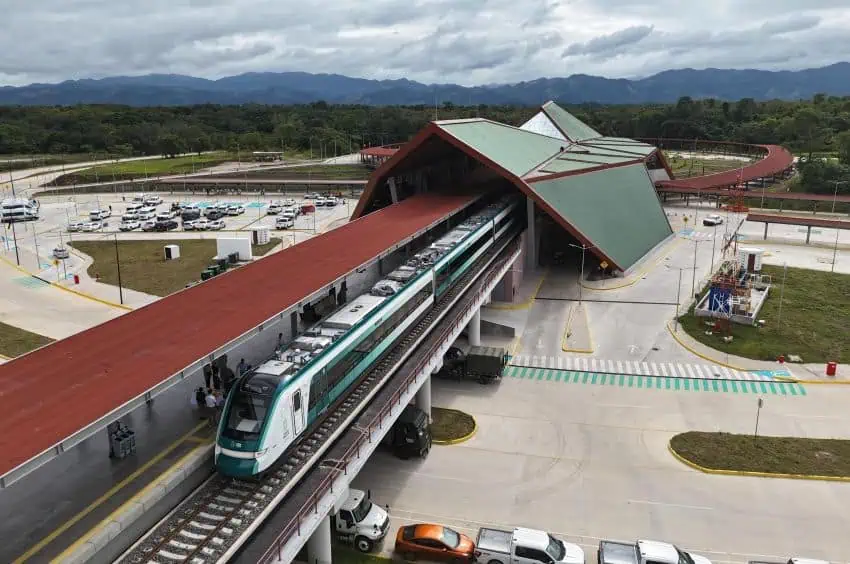
Those students of more recent history, though, know that one of former President López Obrador’s (2018-2024) biggest goals was reviving passenger train travel. His two biggest signature projects in this area were of course the Maya Train and the Interoceanic Railroad.
Now, I’m on Team Train. Anything that helps get us to a point where more public transportation is available is, to me, a good idea. In a place absolutely stuffed to the brim with individual vehicles, it’s nice to know that the government is prioritizing opportunities to travel efficiently and quickly around the country. Every person on a train or a bus, after all, is one less stuck in traffic (well, a bus can get stuck in traffic, but you know what I mean).
How are the trains doing? Well…
Let’s set aside the recent derailment for a moment (we’ll get to it later, I promise).
The Maya Train is working, after having gone over budget and facing backlash from environmentalists and local communities. Well, what’s new? Most big projects in most places in the world take longer than they’re meant to and cost more than originally estimated. That part gets a resounding shrug from me. And of course, any project is always going to have its detractors; things will be lost when a big project that requires land comes to town. I’m not here to argue whether it’s a “net good” or a “net bad,” for now. It needs more evaluation time.
Is it making money? No, and likely won’t for a couple of decades. But you know, sometimes you just have to build it and hope they’ll come. After several decades of Mexicans having zero access to passenger train travel, it’s going to take a while for them to start considering it a real option. I mean at this point, a couple of generations of Mexicans have never been on a train at all. It could take some time to get people using it.
It could especially take people a while to start using it if they think they might die when they’re on it.
I’m speaking now, of course, of the terrible end-of-year tragedy on the Interoceanic route that killed 13 people. (It was certainly not the only train-related accident of late. As Mexico regrows its railway system, accidents with other vehicles have been increasing).
We still don’t know exactly what happened. We do know, though, that some passengers perceived the train as going “extra fast” as it approached the curve. Was that it? I’m literally on the edge of my seat waiting for those results.
I have my suspicions, of course. Like many government projects — especially the “incorruptible” Morena ones — corners get cut and questionable decisions are made. (For some good reporting on how exactly, check out El País’s articles on irregularities both with the Maya Train and the Interoceanic Train.)
Sometimes it seems that asking Mexican politicians to not engage is corrupt behavior is like asking toddlers to hang out unsupervised in a candy shop and not eat anything. Really, what do we think is going to happen?
Also, can someone tell me what the freaking Navy knows about trains? Serious question.
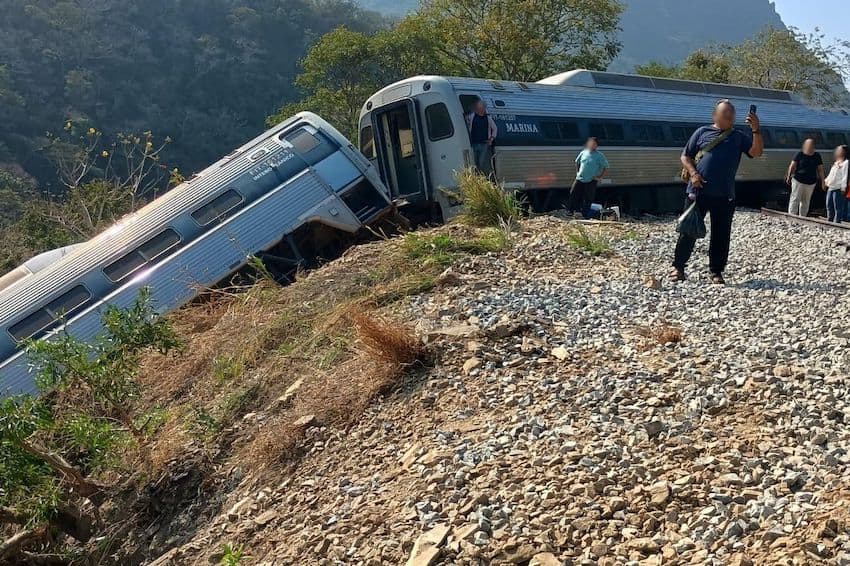
So if we want trains to regain their footing (or railing, as it were), what do we need to do? At least regarding this accident, Sheinbaum promised to “…look for the best certification body so that, if they make recommendations on what needs to be done about these curves or … to make the route safer, we can take them into account.”
Okay, good. Good start. Certification body. Might I suggest a certification body from…China? Japan? France? Really, just anywhere where they already have admirably functioning train systems in place? And then could they stick around and help us build out the system once what’s here already is fixed? At the very least, how about an exchange program: we send Mexican railroad engineers to China for a few years to learn from the best.
Because you can’t get people to trust you unless you prove yourself trustworthy. And unfortunately at this point, even those of us who really, really want to see these train projects succeed would be hesitant about boarding.
And for God’s sake, can we please get some of those automatic railway crossing gates? Maybe it’s just me, but I think drivers should be told pretty dramatically if they’re in danger of getting run over by a train. Then there are the bozos who think they’re Speedy Gonzalez and can outrun it that need to be physically stopped.
Passenger trains could be all over Mexico. But to get people to actually use them, they’ve got to have a reasonable assumption that getting close to or on them will not lead to death.
Sarah DeVries is a writer and translator based in Xalapa, Veracruz. She can be reached through her website, sarahedevries.substack.com.