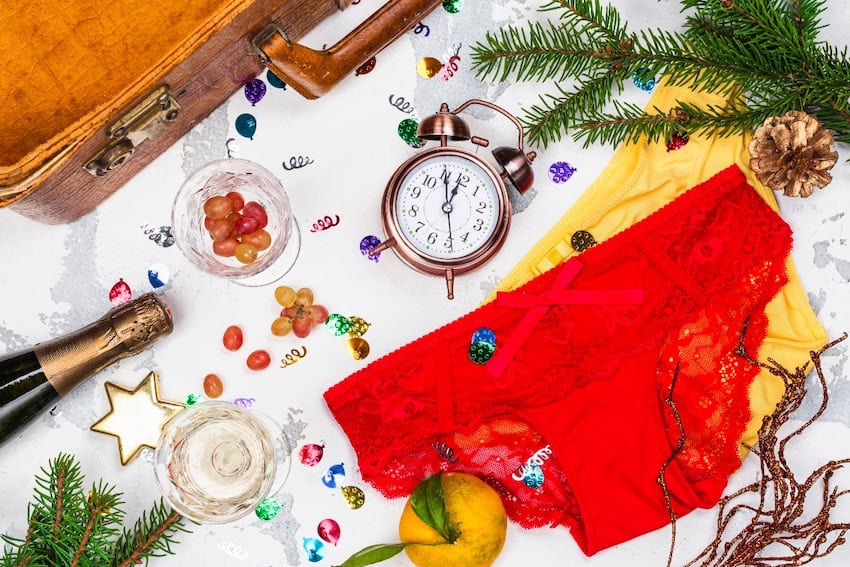
There’s a moment every 31 December in Mexico when time goes a bit wobbly. Midnight is creeping closer, the kitchen is full, la matriarca de la familia is shouting that the grapes aren’t ready, and Tía María is absolutely convinced that this year, this perfectly forming new year, is the year everything changes.
New Year’s Eve in Mexico isn’t a quiet, reflective pause with a classy drink and a vague promise to be better. It’s loud, crowded, emotional, deeply superstitious, and weirdly optimistic. It’s part family reunion, part spiritual reset, part performance art, and everyone understands the assignment.

Let’s start with the main event
At exactly midnight, people attempt to eat 12 grapes in 12 seconds, each grape representing a wish for one month of the coming year. If a grape tastes sour, that month might come with a bit of negativity. If it’s sweet, so too is the wish, so too is the month.
Someone always underestimates the size of the grapes. Someone else forgets to make wishes altogether and ends up frantically whispering things like “health, money, world peace” while chewing at record speed. There’s usually one person who finishes early and feels unbearably smug, and another who’s still chewing grape number nine well into the New Year, refusing to accept defeat.
But it doesn’t matter, because the wishes count anyway. Mexico is generous like that.
Then there’s the underwear
If you didn’t grow up celebrating New Year’s in Mexico, the underwear situation may come as a bit of a surprise. Here, your destiny starts in your drawers, both the ‘chest of’ and the wearable kind.
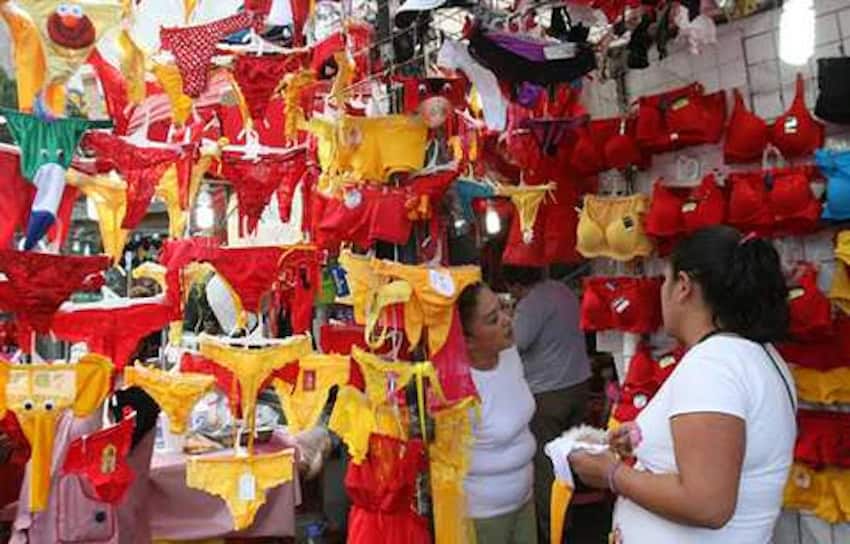
Red underwear is for love. Yellow is for prosperity. White is for peace. Green is for health. The colour choice is a direct conversation between you and the universe, and it’s best not to be vague.

Markets fill up with bright, lacy, aggressively symbolic underwear. Abuelas buy it for their grandkids. Amigas gift it with a wink. No one’s embarrassed, because this is serious business.
Some people hedge their bets and wear multiple colours. Some commit hard to one goal. And some insist they don’t believe in any of it, while quietly choosing yellow, just in case.
If you step outside just as the clock strikes midnight, you may notice something else entirely. People are running with suitcases.
Don’t panic! They’re not fleeing the party. They’re manifesting travel.
The tradition is simple. You grab a suitcase and take a quick walk or run around the block at midnight to invite adventure in the coming year. The size of the suitcase varies, but the enthusiasm does not.
Teenagers sprint, laughing. Adults jog with determination. Someone’s padre takes it far too seriously and disappears for a full five minutes. There’s always at least one person who’s never left the country but runs anyway, hopeful, breathless, dragging a suitcase that’s mostly empty but full of intention.
In some parts of Mexico, the year doesn’t just begin, it burns.
Families make an año viejo, a dummy stuffed with old clothes, cardboard, and sometimes handwritten notes listing everything they want to leave behind. Bad habits, bad luck, bad years, and even bad relationships are fed to the fire at midnight.
Watching it burn is dramatic and oddly peaceful. The air smells like smoke and closure. People stand quietly for a moment, faces lit by the flames, as if the fire might actually understand what it’s being asked to destroy. For a few seconds, it feels like it does.
New Year’s Eve food in Mexico is not subtle.
Tables groan under bacalao, romeritos, pozole, tamales, and dishes that only appear once a year and somehow take three days to prepare. Everyone swears they’re too full, yet everyone eats more anyway.
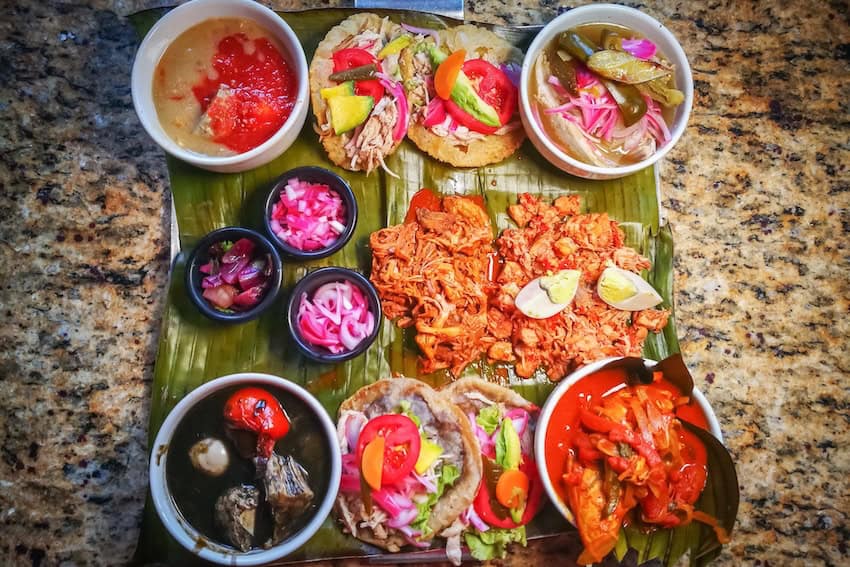
Plates are refilled. Recipes are debated. Someone insists it tastes better this year; someone else insists it doesn’t. Both are lying, because it always tastes of tradition, exactly as it should.
As midnight arrives, fireworks erupt across Mexico’s largest cities and smallest pueblos alike. The noise is unavoidable, echoing through streets and patios, lighting up the sky whether you’re ready or not. Music spills out from everywhere. People hug with the long kind of intention where you feel everything from the year you’ve just survived.
Some cry. Some laugh. Everyone is fully present.
No matter how old you are, New Year’s in Mexico is a family affair. Even if you swear you’re going out later, you start at home.
There are toasts from tíos who never usually give speeches. Resolutions are announced loudly and forgotten immediately. There’s advice you didn’t ask for, and those long hugs you didn’t realise you needed.
Someone brings up last year’s messes. Someone says, “This year will be my year.” And everyone believes it.
New Year’s Day is slow
Leftovers reappear. Coffee is strong. Stories from the night before are retold with generous embellishment. There’s a feeling of reset, and not because everything is suddenly perfect, but because the year feels open. Like a blank notebook you fully intend to write in neatly this time.
New Year’s in Mexico isn’t about perfection or becoming a brand-new person overnight. It’s about hope with humour. It’s about saying, “I don’t know what’s coming, but my grapes and I are ready.”
It understands that life is a bit frantic, so celebrations should be too. It understands that superstition and laughter can coexist. It understands that starting fresh doesn’t require silence, but rather fireworks, running shoes, and red underwear.
And maybe that’s why it feels so good.
Because when Mexico welcomes a new year, it kicks the door open, eats twelve grapes, grabs a suitcase, and dares you to believe, even for a moment, anything is possible
And as with most things, following Mexico’s lead is a very good idea.
Charlotte Smith is a writer and journalist based in Mexico. Her work focuses on travel, politics, and community. You can follow along with her travel stories at www.salsaandserendipity.com.