Seasoned cooks know without thinking that certain combinations just “work:” things like apples and cinnamon, say, or tomatoes, basil and delicate mozzarella cheese.
In Mexico, though, you’re likely to encounter lots of new veggies, fruits, grains, spices and herbs — and new ways of combining them with more familiar ingredients — that will stretch your culinary acumen in delightful ways.
Papaya is one of those things that have a very different personality in Mexico than we foreigners are used to. Who knew there were so many varieties, with such subtly different flavors and textures?
Papayas here are a far cry from the grown-for-commercial-shipping varieties you get up north. They’re kind of like tomatoes; those grown for export will never have the flavor or mouth-feel that a locally grown, sun-ripened papaya will. Trust me on this.
Some taste like a vanilla pear, but with a softer, almost melt-in-your-mouth pillowy feel; others are more firm, with more melon-like flavors.
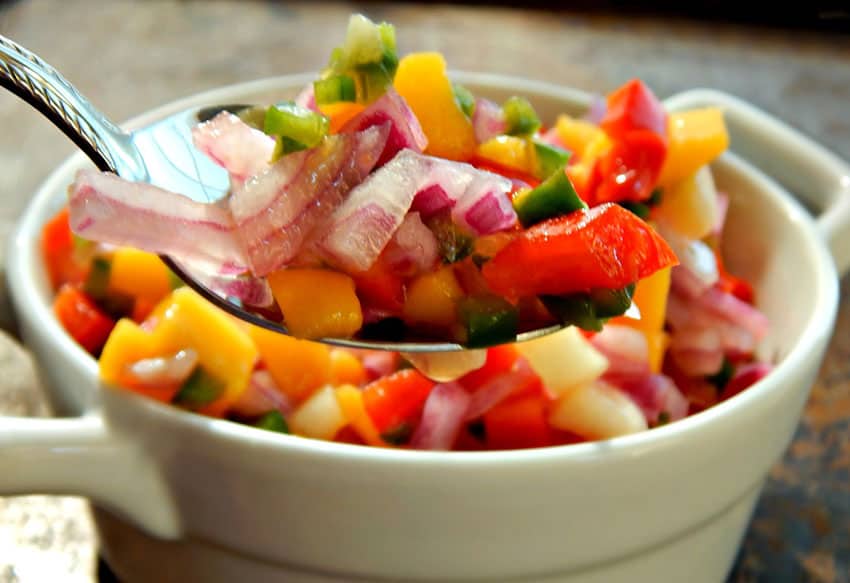
Without going into the different names and seasons, you can explore the world of papayas by asking the vendor where they’re from, and by choosing fruits with different shapes (which vary wildly, from long and tuber-like to rounder, eggplant shaped and everything in between). Some will have seeds; others won’t.
Another important thing to know is that papayas must be ripe – very ripe — to show off their best flavor. How to tell? Local growers and housewives I’ve asked all say the same thing: papayas should look almost rotten on the outside to have the sweetest flavor. Sounds weird, I know, but try it and see.

The first recipe has become a stand-by for me during the summer months when it’s just too hot to cook but I still want a filling meal. Using some of the most popular ingredients in Mexican cuisine, this salad is cool and refreshing and the tangy-sweet flavors and textures are deeply satisfying.
It’s best if you cook the beans yourself, but if that’s not possible, ask at your local tiendita for “frijoles de la olla” – home-cooked beans.
Bean, basil, papaya & rice salad
Salad
- ¼ cup finely chopped red onion
- 1-½ cups cooked Peruana or Mayacoba beans*, drained, liquid saved
- 3 cups cooked Basmati rice
- 2 large carrots, shredded
- 2 tomatoes, diced
- ¼-½ ripe papaya, cut into small cubes
Dressing
- 2 Tbsp. fresh lime juice
- 2 Tbsp. red wine vinegar
- ¼ tsp. each salt & pepper
- 2-3 Tbsp. finely chopped fresh cilantro
- ½ cup finely chopped fresh basil leaves
- 1 clove garlic, minced
- ¼ cup + 1 Tbsp. extra-virgin olive oil
Mix together all dressing ingredients. Toss onions, beans, rice, carrots, papaya and tomatoes together. Pour dressing over all, stir and let sit for 20-30 minutes. Makes lots, 6-8 servings.
* If these beans aren’t available any bean or mixture of beans will do.
Papaya salsa
- 1 medium papaya, seeded, peeled & chopped fine
- 1 red bell pepper, seeded & chopped fine
- 1 onion, chopped fine
- 6 Tbsp. lime juice (4-6 small limes)
- ¼ cup fresh pineapple juice
- ¼ cup fresh chopped cilantro
- 1 clove garlic, minced
- 1 jalapeño, seeded, chopped fine (or to taste)
- Optional: 1 cup cooked or canned black beans
Combine all ingredients and mix well. Refrigerate until served; use within eight hours.
Janet Blaser has been a writer, editor and storyteller and fortunate to write about great food, amazing places, fascinating people and unique events. Her work has appeared in numerous travel and expat publications as well as newspapers and magazines. Her first book, Why We Left: An Anthology of American Women Expats, is available in paperback and as an ebook on Amazon.