The Federal Attorney General’s Office (FGR) is investigating the former first gentleman of the state of Baja California for crimes related to arms trafficking, drug trafficking and money laundering.
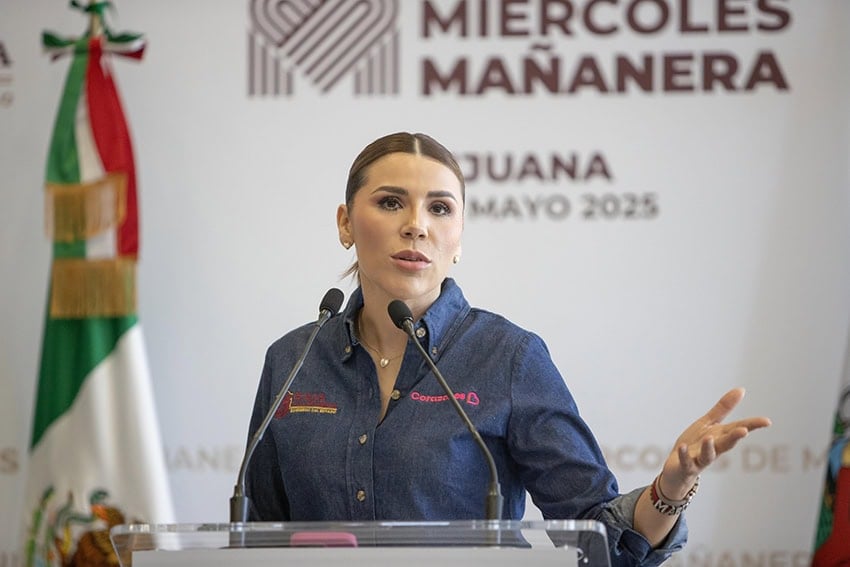
Governor Marina del Pilar Ávila on Wednesday confirmed that Carlos Torres is the subject of a probe that stemmed from an anonymous complaint implicating her ex-husband in a plot to allow a faction of the Sinaloa Cartel to operate in the northern border state.

After referring reporters to a statement issued by Torres (in which he called the accusations “slanderous”), Ávila said she is confident that the FGR “will conduct a thorough investigation and the facts will be clarified.”
Last May, the U.S. government revoked the governor’s and her then-husband’s tourist visas. At the time, Avila said the decision by the U.S. government was “neither an accusation nor an investigation.” The news was significant, however, as it represented the first time in recent history that a sitting Mexican official was denied entry to the U.S. In following months, dozens of Mexican politicians had their U.S. visas revoked by the Trump administration.
According to N+, the news division of the Grupo Televisa-Univision media conglomerate, the Organized Crime Prosecutor’s Office received a complaint on June 11, 2025, that Torres received US $150,000 a month from Pedro Ariel Mendivil García, former security minister for the Mexicali City Council, to allow the Los Rusos Cartel to operate in the northern state.
By then, Torres had stepped down from his honorary posts and in October the governor and he began divorce proceedings.
N+ identified Luis Alfonso Torres, Carlos’ brother, as the alleged leader of the criminal network under investigation, reporting that Luis “directed the administrative operations of illicit funds through companies and support for political campaigns in Mexico.”

The network allegedly carried out extortion by seizing merchandise or shipments and demanding millions of dollars for their release at state customs offices. The payments were then allegedly sent to a local notary. The network is also accused of trafficking in weapons, money and drugs.
Among the names mentioned in the file as subjects of investigation are high-ranking state officials from the Tax Administration Service (SAT) and Customs, as well as mayors and municipal leaders. Also appearing is Sen. Armando Ayala Robles, the former mayor of Ensenada, Baja California.
Carlos Torres was a member of the National Action Party (PAN) for 20 years during which time he was a state congressman (2016-2019), competed to be mayor of Tijuana in 2010 and served as a federal deputy (2006-2009).
In February 2025, Torres resigned from the PAN and joined Morena, the dominant party in Mexico. Ávila and Sen. Ayala are also members of Morena.