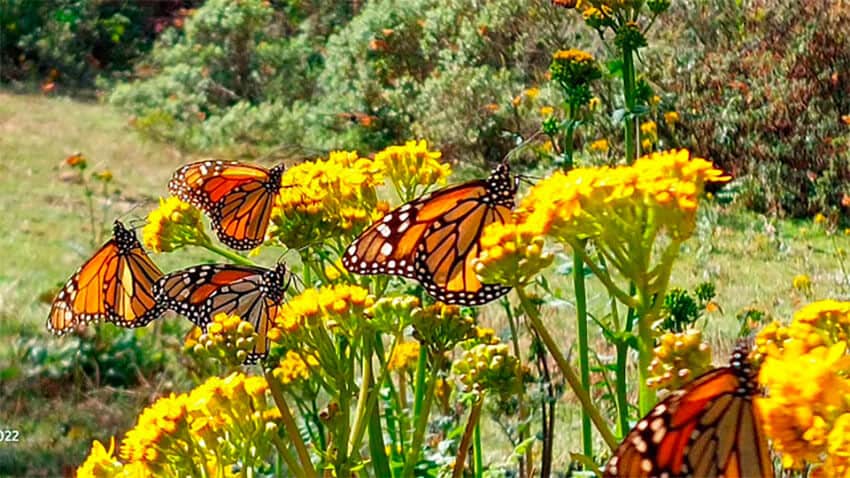
A reforestation project is underway at the El Rosario monarch butterfly sanctuary in Michoacan that will see the planting of 1 million trees, as authorities try to reverse the damage done to the sanctuary and surrounding area by illegal logging.
El Rosario is just one of the smaller sanctuaries that are part of the Monarch Butterfly Biosphere Reserve which hosts 14 major butterfly colonies (although each year the number of colonies varies) that fly in each winter from the United States and Canada. The butterflies that winter here — more than 1 billion — are key pollinators, important for every ecosystem they pass through on long their migration route. The biggest threat to their 4,000-kilometer yearly trek is loss of habitat, which this kind of project attempts to mitigate.
The reforestation and other activities will take place from July 1-14 and involve all the municipalities in the vicinity, said mayor of one of them, Amado Gómez González of Ocampo. The campaign will also celebrate Mexico’s national tree day (July 8) in hopes of teaching those in attendance about the importance of reforestation and the loss of habitat for the monarch butterflies — one of the area’s greatest tourism attractions and a vital element of the area’s ecosystem.
Gómez said that increased police presence has meant a 70% drop in illegal logging in the last five years, adding that three illegal loggers were caught by police just last week. Some of the logging is carried out by local citizens for firewood and farming as much of the land is not owned directly by the government but still in the hands of ejidos and small communities.
Other areas of the forest, where once communities had a presence and certain control, have become a no man’s land that is witness to crime, extortion, and illegal avocado farming by organized crime groups.
Gómez reported that in the more central areas of the sanctuary they have seen a loss of up to 40% of trees to illegal logging and in areas distant from human contact and surveillance that number can rise to 80%. Beside being an important green lung in this part of the country, the sanctuary and surrounding forest is also responsible for 30% of the region’s water, which includes water sent to Mexico City.
Gómez called on state officials to take a portion of the money that it charges the capital for that water and spend it on the maintenance of the sanctuary.

With reports from Mi Morelia and Nacla