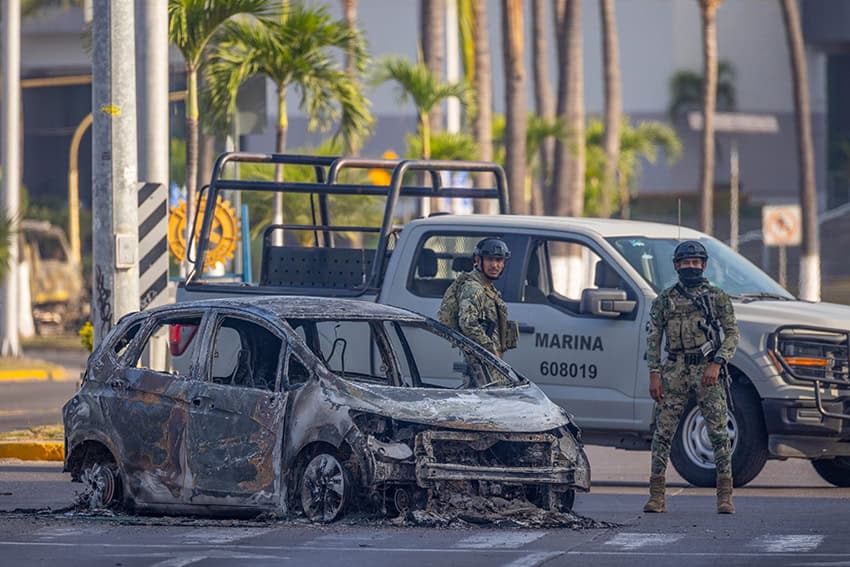
As we assess the aftermath of the Feb. 22 events in Jalisco, the consistent narrative from most pundits and experts is that we should now expect a new wave of violence across the country. Anyone who has watched the Netflix Narcos series as well would expect this, and the sad reality is that the trend for decades has been just that. “If the leader is taken out, the violence will only increase as others vie for control and until new leadership is regained,” conventional wisdom dictates.
But what if this time is different? What if, this time, history did not repeat itself?
At the risk of being called overly optimistic, I am going to lay out my case for why I think this time could be different. Of course, it would be easy for me to write what everyone else already has, caution against any optimism, and say I now expect a spiral of increasing violence. But given that pretty much everyone has already said exactly that, I see no point. And in fact, I think there is a real chance that things will be different this time. Here are ten reasons why:
1. President Sheinbaum has demonstrated — with measurable results — that she is a competent, data-driven leader who is genuinely changing course.
She has demonstrated time and time again that she is changing course from her predecessor AMLO when it comes to dealing with the cartels. Do we need any further evidence than this past Sunday that the “Hugs, not bullets” strategy is over? Her administration is clearly working off of a different playbook. Increased arrests, extraditions of over 100 high-level cartel members to the U.S., drug lab busts, cracking down on gun smuggling — this administration is on the offensive.
And for those tempted by the frequently stated, intellectually lazy shortcut of dismissing Sheinbaum as a “narco-controlled president”: The data simply doesn’t support it. Under her watch as Mexico City’s mayor beginning in 2018, she put data at the center of a comprehensive crime reduction program — and the city cut serious felonies by nearly 50%. Only 7% of Mexico City residents considered the capital safe when she took office; by the time she left for the presidency, the city had undergone a measurable transformation. Fast-forward to her national tenure: Mexico recorded a homicide rate of 17.5 per 100,000 residents in 2025 — the lowest rate since 2016 — and compared to a peak of 29 per 100,000 in 2018.
2. The cartels’ own business evolution may be working against them.
Here is an underappreciated dimension of this moment: Mexico’s cartels have, over the past decade, diversified well beyond drug trafficking into many other “businesses.” Why does this matter? Because the more a criminal organization deepens its roots in legitimate or semi-legitimate commerce — avocados, fuel, internet service, mining — the more it has to lose from an all-out war. There is an increasingly rational economic incentive for what remains of these organizations to stabilize rather than escalate. The transition from violent narco-enterprise to diversified criminal conglomerate creates a complex but real preference towards order. Quite simply, chaos is bad for business.

3. Mexican Security Secretary Omar García Harfuch is unlike previous leaders who have held this role.
He has trained in the United States, is credited with decreasing homicides by nearly 50% in Mexico City while previously working for Sheinbaum, and has even been the victim of a failed assassination attempt by the CJNG cartel in the year 2020 as he was on the way to work. Anyone who survives a 400-bullet attack on his vehicle while getting shot several times, as Harfuch did, and then goes on to take on an even higher-profile job clearly is cut from a different cloth.
4. President Trump and his administration have put tremendous pressure on the Sheinbaum administration and made clear that the situation in Mexico with the cartels must change.
They have consistently threatened to take action if Mexico does not. They have linked the renewal of the USMCA agreement to improved security in Mexico. This has made Sheinbaum’s job much more difficult, but it has also given her leverage to take action to demonstrate to the U.S. that Mexico can clean up it’s own house without sovereignty being compromised. Trust is back again, and intelligence sharing between the two countries is happening. Both countries have recently talked about cooperation being at “unprecedented levels.”
5. U.S. Ambassador Johnson is pressing for improved security — and has the experience to back it up.
U.S. Ambassador to Mexico Ronald Johnson’s previous experience was in the military as a Green Beret and special-operations specialist, he was a CIA officer, and most recently was the U.S. ambassador to El Salvador. An improved North American security situation and more cooperation against the cartels is at the top of his agenda. He has shown that the U.S. is willing to be a partner with Sheinbaum, but also been consistent in that improved security must be a more urgent priority. This could not be a sharper contrast to his predecessor who was often seen (and criticized) for being more aligned with former President AMLO’s non-security related priorities.
6. Artificial intelligence, data analytics and drone technology are fundamentally changing the surveillance equation.
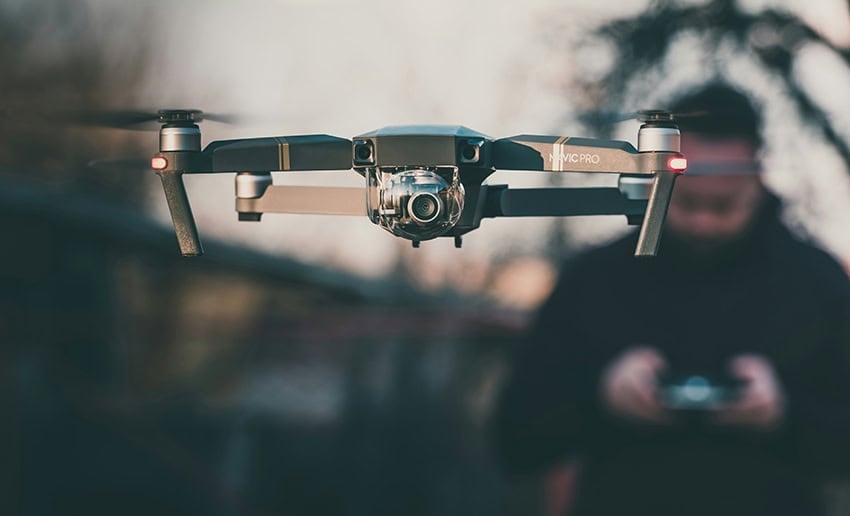
New technologies like artificial intelligence and drones are changing the game. The ability for government agencies to monitor cartel movements and provide intelligence previously unavailable is improving on a daily basis. It’s just not that easy to hide anymore. The U.S. government is deploying technologies from companies like Palantir that allow them to correlate real-time intelligence across agencies — creating the ability to cross-reference financial flows, encrypted communications and physical movement patterns simultaneously. AI-driven systems can detect patterns in cryptocurrency transactions used for cartel financing, monitor dark web communications and flag unusual logistics activity — so tasks that would have taken human analysts weeks or months can now be surfaced in hours.
7. However you might feel about the “Donroe Doctrine,” it’s clear that the United States is turning its attention back to Latin America after decades of neglect.
U.S. Secretary of State Marco Rubio speaks Spanish and has Latin heritage. The U.S. military has been active in blowing up boats suspected of transporting cocaine in the Caribbean and Pacific Ocean. The administration has already taken action in Venezuela, and Cuba is in its sights. The days in which political, business and cartel leaders in Latin America could be comforted with that thought that the U.S. was distracted elsewhere are over.
8. For the first time in history, the cartels have been formally designated as foreign terrorist organizations by the United States.
This is not a symbolic move. The FTO designation unlocks an entirely different legal arsenal — one that allows the U.S. to freeze cartel assets globally, prosecute anyone who provides material support to these groups (including bankers, lawyers and politicians), and apply the full weight of U.S. counterterrorism infrastructure to the problem. Previously, these tools were reserved for groups like Al-Qaeda and ISIS.
9. The pipeline of weapons flowing into Mexico from the United States is finally being addressed.
For decades, the uncomfortable truth was that the guns fueling cartel violence were largely coming from the United States. Estimates suggest that as many as 90% of weapons seized in Mexico originated north of the border — and for decades, relatively little was done about it. That is starting to change. Increased cross-border surveillance, combined with the U.S.’s own interest in demonstrating tangible cooperation on security, means that the flow of arms is being monitored and disrupted at levels not seen before.
10. The upcoming World Cup provides an extremely powerful motivator to clean things up and show that Mexico is worthy of the world stage.
There is no bigger stage for the country to show that it is a safe destination for business investment and visitors from around the globe. Mexico has a once-in-a-generation opportunity to show itself off to the world.
Of course, progress rarely occurs in a straight line, but for the reasons I laid out above, I think that there is a real chance that things will be different this time. Let’s hope for the best!
Stay tuned to Mexico News Daily to stay educated and informed about Mexico.
Travis Bembenek is the CEO of Mexico News Daily and has been living, working or playing in Mexico for nearly 30 years.