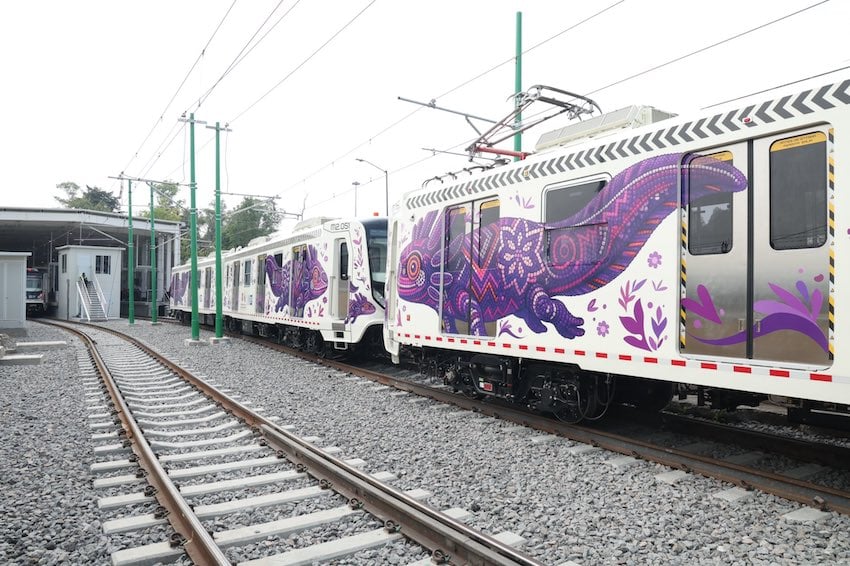
Mayor Clara Brugada on Monday inaugurated the “El Ajolote” light train connecting the Taxqueña transportation hub with Xochimilco in southern Mexico City.
The new service maintains the original route of the Mexico City Tren Ligera (Light Rail, opened originally in August 1986), but will now operate with 17 new electric trains, boosting the total number to 35, and a modernized system that will reduce wait times and increase passenger capacity.
Presentamos la modernización integral del Tren Ligero “El Ajolote”, una línea de 18 estaciones que dará servicio a 250 mil personas cada día.
Con 17 nuevos trenes eléctricos y estaciones renovadas, fortalecemos una movilidad más rápida, segura y sustentable para el sur de la… pic.twitter.com/9at5AOhuRD
— Clara Brugada Molina (@ClaraBrugadaM) May 12, 2026
All 18 stations along the 13-kilometer track received a facelift as part of the 2.4 billion-peso (US $139 million) project.
The train also features a new image — the now ubiquitous ajolote, an amphibian endemic to the Valley of Mexico — which Brugada described as “a living metaphor for a city that is being transformed.”

The El Ajolote light rail system is expected to be a key transportation system for the upcoming World Cup, as its service extends from the Taxqueña Metro station to Estadio Banorte (Azteca), the site of five games.
Brugada said that while the light rail will serve to enhance the World Cup experience for visitors, “the infrastructure will remain as a long-lasting benefit to residents.”
The new service has the capacity to transport 250,000 people daily and travel time from end-to-end will be reduced from 40 minutes to 30 with four-minute intervals between trains, each of which has the capacity for 750 commuters.
The renovations include a new video surveillance system, enhanced security alerts and station announcements, regenerative braking, as well as a new traffic light system along the route.
Is Brugada just ajolote-washing the city?
Few government projects escape intense internet criticism, and the light rail modernization is no exception. In this case, however, the attacks have been aimed more at Brugada’s extensive use of the ajolote image than the project itself. What is being called the “ajolotl-ification” of Mexico City (a coinage based on an alternative spelling of the species closer to the original Nahuatl name) has prompted mockery and a flood of memes on social media.
Critics have complained that despite pot-holes, a lack of street signs and other transportation infrastructure shortcomings (highlighted by the flooding in the Azcapotzalco borough on Monday night), the city has found the time and resources to paint murals and adorn public spaces with ajolote-themed art all over the capital.
Mayor Brugada took on the mockery directly.
“Some have said, out of prejudice or classism, that we are ‘ajolotling’ the city,” she said Monday. “If ‘ajolotling’ means filling what was once gray with color, transforming public spaces and guaranteeing access to services for the benefit of thousands of people, then yes, we are ‘ajolotling’ the city.”
With reports from Chilango, Infobae, Proceso and La Jornada