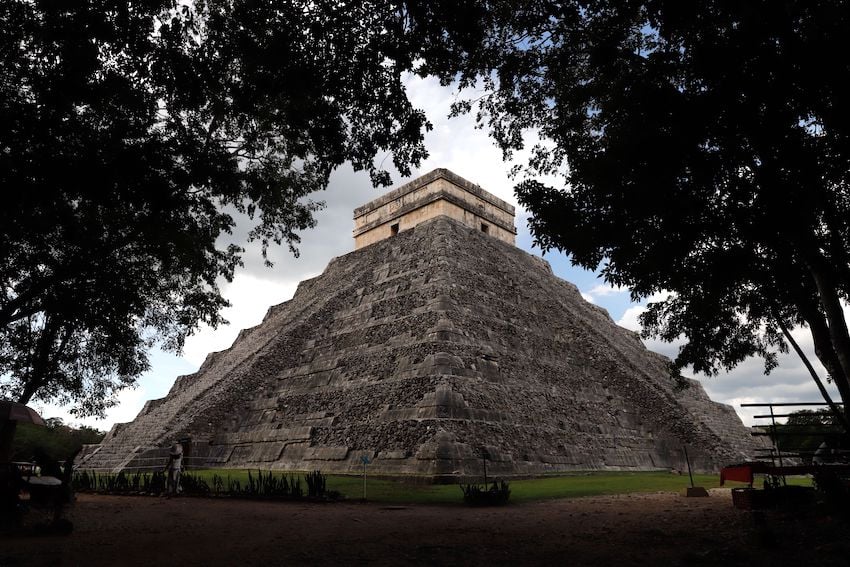
Chichén Itzá reopened to tourists Monday after a two‑week closure that left thousands of visitors unable to enter and caused millions of pesos in losses for the tourism industry in Yucatán and Quintana Roo.
Mexico’s most-visited cultural attraction in 2025 closed May 18 amid a bitter dispute over the relocation of hundreds of vendors — who for years have sold their handicrafts and trinkets within the site, steps away from the ruins — and new regulations for the local tour guides who offer guided visits for a fee.
#YUCATAN Después dos semanas de permanecer cerrada, este lunes reabrió la zona arqueológica de Chichén Itzá. Artesanos comienzan a reubicarse en los sitios asignados por el @INAHmx @CulturYucatan Video AR pic.twitter.com/bJ2dDgMfYt
— Desde el Balcón (@desdebalcon) June 1, 2026
The shutdown of the archaeological site in Tinum, Yucatán, roughly a two-and-a-half-hour drive from Cancún, Quintana Roo, led to mass tour cancellations and what the Mexican Association of Inbound Tourism Agencies (AMATUR) called a “terrible image of Mexico.”
“Chaos at Chichen Itza with thousands of tourists unable to enter,” beamed a headline in Reportur. The tourism-industry news outlet reported that each day around 9,000 visitors were unable to enter.
Then again, the closure didn’t completely keep people out.

On one day when protesters blocked staff but waved roughly 1,000 visitors through for free, two foreigners were detained after jumping barriers and climbing the Temple of Kukulcán. With basically no security within the site, it was local artisans who reportedly called authorities.
The rogue climb echoed a 2025 incident in which a German visitor was detained for scaling the same pyramid.
Chichén Itzá’s gates reopened at 8 a.m. on Monday under a deal struck after 13 days of negotiations between the Yucatán government, the National Institute of Anthropology and History (INAH), artisans, tour guides and Tinum authorities.
Access is now exclusively through the new Visitor Assistance Center, known as CATVI.
Authorities pledged there will be no evictions and no increase beyond the 666 authorized vendors operating inside the complex.
Some 264 artisans agreed to move into stalls in a new handicrafts market that all visitors must pass through before entering via CATVI. Meanwhile, vendors on the causeway between Cenote Sagrado (Sacred Cenote) and the Temple of Kukulcán, also known as El Castillo, will remain in their current spaces.
Pablo Euán of the Indigenous Governing Council of Pisté said the council will oversee the reorganization of artisans and guide work areas.
In a statement, the council said reopening “represents a relief for hundreds of families” but stressed “the fight continues” for a community economic corridor and respect for collective rights.
Officials insist the closure of the old access, known as Old Parador, is irreversible, even as injunctions and community demands keep the conflict from being fully resolved.