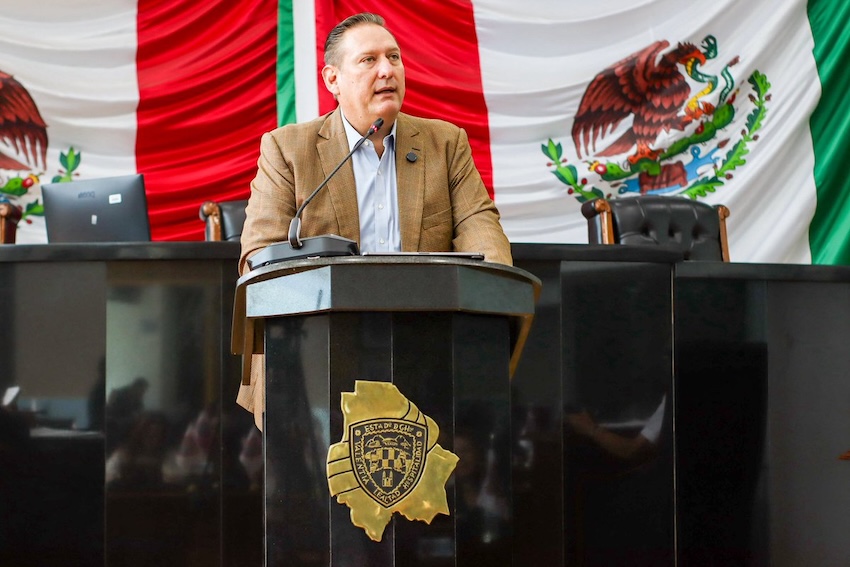
The northern border state of Chihuahua has become the first state in Mexico to ban the use of inclusive language in public schools, passing a legislative reform that has ignited debate nationally over language and identity.
Pushed and promoted mainly by members of the Partido Acción Nacional (PAN), the reform was approved 17-14 by the Chihuahua State Congress on Tuesday.
In amending Article 8 of the state’s education law, the legislation will prohibit inclusive language and promote the correct use of Spanish grammar and spelling rules in classrooms.
“We did it! No more ideologized language in the classrooms or woke confusions,” Carlos Olson San Vicente, a member of the Chihuahua State Congress, wrote on social media after the vote. “Only the biological truth that only boys and girls exist, not ‘niñes.’ Common sense over ideology!”
Olson is a deputy from PAN who authored and promoted the amendment. He is also a member of the state’s legislative committee for Education, Culture, Physical Education and Sports.
The reform makes Chihuahua — nicknamed “El Estado Grande” for its status as Mexico’s largest state by area — the first Mexican state to ban inclusive language in schools.

In other words, there will be no more classroom usage of gender-neutral terms such as “amigue,” “amigx” or “amix” in place of amigo or amiga; “todxs” “todes” or “tod@s” rather than todos or todas; “elle” instead of él or ella.
The common idea in those often awkward coinages is to provide options for avoiding gender-specific terms (usually male) in gender-neutral contexts.
For example, a Spanish noun ending in -os is generally masculine plural, as in todos (all men). But traditional standard Spanish also uses the masculine todos as a plural for a mixed group of men and women, which in recent years has rubbed many the wrong way. Hence the invention of “todxs” “todes” or “tod@s.”
On the legislative floor, Olson argued, “Let the new generations not lose command of their native language, nor should the teaching of Spanish be diluted by the influence of digital trends or linguistic formations that are foreign to the norm of the language.”
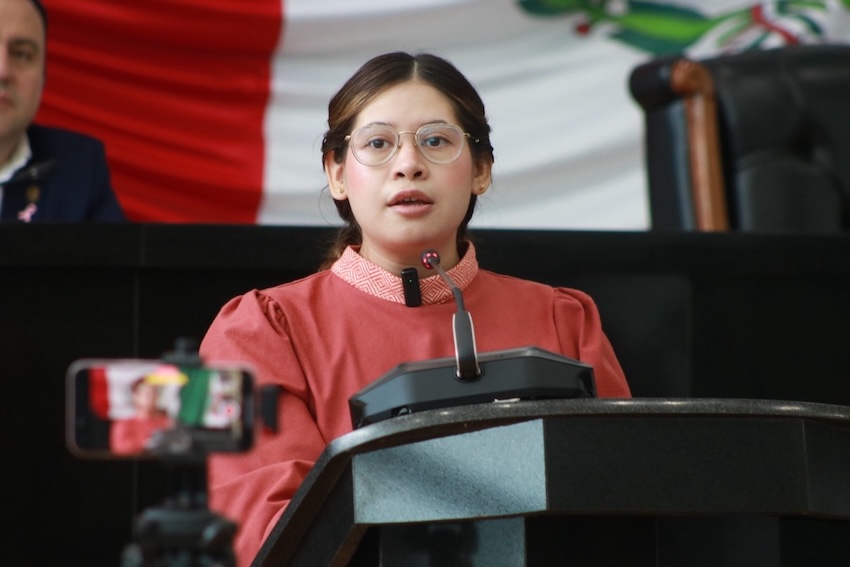
Opponents, including Jael Argüelles, a member of the Chihuahua State Congress representing the Morena party, criticized the law as regressive.
“Language fulfills a very specific function: to communicate,” she said. “Language is a living, evolving and ambiguous system that changes daily to name new realities, new identities and ways of existing.”
She said the reform makes invisible the struggles of women, children, Indigenous peoples and the LGBTTTIQ+ community “by imposing rigid criteria on language use.”
The vote occurred only months after the nation’s Senate approved a constitutional reform incorporating gender-inclusive language in national law.
Olson said the reform in his state follows similar decisions in countries such as France, Argentina and just days earlier in El Salvador. He asserted that “schools should teach grammar rules, not ideological language that indoctrinates our children and hinders learning.”
However, according to critics, the approved initiative does not clearly explain what constitutes inclusive language, or how its use distorts language and/or hinders learning.
Currently, there are no mainstream media reports of other Mexican states moving toward a similar legislative ban, though groups and authorities in other states have debated the use of inclusive language.
With reports from Animal Politico, SDP Noticias, Líder Empresarial and El Financiero