Coronavirus stoplight map takes on softer hues as the latest wave continues its decline

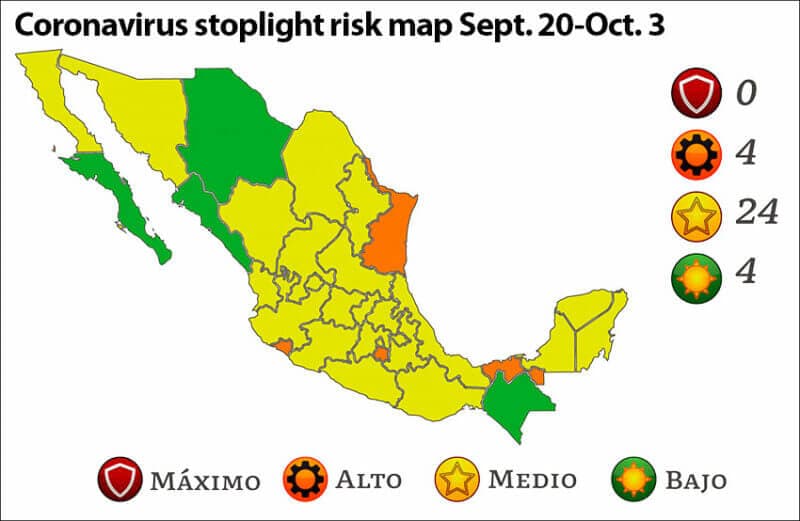
The declining third wave of COVID-19 is reflected in the new coronavirus stoplight risk map, issued Friday by the federal Ministry of Health.

More low-risk green and a lot more medium-risk yellow color the new map that takes effect on Monday. 

Baja California Sur and Sinaloa will be painted green, joining Chihuahua and Chiapas, while 24 states will be yellow, nine more than on the map issued two weeks ago.

At high risk and colored orange are four states, down from 13. No states are at maximum risk red.

Yellow states are:

  • Aguascalientes
  • Baja California
  • Campeche
  • Coahuila
  • Durango
  • Guanajuato
  • Guerrero
  • Hidalgo
  • Jalisco
  • Mexico City
  • México state
  • Michoacán
  • Nayarit
  • Nuevo León
  • Oaxaca
  • Puebla
  • Querétaro
  • Quintana Roo
  • San Luis Potosí
  • Sonora
  • Tlaxcala
  • Veracruz
  • Yucatán
  • Zacatecas

Painted orange on the new map are:

  • Colima
  • Morelos
  • Tabasco
  • Tamaulipas

Mexico News Daily

Have something to say? Paid Subscribers get all access to make & read comments.
Tamul Waterfall dried up

Why did the Huasteca Potosina’s picturesque Tamul Waterfall dry up?

0
State and federal authorities pulled out all the stops to get the Gallinas River flowing again to the waterfall site, including a total ban on upstream extraction for irrigation, but to no avail.

The MND Peso Index™: Is the Mexican peso over or undervalued against the US dollar?

8
The MND Peso Index™ is a new monthly economic indicator developed by Mexico News Daily that measures whether the Mexican peso is overvalued or undervalued against the US dollar.
The Mayab Highway connecting Mérida and Playa del Carmen

Mexico Infrastructure Partners announces plan to invest US $12B across key sectors

1
Bloomberg reported that around $8 billion of the firm's planned investment would go to renewable energy projects, some $2.5 billion would go to highway projects, $1 billion to midstream opportunities and $500 million to digital infrastructure.
BETA Version - Powered by Perplexity