Mexico addressed a key issue ahead of the US-Mexico-Canada (USMCA) trade agreement review, cobbling together an action plan for preferential trade with the U.S. in minerals deemed critical for the electronics and sustainable energy industries.
In a statement released Wednesday the Economy Ministry said the objective is “to ensure the supply of essential inputs for various key sectors of the industry, through binational cooperation.”
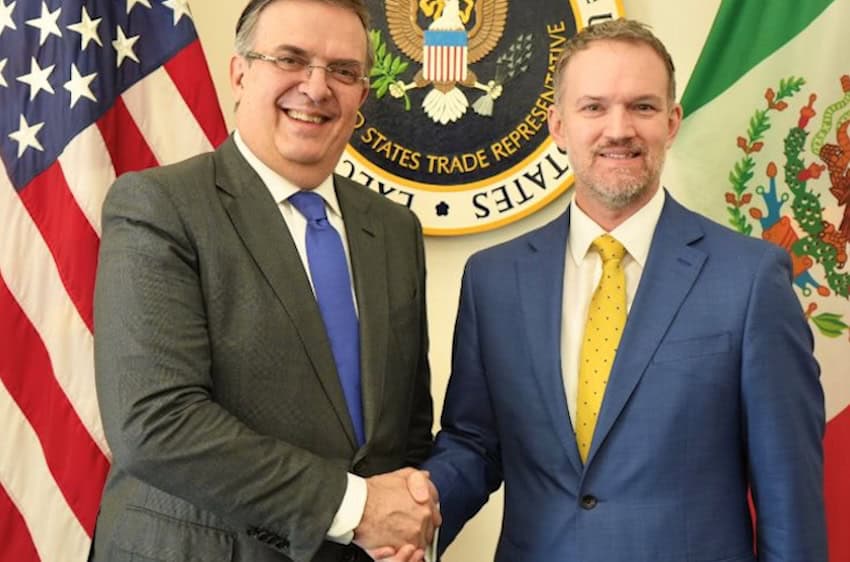
Economy Minister Marcelo Ebrard said talks with the Office of the U.S. Trade Representative (USTR) will continue within a framework of respect and adherence to the legislation of both countries.
“Since we are highly integrated with the United States, we have to support each other,” Ebrard said. “All cooperation efforts will be carried out within the framework of our sovereignty and with respect for our Constitution.”
For its part, the USTR said it will work to develop coordinated trade policies and mechanisms that mitigate critical mineral supply chain vulnerabilities, with the goal of ensuring the mutual resilience of supply chains.
“This work will include identifying specific critical minerals of interest, exploring adjusted minimum border prices for imports of critical minerals, and consulting on how to incorporate such minimum prices into a binding plurilateral trade agreement,” the USTR explained in a brief statement.
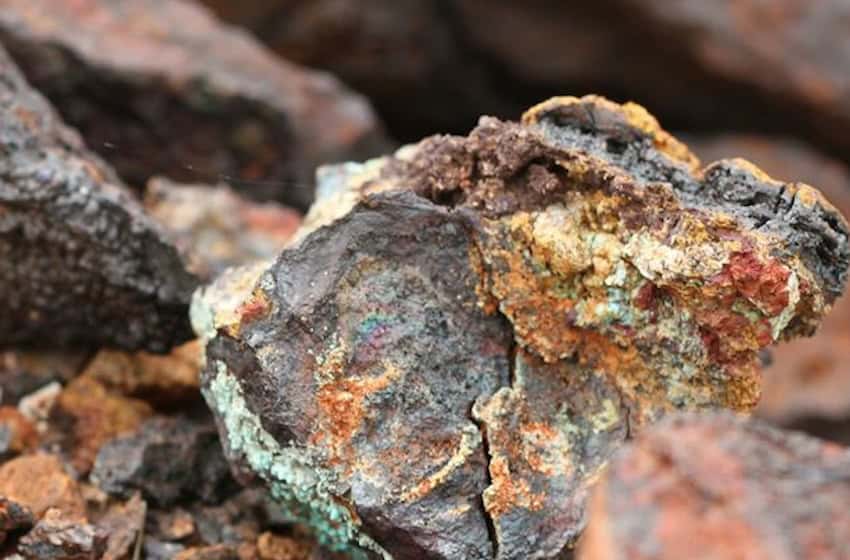
Minerals labeled “critical” are essential for the digital device manufacturing industry, as well as for the production of electric vehicles, solar panels and wind turbines. Some of the most fundamental critical minerals are lithium, cobalt, and aluminum (used in batteries), plus copper, silver and nickel (in electronics).

This announcement came just over a week after Mexico and the U.S. agreed to begin formal discussions as part of the review of the USMCA.
Over the next 60 days, the two countries will work to identify specific critical minerals, while considering price floors for imports, in order to counteract dumping practices or disguised subsidies.
The plan also allows for these price floors to be incorporated into a binding trade agreement in which other allied countries could participate.
The action plan includes other measures such as regulatory standards for mining and processing, technical cooperation, promotion and evaluation of investments, and coordinated responses to supply crises of critical minerals.
Among the commitments made are coordination in geological mapping, the promotion of research and development of new technologies, the creation of strategic storage mechanisms and the exchange of information between entities such as the U.S. Geological Survey and the Mexican Geological Service.
With reports from El Financiero and El País