Experts urge coordinated efforts to save jaguar population

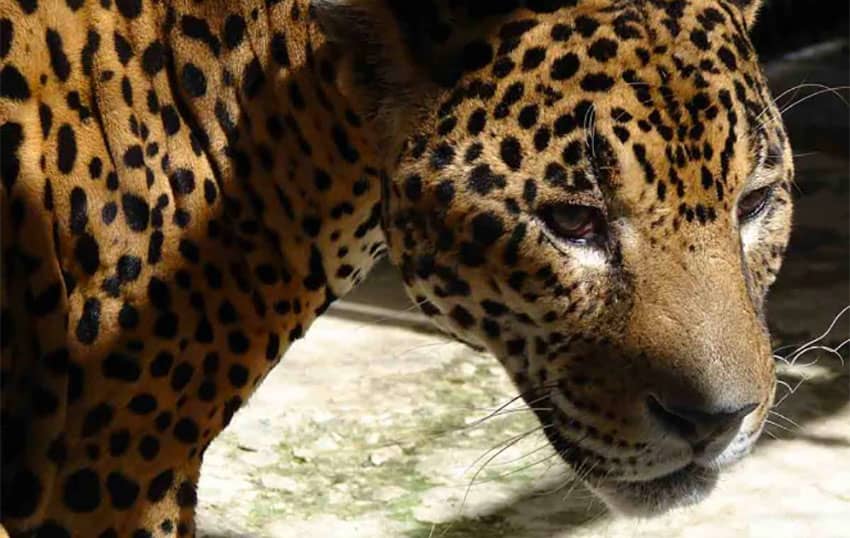
Ecology experts and conservationists have urged authorities to make a coordinated effort to save the country’s jaguar population, which is under threat from poaching, habitat loss and illnesses transmitted by domestic animals.

Despite moderate increases in its population over the last decade — from 4,000 in 2010 to 4,800 now — the jaguar is still considered a threatened species, according to Rodrigo Medellín, a researcher at the Institute of Ecology at the National Autonomous University (UNAM).

The National Jaguar Conservation Alliance (ANCJ) reported last month that the biggest threat to jaguars in Mexico is the Chinese black market. The big cats are prized in China for their fangs, claws, bones and pelts for use in medicines, jewelry and textiles.

Medellín and ANCJ president Gerardo Ceballos said the only way to stop illegal trafficking of jaguars is through coordinated efforts by authorities, local populations and the international community, for which an alliance of 14 Latin American countries was created in order to articulate a conservation and protection strategy on the continent.

They said that specific goals and clear environmental public policy are necessary in order to maintain jaguar populations and biological diversity in the long term in Mexico.

One such goal would be achieving a rate of zero deforestation by the end of President López Obrador’s term, as 100,000 hectares of forest and jungle are lost each year in Mexico, contributing to the numerous threats to the jaguar’s existence.

They said it was also necessary to evaluate infrastructure projects for communications and transportation, as many affect the jaguar’s natural habitat and fragment populations, making them smaller and more vulnerable.

The Maya Train is one such project that experts have said poses a threat to the jaguar’s habitat and existence.

Their strategy also calls for an increase to the National Forest Commission’s (Conafor) budget in order to support communal landowners, members of cooperatives and owners of small wildlife refuges for jaguars.

Source: Excélsior (sp)

Have something to say? Paid Subscribers get all access to make & read comments.
Manzanillo, Colima, México, 13 de marzo de 2026. La doctora Claudia Sheinbaum Pardo, presidenta Constitucional de los Estados Unidos Mexicanos en conferencia de prensa matutina, “Conferencia del Pueblo” desde Colima. La acompañan Indira Vizcaíno Silva, gobernadora Constitucional del Estado de Colima; Omar García Harfuch, secretario de Seguridad y Protección Ciudadana (SSPC); Raymundo Pedro Morales Ángeles, secretario de Marina (Semar); Bulmaro Juárez Pérez, divulgador de lenguas originarias, presentador de la sección “Suave Patria”; Ricardo Trevilla Trejo, secretario de la Defensa Nacional (Sedena); Jesús Antonio Esteva Medina, secretario de Infraestructura, Comunicaciones y Transportes; Bryant Alejandro García Ramírez, fiscal general del Estado de Colima; Fabián Ricardo Gómez Calcáneo; Rocío Bárcena Molina, subsecretaria de Desarrollo Democrático, Participación Social y Asuntos Religiosos de la Secretaría de Gobernación; Efraín Morales López, director general de la Comisión Nacional del Agua (Conagua); Marcela Figueroa Franco, secretaria ejecutiva del Sistema Nacional de Seguridad Pública (SESNSP) y Guillermo Briseño Lobera, comandante de la Guardia Nacional (GN). Foto: Saúl López / Presidencia

Mexico’s week in review: Congress deals Sheinbaum her first legislative defeat

0
The week of March 9 in Mexico was marked by standoffs between allies in Congress and adversaries at the airport. Here's what you missed.
A soldier displays seized handguns

The US and Mexico, growing together and growing apart: A perspective from our CEO

1
From a historic drop in homicides to opposite bets on electric vehicles, Mexico News Daily's CEO breaks down where the U.S. and Mexico are converging — and where they're not.
Veracruz Gov.

Veracruz governor blames private vessel for 200-kilometer Gulf Coast oil spill

1
The spill, which has spread to over 200 kilometers of Mexico's Gulf Coast beaches, has been traced to a private oil tanker off the coast of Tabasco.
BETA Version - Powered by Perplexity