
Two days after Mexico announced the closure of 13 gambling establishments and websites involved in possible money laundering, the U.S. Treasury Department restricted access to the U.S. financial system for 10 Mexico-based establishments, accusing the Sinaloa cartel of using them to introduce illicit funds into the international financial system.
The U.S. Office of Foreign Assets Control (OFAC) sanctioned 27 targets in all, while the Financial Crimes Enforcement Network (FinCEN) took action against the 10 establishments, which are accused of laundering money for the Sinaloa cartel.
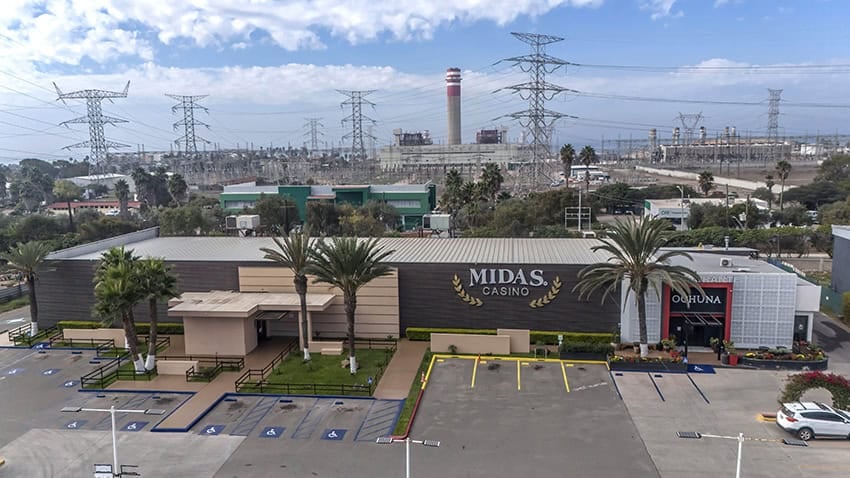
The casinos sanctioned include the Skampa in Ensenada, Baja California, and Villahermosa, Tabasco; the Palermo in Nogales, Sonora; the Emine in San Luis Río Colorado, Sonora; the Mirage in Culiacán, Sinaloa; and the Midas Casino chain, which operates in Mazatlán, Sinaloa, as well as Rosarito, Baja California, and other northwestern cities.
The OFAC and FinCEN worked closely with the Mexican government to target the Hysa Organized Crime Group allegedly responsible for the cartel-related money laundering and a slew of other criminal activities across Mexico and Europe.
In a U.S. Treasury press release, the coordinated action was described as “the result of recent U.S.-Mexico commitments … to work together more closely to combat narcotrafficking and related financial crime by Mexico-based drug cartels and other groups.”
John K. Hurley, the U.S. undersecretary for Terrorism and Financial Intelligence thanked Mexico for its cooperation in the operation, which was secured during his visit to Mexico City on Sept. 18.
“Our message to those supporting the cartels is clear: You will be held accountable,” he said.

According to the Treasury, the primary target of the operation, the Hysa family, “has used its influence through its investments in, or control over, various Mexico-based businesses — including gambling establishments and restaurants — to launder the proceeds of narcotics trafficking” for the Sinaloa cartel.
The newspaper El Universal pointed out that the operation against the Hysa family — originally from Albania — came less than three months after Sinaloa cartel co-founder Ismael “El Mayo” Zambada, now in U.S. custody, accepted a plea agreement.
On Tuesday, Mexico’s Finance Ministry blocked operations at 13 casinos where multimillion-dollar cash transactions, the cross-border movement of illicit funds and the use of unsupervised digital platforms were detected.
Security Minister Omar García Harfuch said that an inter-institutional investigation uncovered the criminal activity, identifying 13 physical and virtual gambling houses where irregular operations were detected. The casinos in question were operating in the states of Jalisco, Nuevo León, Sinaloa, Sonora, Baja California, México state, Chiapas and Mexico City.
Today, Treasury issued sanctions and has taken steps to cut off numerous Mexico-based gambling establishments involved in cartel-related money laundering.
We will continue to target those involved in supporting terrorist drug cartels.
— Treasury Department (@USTreasury) November 13, 2025
As a result of the findings, criminal complaints were filed with the Federal Attorney General’s Office and the Tax Prosecutor’s Office was notified. All activities at the sites in question were suspended, while websites and bank accounts were blocked.
On Wednesday, President Claudia Sheinbaum acknowledged that Mexico’s casino law needs to be updated.
“Today, a great many bets are placed digitally … there are many [digital casinos] … advertised on social media platforms, television, etc.,” Sheinbaum said, adding that she supports tightening regulations governing casinos and digital gambling platforms.
On Thursday, Mexico announced it had sanctioned five more companies it suspected of money laundering. The Mexican government did not name any of the 18 shuttered sites, but Grupo Salinas, controlled by magnate Ricardo Salinas Pliego, said it operated two of the targeted casinos and denied wrongdoing.
A columnist for the newspaper El Universal questioned why the previous administration did not fully investigate the Hysa family.
Mexican authorities opened a money-laundering investigation against the Albanian family in 2022, but it failed to progress and the case was dropped despite reports of an alliance between the so-called Albanian mafia and the Sinaloa Cartel.
With reports from The Associated Press, Reuters, La Jornada and CNN en Español