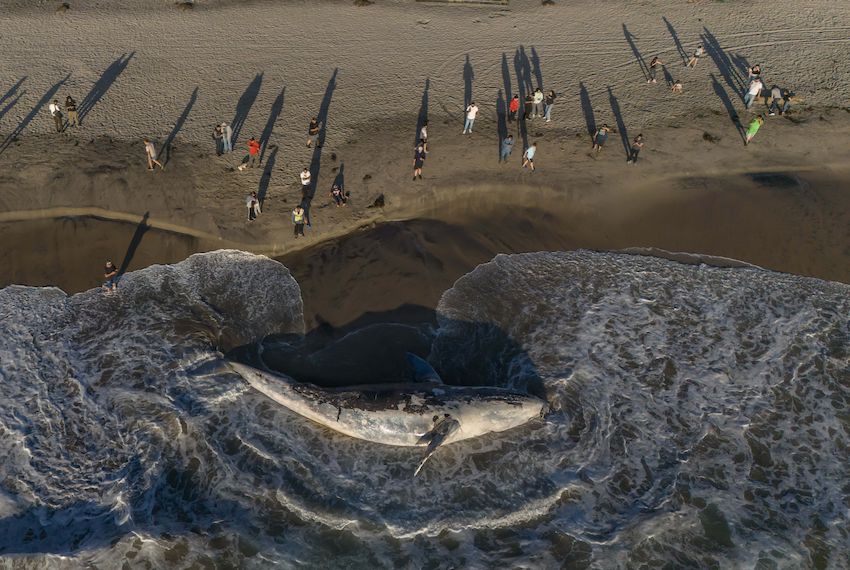
Ninety-two gray whales washed up dead in Baja California Sur (BCS) during the most recent breeding season, marking one of the worst die-offs in decades, according to Mexican and U.S. researchers.
The deaths occurred during the 2024-25 season for gray whales, which spanned from December 2024 to April 2025.
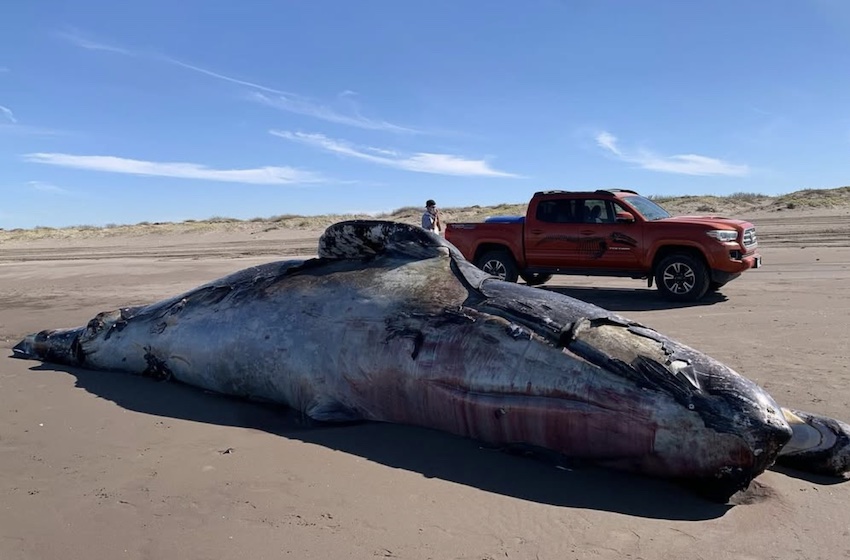
Scientists say malnutrition is to blame — not poaching or ship strikes — after most carcasses were found decomposed and showed no signs of direct human harm.
Self-beachings, implying that a whale intentionally or accidentally beaches itself, were not the cause, either, as scientific consensus does not support intentionality or suicidal behavior in whales.
“What we’ve seen leads us to believe they arrived malnourished, which made them much more vulnerable and prone to stranding,” said Lorena Viloria Gomorra, a researcher with Mexico’s Marine Mammal Research and Monitoring Program (PRIMMA).
Most strandings are involuntary responses to distress, disorientation, illness or external factors.
The deaths were recorded in places such as Laguna San Ignacio and Bahía Magdalena, key whale sanctuaries and breeding areas on BCS’ west coast that are also remote whale-watching areas about 400 kilometers north of Cabo San Lucas.

The Whale Museum in La Paz, the capital of BCS, confirmed that whales likely died offshore after failing to find enough food in their Arctic feeding grounds.
Two years ago, Mexican agencies such the Ministry of Environment and Natural Resources (Semarnat) and National Commission of Natural Protected Areas (Conanp) reported a significant uptick in Gray whale numbers in the Vizcaíno Reserve, which includes San Ignacio and Bahía Magdalena.
In the long run, however, the numbers are reportedly dropping.
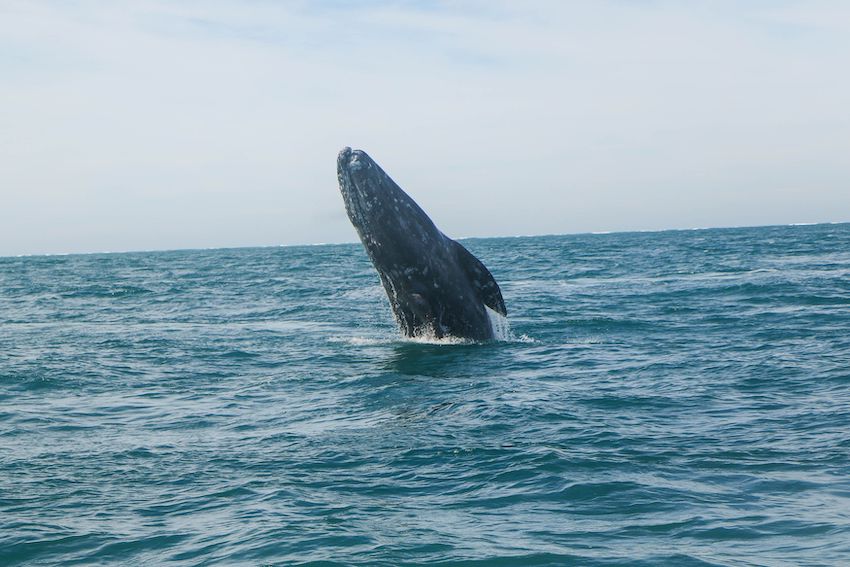
The eastern North Pacific gray whale population has plummeted from 27,000 in 2016 to about 13,000 this year, the lowest number since the 1970s, according to a NOAA Fisheries report from June as well as an open letter from biologists in Mexico, the United States and Canada.
Moreover, births have almost completely collapsed. Only 85 calves were counted this year — a 90% drop from normal breeding seasons, according to NOAA Fisheries data and supporting articles. NOAA Fisheries is a federal U.S. agency within the Department of Commerce’s National Oceanic and Atmospheric Administration (NOAA).
“Gray whales are showing signs of extreme stress, with significant unusual mortalities, a reduction in reproductive rates, an increase in the proportion of malnourished whales, and changes in their foraging behavior,” biologists wrote in their August open letter.
They warned that the population is in a “precipitous decline.”
Scientists link the crisis to climate change. Melting Arctic ice and warming seas have reduced the whales’ main food source — benthic amphipods.
“Recent studies indicate that whales may be experiencing unprecedented conditions in the Arctic due to climate change,” the open letter states.
The biologists called on international agencies to re-evaluate the gray whale’s protection status and urged the International Whaling Commission to act. They warned that the species should be considered “highly vulnerable.”
International researchers are now expanding monitoring and photo-ID programs, hoping to understand and reverse the deadly trend.
With reports from La Jornada, Oronoticias and Mongabay