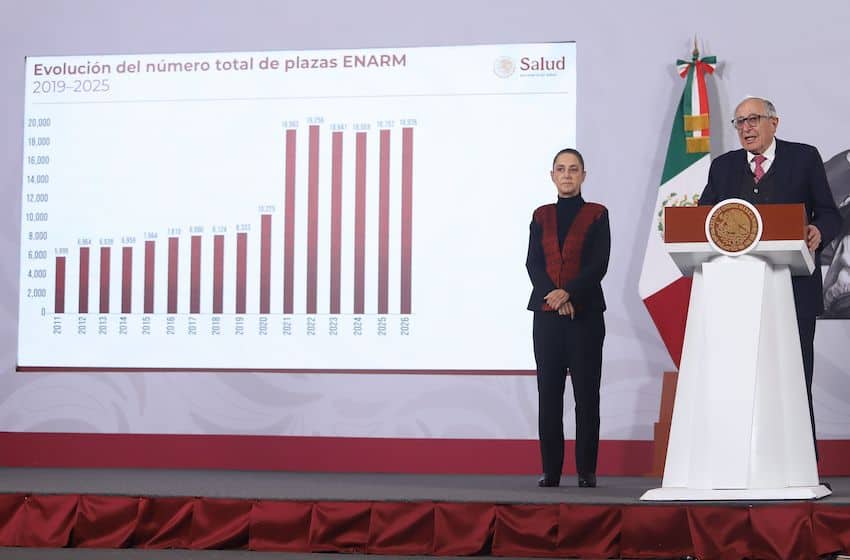
Mexico’s Health Minister David Kershenobich presented the national “Donating is Transcending” campaign, aimed at encouraging organ donation and reducing waiting times for patients, at the daily presidential press conference on Tuesday.
The campaign encourages people to “say yes to organ donation,” with the slogan: “For a Mexico without waiting lists. Get informed, decide and tell your family.”
On National Organ and Tissue Donation and Transplantation Day in September, Mexico’s National Transplant Center (CENATRA) issued a call to strengthen the country’s donation culture, emphasizing that the waiting list exceeded 19,000 patients.
The General Health Law’s framework for organ donation stipulates that the final decision must be taken by the deceased’s family, regardless of whether the person wished to donate their organs, which is one of the main barriers to donation in Mexico.
Approximately three to four people per million donate their organs in Mexico — compared to 42-48 per million in the United States — making it one of the countries with the lowest donation rates in the world, given its population.
Previous steps have been taken to improve the donation process in Mexican hospitals. Starting in 2011, hospitals accredited for transplants were assigned a donation coordinator to identify potential donors, ensure the viability of organs and tissues, communicate with families and coordinate logistics with the National Transplant Registry.
However, coverage and training for this role across Mexico remain uneven, which has restricted the expansion of transplant activities, according to CENATRA.

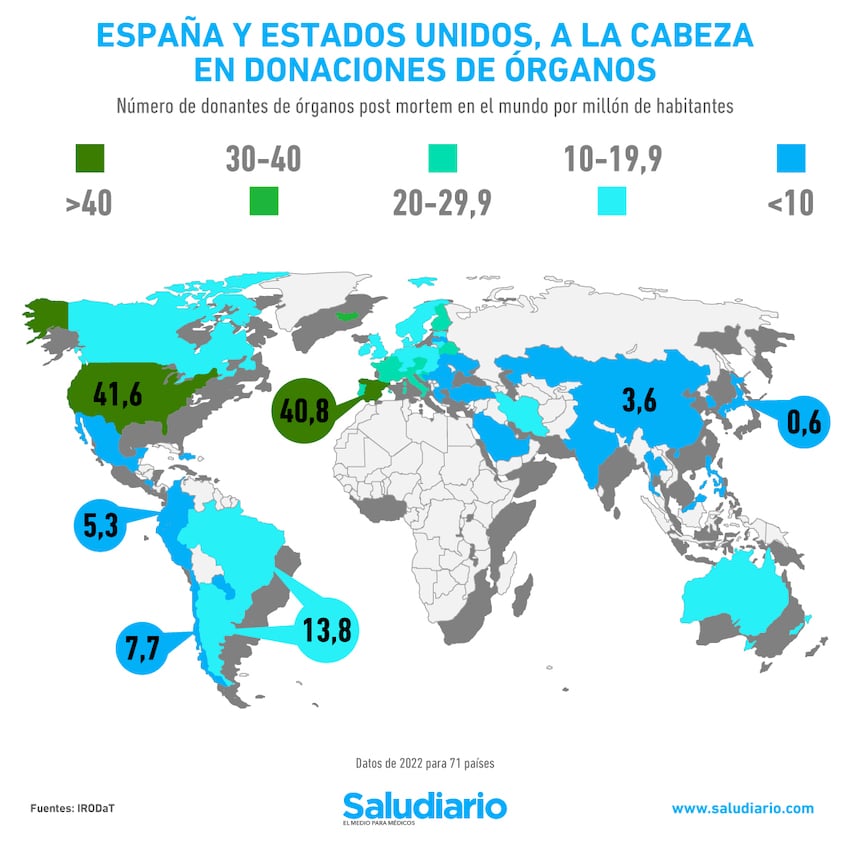
On the other hand, Spain, which today has the highest per capita organ donation rate in the world, is an active partner in the development of Latin America’s organ donation network. In 2023, the Ibero-American Council on Donation and Transplantation (RCIDT) reported a 14% regional increase in donations with respect to 2022.
Mexico’s health institutions have performed 14,347 transplants in the last five years, with a survival rate of 93.5% for living donors and 84.2% for deceased donors, according to Kershenobich.
In the last 12 months, there have been 2,783 kidney transplants; 245 liver transplants; 46 heart transplants, including four dual transplants (heart and kidney); and 10 lung transplants.
Mexico is also making progress with pancreas transplants, which is helping to strengthen the country’s reputation in the transplant field.
“One donor can save the lives of up to eight people,” emphasized Kershenobich.
With reports from Milenio and El Universal