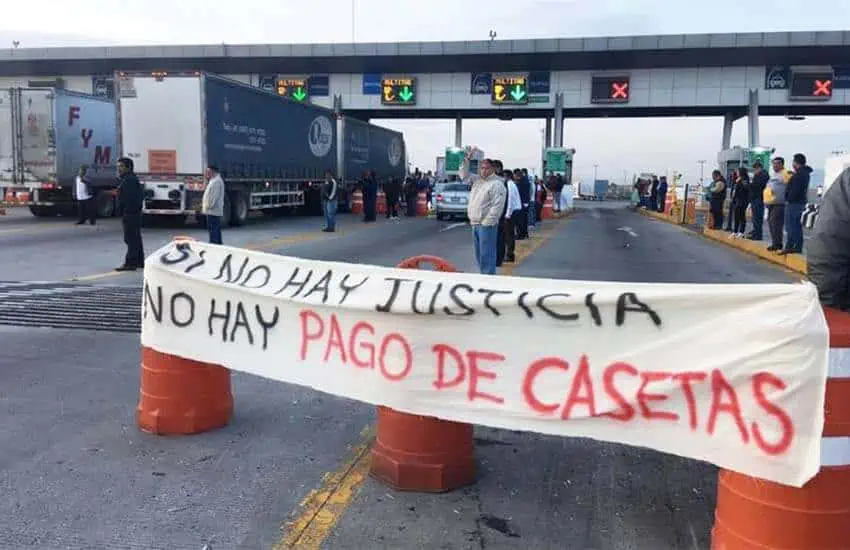
An estimated 18 to 19 million motorists per year are passing through toll plazas without paying, generating losses of over 1.5 billion pesos (US $73.9 million) for highway concessionaires.
The newspaper El Universal, which cited those figures in a report published Thursday, said the avoidance of paying tolls is encouraged by members of associations that dedicate themselves to the illegal occupation of toll plazas, a relatively common practice in Mexico.
A broad range of groups – including students, teachers and the unemployed – occupy the plazas as a form of protest and/or to raise funds by charging motorists an unofficial toll.
Marco Frías, director of the Mexican Association of Highway Infrastructure Concessionaires, told El Universal that the non-payment of tolls – official ones at least – is most prevalent on the eastern side of the Valley of México metropolitan area, which includes Mexico City and surrounding municipalities of México state.
One such plaza is the Las Américas Caseta on the Circuito Exterior Mexiquense (México state Outer Loop Road) in Ecatepec, he said.
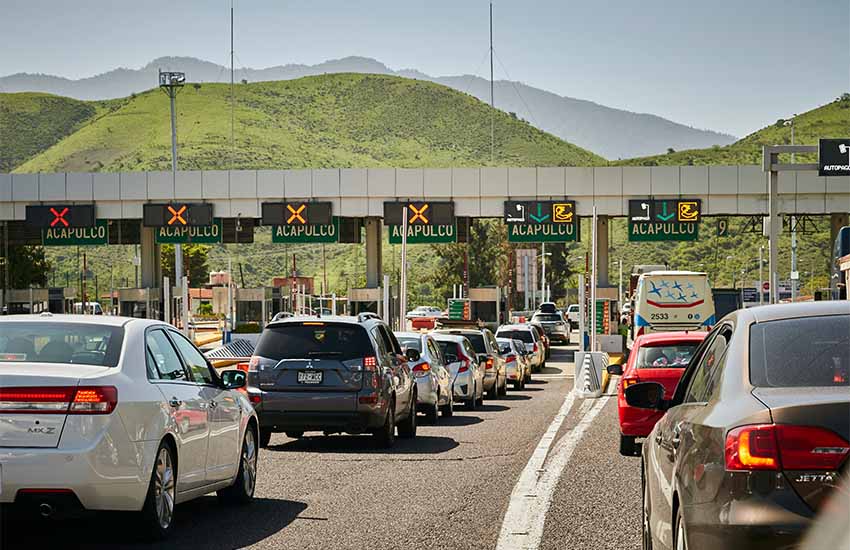
The practice of not paying tolls causes a “significant decrease” in income for highway concessionaires and consequently affects the tax revenue collected by authorities, Frías said.
“The capacity of governments and in particular the federal government … to generate resources that can be used for education, for vaccines, for health care and so on,” is adversely affected, he said.

Frías said that a broad range of motorists pass through toll plazas without paying, apparently even when they are not occupied by protesters.
“The incidence of motorcycles [not paying] is growing a lot,” he said, adding that in eastern México state, truck drivers and public transit drivers are also guilty of the practice.
A group called Resistencia Civil Pacífica, or Pacific Civil Resistance, is one of the main promoters of the non-payment of tolls, El Universal said, adding that it uses social media to encourage the practice.
“If you go onto Facebook you can see a series of videos, even tutorials, about how to avoid tolls,” Frías said.
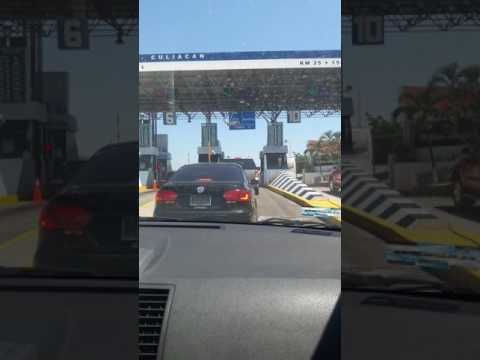
In one such video on YouTube, a motorist teaches a maña, or trick, to avoid paying.
“We’re going to see the trick one learns here due to extreme poverty,” a man says as he approaches a toll booth in Sinaloa.
He then avoids paying a toll by passing through the plaza when the boom lifts for the vehicle directly in front of him.
“You put yourself glued to the car [in front] as if you were being towed with chewing gum, and when the guy [in front] goes, you go with him,” the man tells his viewers after joking that the trick won’t work if the person in front of you has the same idea.
Frías said that not paying tolls has become a trend in Mexico and other countries such as Spain and Chile. However, he acknowledged that “the vast majority” of motorists are responsible and do the right thing.
“They’re aware … that when you pay a toll you get the [accident] insurance … that the highway grants, they’re aware that driving on a toll highway … [is] much safer and more efficient,” Frías said.
With reports from El Universal