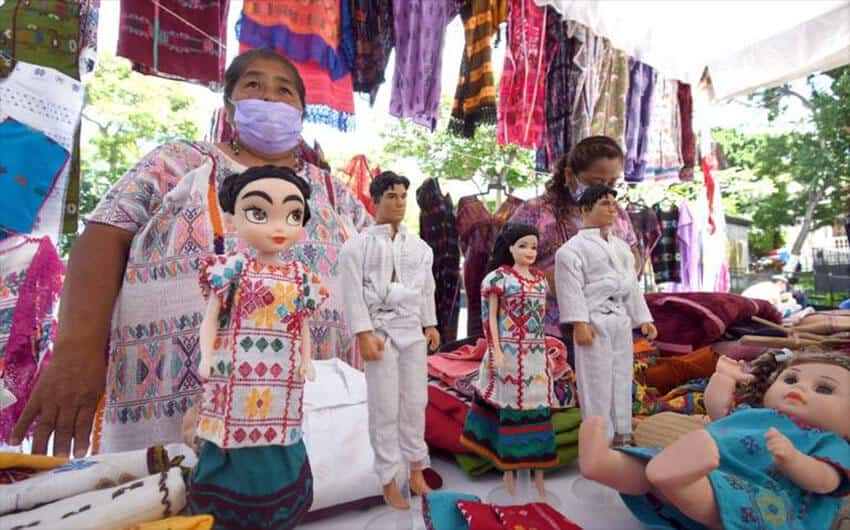
The world’s most famous toy doll now has her own outfits in the style of the traditional dress of the Amuzgo women of Guerrero.
A group of women from Xochistlahuaca in southeastern Guerrero has long been dedicated to making traditional clothing for men and women that include colorfully embroidered shirts, skirts, and huipiles — a boxy traditional shirt worn by many women throughout the country.
Susana Martínez de Jesús, one of the group’s members, remembers sewing from the time she was a child and had to steal thread from her mother because “thread was expensive and they didn’t let children play with it,” but, she said, it was the only way to start to learn how to sew and embroider.
Martínez de Jesús said that several years ago, the mayor approached the women to make something that could be given to visitors at the local traditional culture fair and only requested that it be beautiful and represent the traditional arts of the town. The women decided to make outfits for the Mattel dolls Barbie and Ken in the local style, with intricately embroidered patterns and designs.
“It was difficult work,” says Martínez de Jesús, “because if making a garment of normal size is difficult, working in miniature is even more difficult, nevertheless, we made them and presented them and the comments from the public were really encouraging, they really liked them.”
The dolls were a huge success and the women have continued making and selling them, hoping that their children will see themselves in their newly dressed dolls and feel proud of their heritage. While Barbie has worn the trappings of hundreds of different careers and personalities, this is quite possibly the first time she will be dressed in traditional, handmade garments from Mexico.
With reports from El Sol de Acapulco