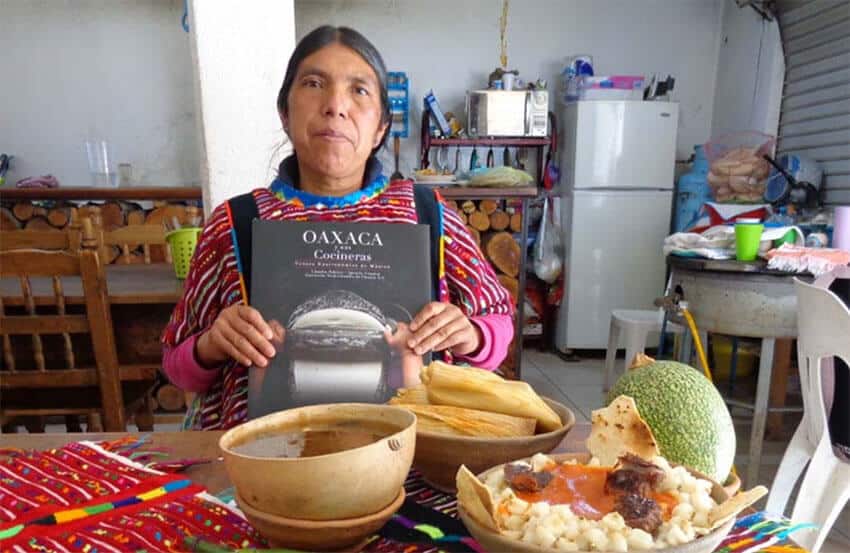
Traditional dishes are losing their appeal to today’s young people, says celebrated local cook Raymunda Vásquez Hernández, one of more than 50 chefs to participate in the state’s Fourth Encounter of Traditional Cooks at the end of April. After a two-year suspension due to COVID, the gastronomic fair was a massive hit, with hundreds of people turning out for traditional barbacoa, moles, tamales and stews.
Despite that warm reception, Vásquez says that today’s youth are not interested in the traditional dishes she is famous for like beef pozole with yerbasanta or a fresh drink made from chilacayote. Around the world Oaxaca food is finally gaining the fame that it deserves, with Oaxacan restaurants popping up as far away as the west of the United States and the streets of London.
Yet Vásquez says she sees kids in her community opting to buy instant soup and sodas in the local convenience store instead of eating at her local eatery in San Andrés Chicahuaxtla, Puebla, where she lives. She worries that their diet is moving away from their traditional cuisine based on ancient varieties of corn, to one that is full of preservatives, artificial flavoring, and artificial coloring.
Oaxaca’s cuisine was officially designated as cultural heritage in 2010. Vásquez formed part of a team of renowned traditional cooks that were included in Oaxaca & Its Traditional Cooks, Gastronomic Treasure of Mexico (Oaxaca y sus Cocineras Tradicionales, Tesoro Gastronómico de México), a recipe book that highlighted 80 ancestral recipes. While this kind of work wins endless praise from chefs and food enthusiasts, indigenous communities around Mexico are inundated with cheap snacks and Coca-Cola and have a growing problems with diabetes among their residents.
Vásquez insists that she and other traditional chefs will continue to fight for the visibility and presence of local dishes on menus and in homes. She participates in expos across the country presenting her food and the products necessary to create them, and says that the value of traditional Mexican cuisine should also be given a voice in major media like television.
With reports from El Imparcial