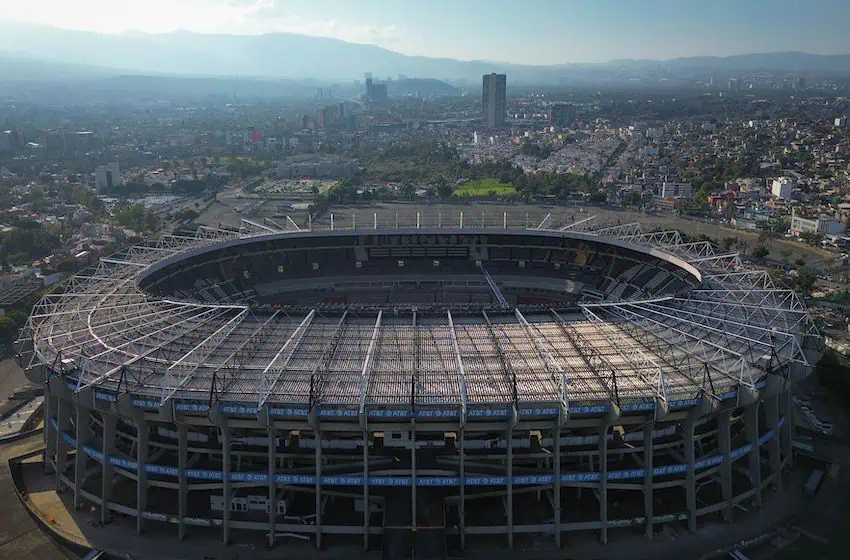
Less than six months before the first ball starts rolling at Mexico City’s Estadio Azteca, World Cup preparations continue apace across the country.
With nearly 6 million additional visitors expected in June-July 2026, the pressure on air connectivity, hotel inventory and ground services will be immense.
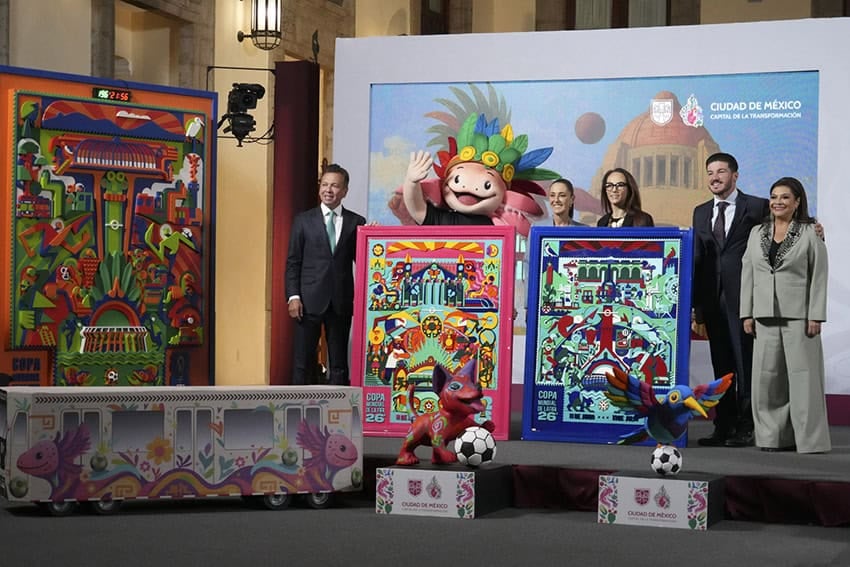
Eager to capitalize on the long-term exposure that comes with hosting one of the world’s largest global spectacles, the federal government and officials from the three Mexican host cities insist all will be in order when the World Cup kicks off in the nation’s capital on June 11.
President Claudia Sheinbaum spoke confidently about Mexico’s readiness after meeting with representatives of soccer’s world governing body, FIFA, on Nov. 10.
“Mexico will once again show the world who we are: a country of immense cultural richness, proud of its roots, its present and its future,” Sheinbaum said.
The government, in coordination with state authorities and the private sector, is organizing “Mexico 2026 Celebrations,” featuring public match screenings and free cultural and sports activities with the goal of “making this World Cup truly the people’s event.”
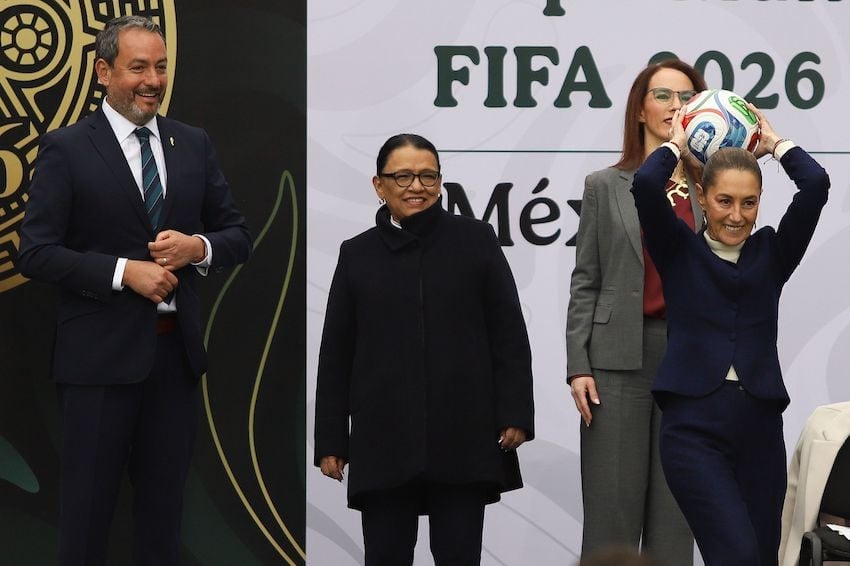
FIFA officials shared Sheinbaum’s optimism.

“This … will be the most ambitious event in the history of humankind,” said Jurgen Maika, Director General of FIFA Mexico. “In the three Mexican stadiums, we will welcome more than 800,000 fans, and … [visitors] will enjoy a free experience that will include the best of our culture, art, music and gastronomy.”
Playing host to the world
As co-host alongside the U.S. and Canada, Mexico will become the first nation to host three World Cups.
Sheinbaum called the quadrennial soccer extravaganza a great opportunity “to demonstrate to the world that we are experiencing a historic transformation.”
“Mexico welcomes everyone with open arms,” she said, acknowledging the responsibility that comes with hosting millions of fans, world leaders and global celebrities.
In addition to the inaugural match in the nation’s capital, 12 additional games will be played in Mexico, with Mexico City’s Estadio Azteca (5 games), Monterrey’s Estadio BBVA Bancomer (4) and Guadalajara’s Estadio Akron (4) rolling out the proverbial red carpet.
The host cities and states are racing to complete infrastructure projects designed to improve connectivity, security and long-term urban development strategies.
To ensure a safe and unforgettable experience, the Sheinbaum administration and the Mexico City government are spending more than US $1 billion on infrastructure improvements, cultural exhibits and tourist amenities.
The overarching goal is to ensure that upgrades to public transport systems, airports and urban services not only make for a memorable experience for visitors, but also provide lasting benefits for residents.
Sprucing up the capital
Naturally, as the Mexican hub of the 2026 FIFA World Cup, Mexico City is getting the lion’s share of attention.
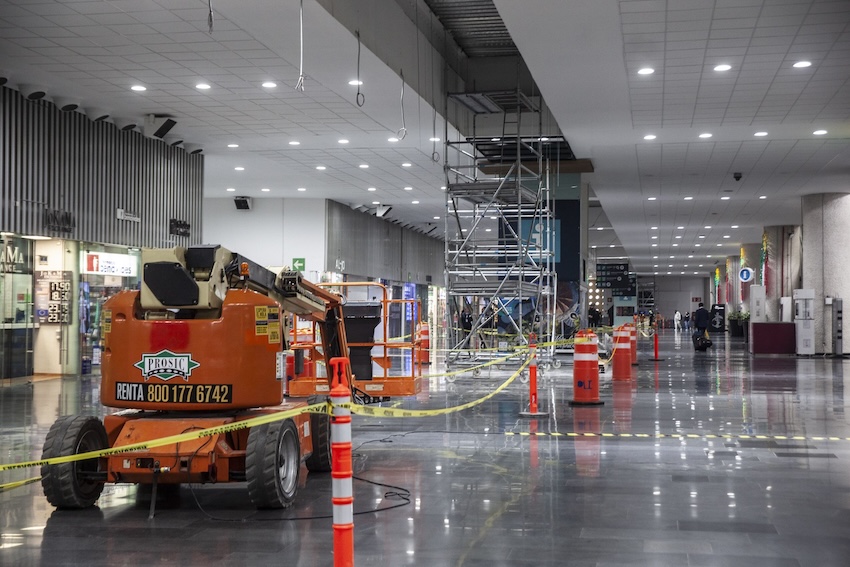
Projects funded by the federal government include the US $26.4 million renovation of the two terminals at Mexico City International Airport (AICM) and construction of a train line connecting the center city with Felipe Ángeles International Airport (AIFA), about 30 miles north of the capital.
Renovations at the AICM focus on structural rehabilitation, including runway enhancements, expanded parking and drainage upgrades to improve efficiency and reliability. Construction is expected to be 80% completed by the time the tournament starts on June 11, 2026.
The Mexico City government is also digging deep into its own pockets to modernize its infrastructure and services.
Mexico City Mayor Clara Brugada created the Mexico City FIFA Committee, intending to leverage the World Cup to upgrade logistics and security, with a focus on enhancing urban spaces around Estadio Azteca.
With significant investments in mobility, public spaces and urban development, Mexico City aims to celebrate diversity, promote equality and reaffirm its status as a global cultural hub.
¡Adiós a los baches en la #CapitalDeLaTransformación!
Vamos a rehabilitar avenidas principales para que todas y todos podamos movernos con mayor seguridad y comodidad.¡Con trabajo y resultados, transformamos la ciudad! pic.twitter.com/B0VtfSpk26
— Clara Brugada Molina (@ClaraBrugadaM) October 22, 2025
City Hall has set aside 2.6 billion pesos (US $142 million) to modernize the capital’s main avenues and rehabilitate 250 kilometers of primary roads, equivalent to more than 3.5 million square meters of new pavement.
A second phase of road rehabilitation will begin after the World Cup such that half of all the main avenues will be repaved by May 2027.
Brugada insists this is not just about filling potholes, but about completely reconstructing the pavement, guaranteeing durable and safe streets for all capital residents.
As part of the city’s policy to promote cycling as a means of transportation, 500 million pesos will be invested in various cycling infrastructure projects totaling 300 kilometers. Eighty kilometers of new bike lanes will be ready by next June, increasing Mexico City’s total cycling routes to 613 km.
Foremost among the new projects is the controversial Gran Tenochtitlán bike path, a 34-km route running along Tlalpan Avenue, one of the city’s principal north-south causeways. The project also includes the restoration of green areas along the avenue, and street lights lining the road are being upgraded.
La CDMX recibirá su manita de gato por el Mundial 2026: desde la polémica ciclovía en Tlalpan, “Gran Tenochtitlán”, hasta mejoras en el Tren Ligero y el Trolebús. 🚎🏗️ Tú, ¿qué opinas de estas obras? 🚧 👀#Chilango #cdmx #CiclovíaTlalpan #Mundial2026 pic.twitter.com/NhNUJ7n61g
— Chilango (@ChilangoCom) December 15, 2025
Mexico City will also rehabilitate 34 pedestrian underpasses along Tlalpan Avenue with the goal of improving mobility and safety. Twelve crossings located in the 2 km between Plaza Tlaxcoaque (just south of the Zócalo) and the Chabacano Metro station were being refurbished in November.
Although the World Cup matches in Mexico City don’t coincide with the peak of the rainy season (the capital experienced record-setting floods this past August), efforts to improve the city’s hydraulic infrastructure are in the works.
Brugada has touted a “Water Acupuncture” strategy that will enable 100 infiltration points (mostly wells), instead of building new pipelines that would cost billions of pesos.
The city government is also rehabilitating its light rail service and is building a new trolleybus line in the capital’s southern boroughs
The rail line connects the Taxqueña multi-modal hub to the southern borough of Xochimilco and the trolleybus will link the National Autonomous University of Mexico campus with the Santa Úrsula neighborhood, which is adjacent to Estadio Azteca.
Related schemes offer improved access between Estadio Azteca and key transportation nodes, including AICM and AIFA.
The area around the iconic stadium is also getting a makeover, with 67 infrastructure projects to improve water systems, drainage and mobility, as well as the addition of shopping and leisure centers on the stadium’s grounds.
Estadio Azteca — poised to become the first soccer ground to stage three inaugural World Cup matches — is also getting a multibillion-peso facelift, but not at public expense. A private company is financing the renovations there.
Mexico’s cultural legacy will also be front and center.
The Mexico City government will create 1,000 World Cup-themed murals at strategic locations throughout the capital, while the federal government’s “Social World Cup” program promises educational, tourism and gastronomic activities, including a tournament-long culinary event featuring the best regional cuisine from across the country.
With reports from Milenio, ESPN, Proceso, Mexico Business News, Infobae and Reforma