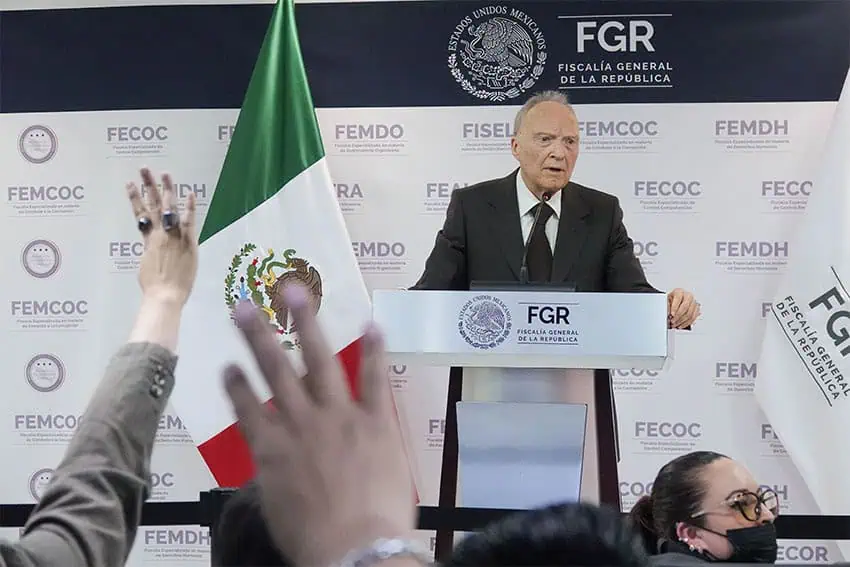
Mexico’s Attorney General Alejandro Gertz on Wednesday asserted that Jalisco state authorities were negligent in their investigation of a ranch linked to a notorious drug cartel, but vowed to discover what went on there.
In vowing to uncover the truth, Gertz provided a litany of irregularities in the state investigation.
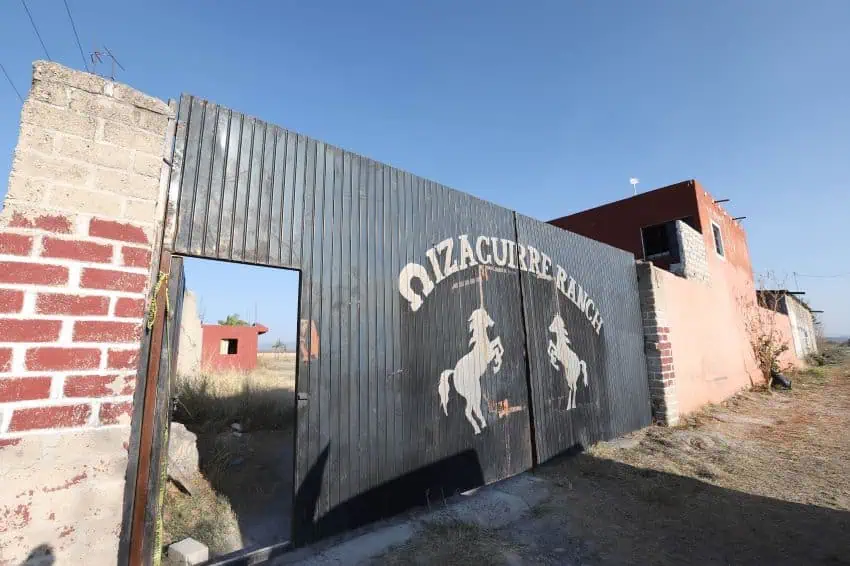
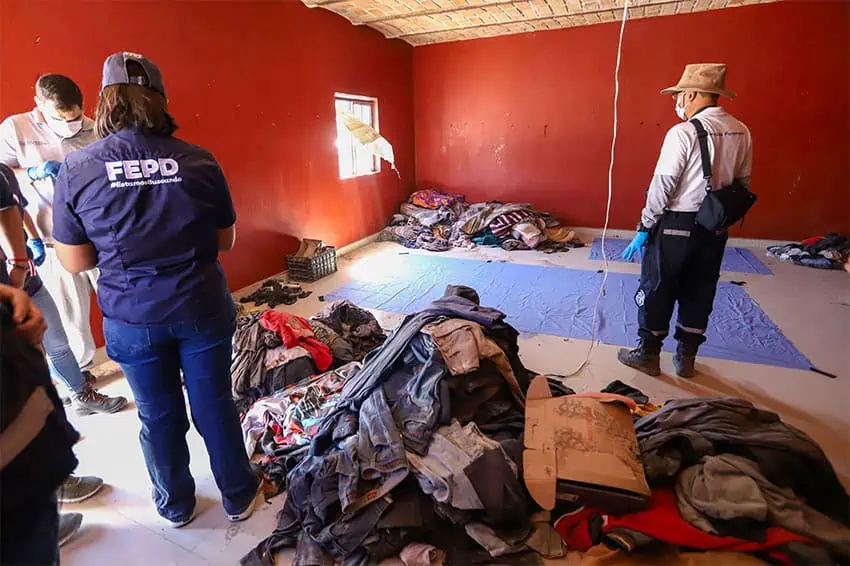
State authorities did not test human remains at the site or properly identify the clothing and shoes found there, Gertz said. They also failed to register evidence or fingerprints and did not process vehicles found at the ranch, three of which were later stolen.
Local authorities didn’t investigate the ownership of the ranch, failed to scientifically analyze alleged crematorium locations and did not investigate local officials who were linked to activities at the ranch, he said.
“If the (state) prosecutors … committed some type of irregularity … we will do everything necessary to establish that responsibility of … the entire chain of command,” said Gertz whose office was ordered to take over the investigation by President Claudia Sheinbaum.
Gertz also claimed Jalisco officials failed to alert federal authorities — as is standard procedure — even though the National Guard was involved in the September 2024 operation that originally discovered the camp.
Warrior Searchers of Jalisco uncover an ‘extermination camp’ in Teuchitlán
On March 5, a group of activists searching for missing loved ones found ashes, bone fragments, clothing and personal items at Izaguirre ranch just 60 kilometers from the state capital Guadalajara, six months after it had supposedly been secured by state authorities.

The discovery of what seemed to be underground ovens led to speculation that the site may have been used to cremate bodies, prompting headlines about “an extermination camp” at a “ranch of horror.”
The reports shocked the nation even as collectives of mothers and relatives have been searching for disappeared loved ones since the first “buscadoras” chapter was created in 2009.
The government has acknowledged that there are roughly 115,000 people missing in Mexico, largely as a result of drug cartel violence.
Most cases are never solved and searchers were often criticized by President Andrés Manuel López Obrador (2018-2024) who was accused of trying to artificially reduce the official number of the disappeared. This has prompted a deep mistrust of authorities on the part of those searching for their loved ones.
Sheinbaum’s Ayotzinapa?
The discovery of mass graves is not uncommon in Mexico, with findings reported in the states of Guanajuato and Guerrero as well as in the northern border city of Reynosa where another alleged extermination camp was found just days before the news of the Teuchitlán ranch.
The possibility that the ranch near Teuchitlán was a systematic extermination camp has caused a deep sense of horror, although Gertz claimed the evidence with regard to crematoriums is inconclusive.
The scandal has cast a shadow over the nascent administration of President Sheinbaum, who pledged to crack down on violence and reduce homicides during her Oct. 1 inauguration.
During her Thursday morning press conference, Sheinbaum declared that the case “would not become my Achilles’ heel.”
Her comment was prompted by media speculation that Teuchitlán could become her “Ayotzinapa,” referring to the disappearance of 43 students in September 2014 and the failure of federal authorities to adequately resolve the case. Activists commemorated the 10th anniversary of Ayotzinapa last September, just days after the Teuchitlán ranch was first found by authorities.
Search collectives issue scathing response to Sheinbaum’s missing persons reforms
On Monday, Sheinbaum pledged that her government “will not tolerate the construction of half-truths or falsehoods” about the Teuchitlán case, while announcing six “immediate” actions against the crime of disappearance.
Search groups and rights experts told The Associated Press that Sheinbaum’s measures were largely already reflected in current or past laws with few new concepts to push the needle forward.
Additionally, activists and search groups are worried that the Teuchitlán investigation is being mishandled, though Gertz said his office was planning to grant access to the site to members of the public and journalists.
With reports from El Universal, El País, Reuters, Associated Press, El Financiero and La Jornada