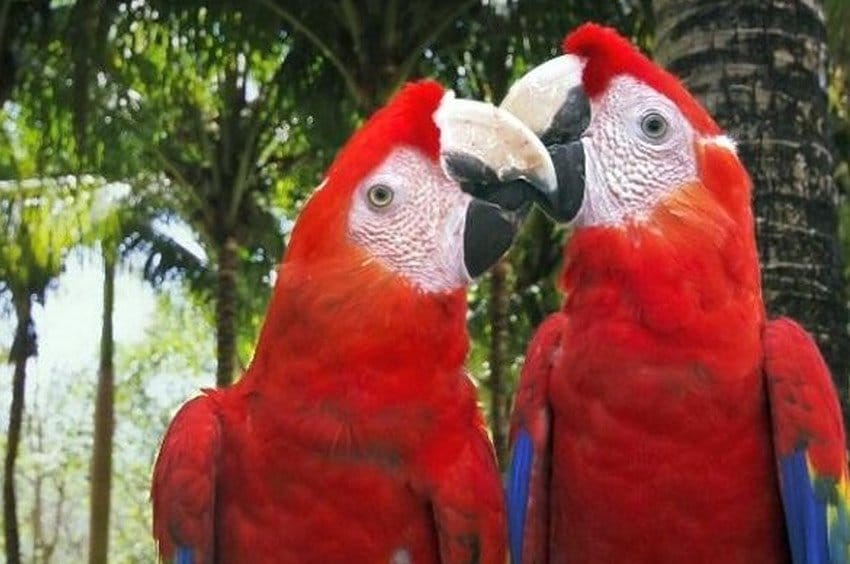
Almost 30 scarlet macaws have been released in the Tuxtlas region of Veracruz as part of a long-term program designed to reintroduce the species to what once was its natural habitat.
The macaws disappeared from the rainforests of the region 40 years ago, but the collaboration between a theme park, the largest university in Mexico, non-governmental organizations and local farmers and communal landowners, a dwindling macaw population started to grow five years ago.
Twenty-seven of the birds were released last weekend at the Tuxtlas Biosphere Reserve, near the town of Dos Amates.
The researcher in charge of the project explained that the birds traveled to the municipality of Catemaco after being bred in captivity with the aid of specialists at the Xcaret park in Quintana Roo.
Patricia Escalante Pliego, of the Institute of Biology at the National Autonomous University of México (UNAM), added that the birds are donated by Xcaret, and that the project expects to release a total of 500 macaws.
She said that 80% of all the parrots released since the program started in 2013 have readapted successfully to the Los Tuxtlas environs. Those that did not make it were either eaten by predators or couldn’t survive harsh weather conditions. She added that four of the birds were poached by humans.
Escalante told the newspaper Milenio that the initiative to reintroduce the bird species is costly for the organizations involved, which spend over 1 million pesos (close to US $49,000) per year on bird feed and creating nests and other spaces where the macaws start learning to live, and hopefully reproduce, in a natural environment.

She would like to see state and federal governments chip in and collaborate with the initiative’s efforts. Another wish is that residents of Catemaco stop killing the endangered birds and cutting down the trees in which they nest.
Source: Milenio (sp)