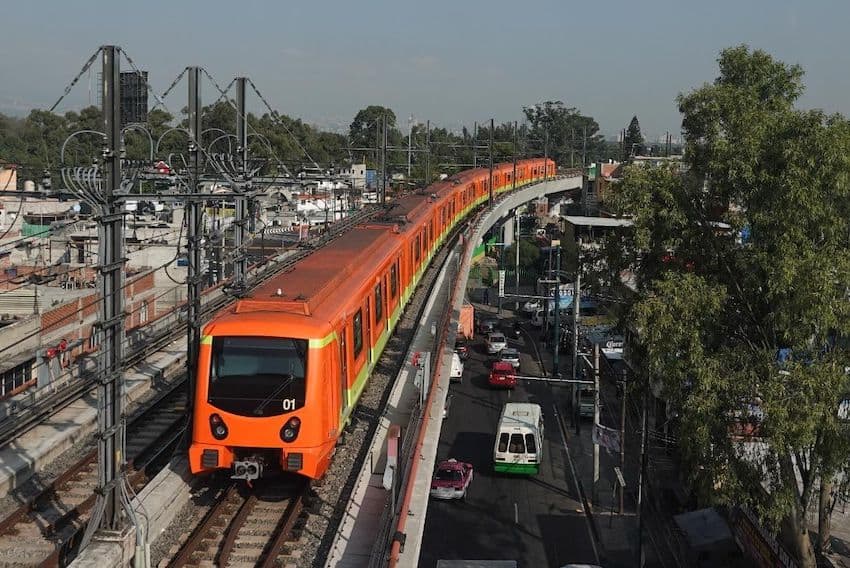
The elevated section of Line 12 of the Mexico City metro reopens on Tuesday almost three years after part of it collapsed in an accident that claimed the lives of 26 passengers.
The reopening of the elevated section comes one year after the underground section of the line — the metro system’s newest — resumed operations.
Built during the 2006-12 mayorship of former Foreign Affairs Minister Marcelo Ebrard, Line 12 — also known as the golden line for its assigned shade in Mexico City’s color-coded metro — runs between Mixcoac in the capital’s southwest and Tláhuac in the southeast.
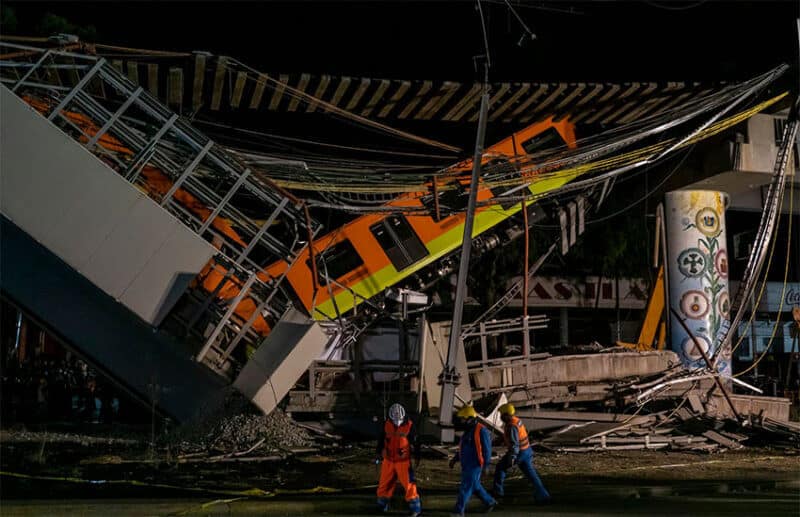
Line 12 was plagued by problems after it opened in 2012, but none as serious as the collapse of an elevated section between the Olivos and Tezonco stations at 10:22 p.m. on May 3, 2021. In addition to the 26 deaths, around 100 passengers were injured in the accident, in which two train cars plunged onto a busy road in the Tláhuac borough of Mexico City.
Mayor Martí Batres announced the reopening on Saturday, explaining that the final preparations for the resumption of services along the entirety of Line 12 took place this month. He said that the project to reinforce the elevated section was completed on Dec. 31.
President Andrés Manuel López Obrador announced in June 2021 that billionaire businessman Carlos Slim — whose company Carso Infrastructure and Construction (CICSA) was involved in the construction of Line 12 — would cover the costs of the repairs.
Norwegian company DNV, contracted by the government to conduct an independent investigation into the May 2021 disaster, determined that design flaws and shoddy construction work contributed to the collapse of the Line 12 overpass. Former Mexico City mayor Claudia Sheinbaum, now the presidential candidate for the ruling party Morena, rejected DNV’s final report — which said that lack of maintenance was also a factor in the accident — saying that the report was “deficient” and “poorly executed” as well as “biased and false.”

A New York Times investigation published a month after the accident also found serious flaws in the construction of the collapsed overpass. It said: “Steel studs that were vital to the strength of the overpass — linchpins of the entire structure — appear to have failed because of bad welds, critical mistakes that likely caused the crash.”
Ten former Mexico City officials, including the director of the Line 12 construction project, face charges including homicide in connection with the overpass collapse that caused the accident. Most of the passengers injured in the crash and the families of those who died accepted compensation payments from the city government and CICSA.
There was some speculation that the disaster would have an adverse effect on the presidential ambitions of Ebrard and Sheinbaum given that the former was mayor of Mexico City when the Line 12 was built and the latter was mayor when the accident occurred.
However, Ebrard and Sheinbaum finished second and first, respectively, in Morena’s candidate selection process, and Sheinbaum is widely projected to win the June 2 presidential election and become Mexico’s first female president.
With reports from El País, El Financiero and Milenio