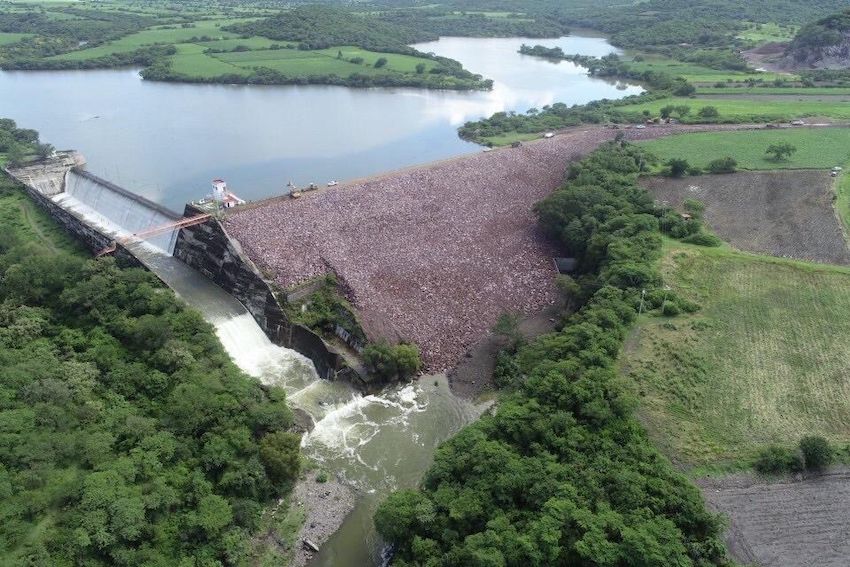
After several difficult years, Mexico is experiencing far less drought so far in 2026 as the El Niño phenomenon brings more rainfall.
In the 2026-2027 period, El Niño could behave similarly to how it did in 2015, one of the most intensely rainy years in recent times, Dante Sinohé Hernández Padrón, a researcher with the National Water Commission (Conagua), said during the 40th Climate Perspectives Forum in May.
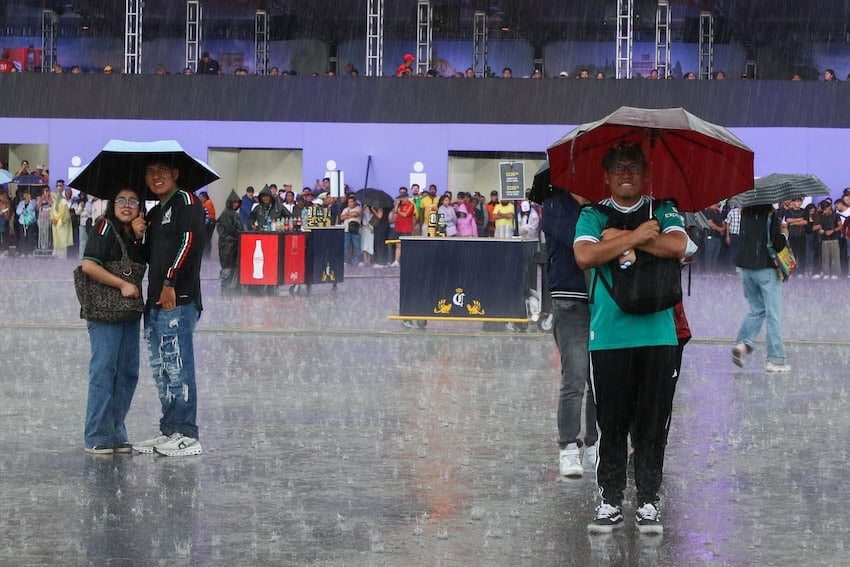
Mexico may be free of widespread drought by the end of its rainy season, which typically runs from May to October, according to current predictions.
Conagua bases its drought assessment on the international five-category system, which ranges from abnormally dry or D0 (a precursor to drought, not actually drought), to moderate (D1), severe (D2), extreme (D3) and exceptional (D4) drought.
“Currently, we are experiencing normal dry conditions, without a nationwide drought [although] obviously, one could occur in some regions,” Hernández Padrón said at the conference.
He added that there has been a 94% recovery from the previous several drought-plagued years.
Drought occurs gradually and can affect domestic water supply, agriculture, energy, water quality and other areas, so its effects are often felt only after it has persisted for several months or even years.

Just before the 2025 rainy season, almost half of Mexico — 596 municipalities — was experiencing some level of drought, with 46.5% of the country falling into the D1 to D4 categories, according to Conagua.
However, after months of above-average rainfall in 2025, Mexico began 2026 with its smallest drought footprint in six years, with just 7.4% of the country experiencing some degree of drought. As of June 15, only 2.4% of the territory was experiencing drought (D1-D4).
Northern Chihuahua, one of only two regions currently experiencing severe drought, has seen conditions ease considerably since late 2025, with several municipalities moving from drought to abnormally dry or drought-free categories, according to Conagua’s Drought Monitor. The improvement is stark compared to the same period in 2024, when much of the state was gripped by extreme drought.
Hernández Padrón warned that a severe drought could occur in 2027 if temperatures reach levels similar to those of 2023.
The researcher stressed the importance of monitoring the El Niño-Southern Oscillation phenomenon for 2026-2027, as an intense drought could occur if a “Godzilla” El Niño forms, which will push global temperatures higher.
With reports from El Economista, Gaceta UNAM, El Sol de Parral and La Jornada