Long recognized as one of the fastest-sinking sites in the world, today’s Mexico City is sinking by nearly 10 inches (about 25 centimeters) a year, and has sunk by nearly 40 feet over the past century.
This information comes from newly available satellite data released by NASA last week that was derived from the U.S.-India satellite project known as NISAR.NISAR uses advanced radar imaging — effectively a microscope in space — to measure changes in Earth’s land, ice, sea level rise and groundwater.
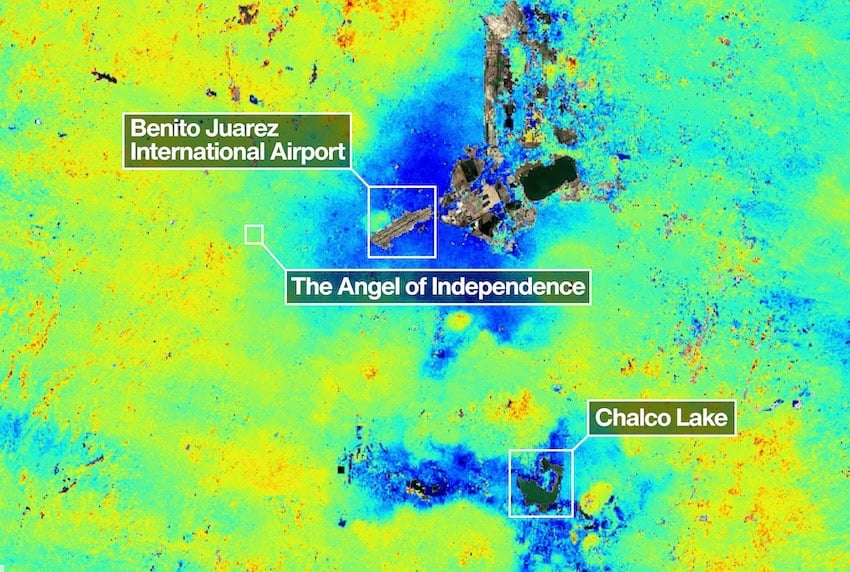
It has long been observed that Mexico City has been sinking (a 1995 study by the National Academies of Sciences, Engineering and Medicine found the city was sinking roughly two inches per year by the late 1800s), but the rate of sinking has become more dramatic over time and the NISAR images confirm it.
The NASA data — based on preliminary measurements taken during the dry season between October 2025 and January 2026 — indicates that Mexico City is sinking by more than half an inch every single month.
The primary reason for the subsidence is a lack of water in what was once a vast lake system fed by seasonal rainfall and underground aquifers.
Much of greater Mexico City now relies on the water supplied by these local aquifers, but a surging population, coupled with climate change, means that rainfall no longer replenishes the aquifers sufficiently.
“The [natural] reservoirs are basically empty,” Enrique Lomnitz, founder of a water nonprofit, told online media outlet Jezebel.com.

As the water disappears, the ground inevitably begins to shift and compact under the sheer weight of the skyscrapers and millions of people, cars and buses, and layers of cement built on top of it.
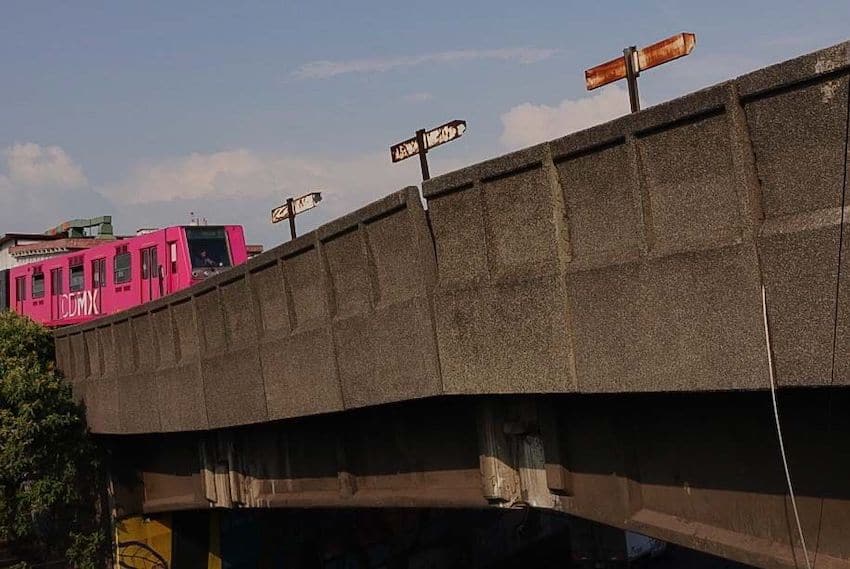
Visible evidence includes tilted historic buildings, cracked infrastructure and sinking monuments.
It is not unusual for streets to buckle or for sinkholes to appear or for water pipes to burst as a direct result of the subsidence.
Enrique Cabral, a geophysicist, described the ongoing subsidence as “a very big problem” because it damages the city’s critical infrastructure, such as the subway, the drainage system, the potable water system, housing and streets.
The government’s response has so far included limiting the further drawing of groundwater from Mexico City wells, establishing new water sources and funding extensive water pipe repairs.
These large-scale efforts will require billions in funding, and it’s possible that the continued sinking would simply erase any gains as quickly as they are made.
With reports from The Associated Press, ABC News and Jezebel.com