A monumental lighting display will adorn Mexico City’s Zócalo on Sunday, March 8, as part of commemorations for International Women’s Day.
The special lighting will be primarily purple, a color associated with women’s rights movements around the world.
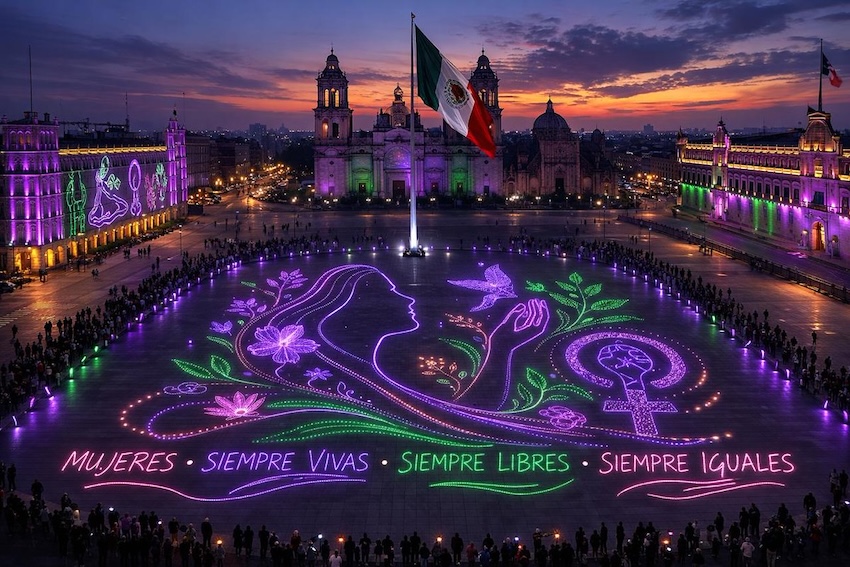
The official X account of Webcams de México shared an AI generated rendering of how the Zócalo will look on the day. The image shows a woman’s face in silhouette on the surface of the square, with her hair blown around her and what seems to be leaves flying from her hand. With it, a projected message will read: “Women, always alive, always free, always equal.”
This sign will be built by women on the evening of March 7.
Buildings surrounding the Zócalo will also be illuminated to create a purple atmosphere in and around Latin America’s largest public square.
The exposition is part of a larger initiative dubbed “Time for Women. Festival for Equality,” which has been running since 2019. The 2026 edition will feature over 100 activities in more than 60 venues throughout Mexico City through April 19.
The activities will include concerts, exhibitions, theater performances, film, workshops and academic sessions that incorporate a gender perspective. Most of these events will be free of charge.

Mexico City Mayor Clara Brugada noted that the Zócalo has historically been lit up in much the same way for such major events as Mexico’s Independence Day (Sept.16), Day of the Dead (Nov. 1 and 2), Revolution Day (Nov. 20) and the winter holidays.
“Now in March we will also have a monumental lighting display, and we want public buildings to be illuminated in purple as well,” Brugada said.
In addition to being adorned with lights, the National Palace at the east end of the Zócalo, which serves as President Claudia Sheinbaum’s residence, has already been protected by metal barriers up to 2.5 meters tall ahead of the Women’s Day demonstration on March 8.
President Claudia Sheinbaum said that the placement of the fences is intended to “avoid a confrontation between police and women,” and to protect the building from violent acts during the event.