Mexico is moving to modernize its forensic identification system as authorities confront an ongoing crisis of disappearances.
The Attorney General’s Office (FGR) is implementing the FBI-developed Combined DNA Index System — known as CODIS — by linking 15 state prosecutor’s offices and forensic institutes to a national database, El Sol de México reported last week.

The newspaper said its information came from a request to Mexican authorities under the country’s transparency laws, which function similarly to the U.S. Freedom of Information Act.
The system was developed by the FBI mainly for crime investigation, but also for linking remains to missing persons, for which it will be used in Mexico.
CODIS allows laboratories to compare genetic profiles and match unidentified remains with relatives of missing persons more quickly.
According to the National Registry of Missing and Unlocated Persons, maintained by the Interior Ministry (Segob) and cited by El Sol, Mexico has 134,101 persons listed as missing or disappeared.

The FGR said states beyond the initial 15 will be added as their laboratories meet international accreditation standards, leaving out for now states such as México and Tamaulipas despite their high numbers of missing persons.
“The truth is that instruments like CODIS are what Mexico needs,” said Mariano Guardado, head of the forensic genetics lab at the National Autonomous University of Mexico (UNAM) School of Forensic Sciences.
Recent events highlight both progress and need, as new discoveries of human remains underscore the urgency.
Authorities last week seized 1.5 tonnes of cocaine off the coast of Chiapas, after which the newspaper Milenio quoted a statement from the U.S. Embassy that read, in part: “… with support from INL Mexico [the U.S. State Department’s anti-narcotics and law-enforcement office in Mexico City], the FBI’s CODIS system will help expedite forensic identification in Mexico.”
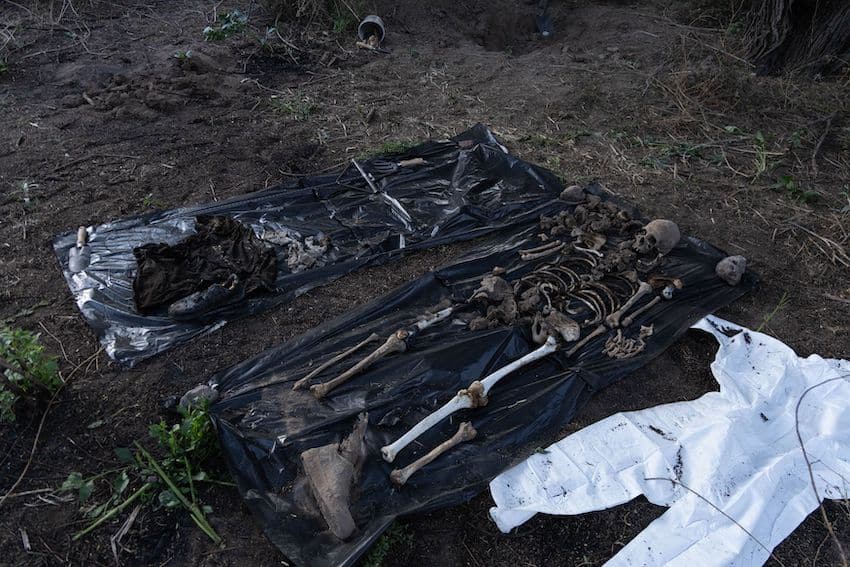
Separately, the group Madres Buscadoras de Chiapas (Chiapas Searching Mothers) last week uncovered skeletal remains and clandestine graves at a ranch in the central part of the state, according to TV Azteca.
That finding and others in Morelos last year and in Baja California Sur in March illustrate the scale of unresolved cases that authorities hope CODIS will help address.
With reports from El Sol de México, Milenio and TV Azteca