Mexico’s next transportation secretary has breathed new life into the suspended Mexico City-Querétaro train project, declaring that it forms part of the incoming government’s plan for a new national railroad network.
Javier Jiménez Espriú told the newspaper El Financiero that the transportation plan also includes building a new railroad between Cancún and Palenque, modernizing the existing line between Coatzacoalcos and Salina Cruz and starting the construction of Guadalajara-Tijuana and Querétaro-Nuevo Laredo routes.
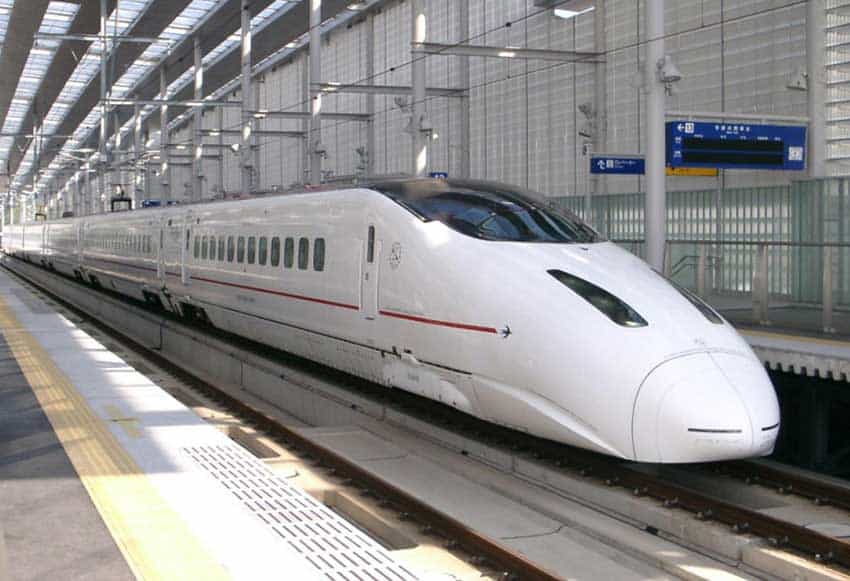
The current federal administration awarded a US $3.75-billion contract to a Chinese-led consortium in 2014 to build a high-speed rail line between Mexico City and Querétaro but the project was later postponed as part of budget cuts announced in January 2015 and it hasn’t been revived since.
But following Andrés Manuel López Obrador’s landslide victory in the July 1 presidential election, it would appear that the project is back on the agenda.
“Our idea is to establish a national railroad network; the network has different important sections and within those we will determine which sections [deserve] the most urgent attention based on the impact they will have at both a social and economic level, because the [different] sections will trigger regional development projects,” Jiménez said.
In a separate interview with the newspaper Milenio, Jiménez said that the next federal government will continue practically all the infrastructure projects that have already been started but added that the development of the Isthmus of Tehuantepec region in Oaxaca and the Maya area of Calakmul in Campeche would be priorities.
In the former region, the future cabinet secretary said, in addition to modernizing the train line between Coatzacoalcos, Veracruz, and Salina Cruz, Oaxaca, work will also be undertaken to improve the highway network.

In addition, the ports in the respective cities and the airport at Ixtepec, Oaxaca, will be modernized, Jiménez said.
There are also plans to establish an extensive fiber optic network in the Isthmus region and López Obrador said yesterday that the possibility of establishing a free zone with a lower value-added tax rate is also being analyzed.
The projects planned for the region, which took the brunt of the powerful September 7 earthquake, will complement the Special Economic Zones (SEZs) in Coatzacoalcos and Salina Cruz that were established by the current government.
“The other big project is the passenger train from Cancún to Bacalar and Palenque to develop the Maya area, mainly Calakmul . . .” Jiménez said.
He added that during its six-year term, the López Obrador-led administration would prioritize the construction of paved roads in 250 municipalities that currently only have dirt-road access to their main towns.
The projects will create employment in rural areas and prevent communities from being cut off due to heavy rains that can make the dirt roads impassable, Jiménez said.
He also said that by the end of the next government’s term, the aim is for all Mexicans to have access to broadband internet services.
With regard to the new Mexico City International Airport project, the future communications and transportation secretary said the López Obrador transition team would first analyze its technical aspects — such as the suitability of the ground it is being built on — as well as environmental considerations to determine whether it is feasible in an operational sense.
The president-elect has previously threatened to scrap the project, charging that it is too expensive, corrupt, not needed and unfeasible due to its construction on an ancient lakebed.
Jiménez said that if it is determined that the project is technically feasible, the incoming administration would turn its attention to analyzing whether the contracts are in order and if it adds up financially.
If it doesn’t, “there is the solution of the other airport,” he added, referring to the proposal to adapt an existing air force base in México state for commercial use.
He also said the public consultation process that López Obrador floated at a rally in Texcoco, México state — the municipality where the new airport is being built — would take place after the incoming government has completed its analysis.
Whether the new government decides to continue with the current project or instead develop the Santa Lucía air base — located about 50 kilometers northeast of the capital — Jiménez said that a new airport must be ready by 2023 to alleviate pressure on the existing facility.
Source: El Financiero (sp), Milenio (sp)