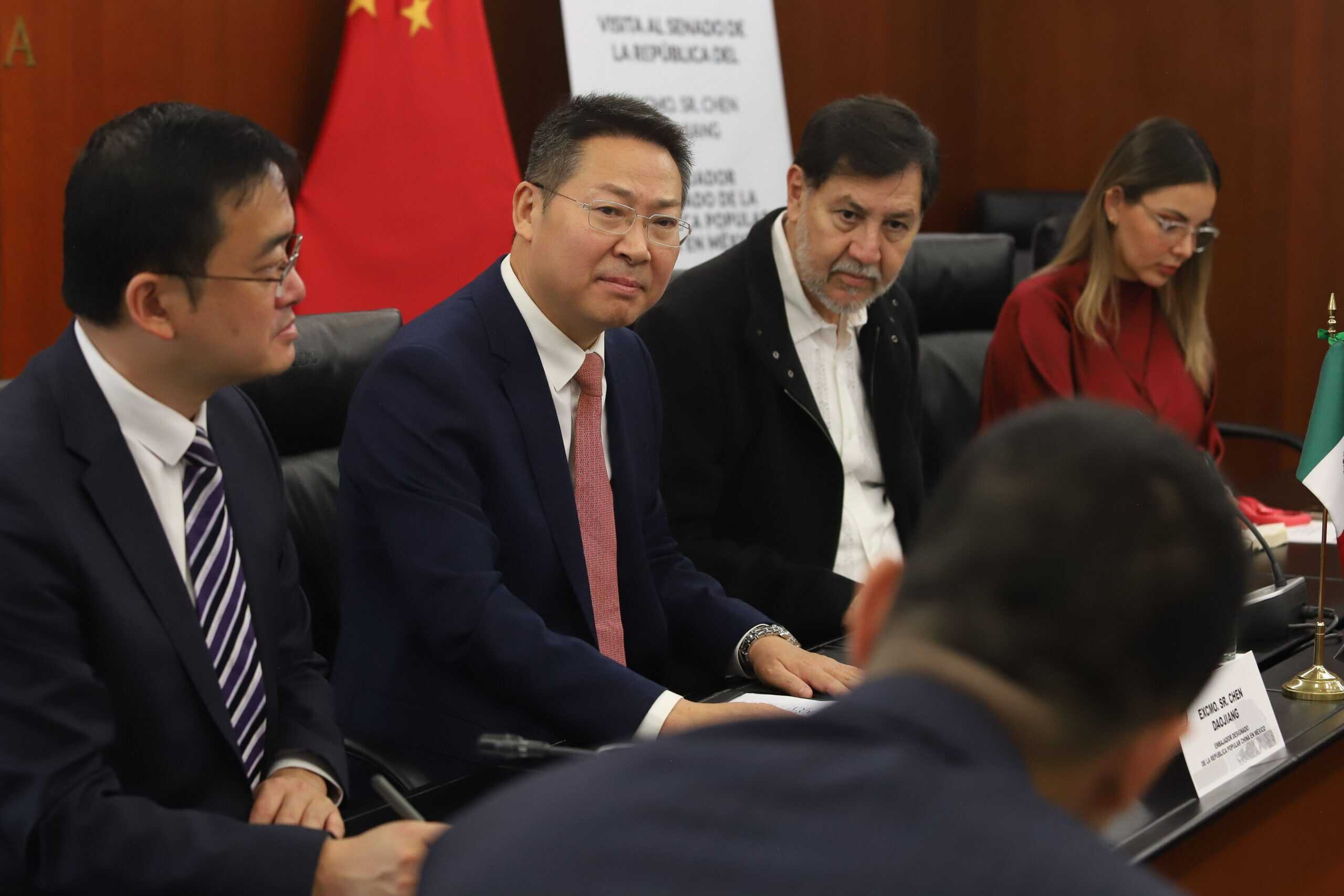
China’s ambassador to Mexico on Wednesday expressed confidence that Beijing and Mexico can deepen ties in areas such as manufacturing, innovation and the digital economy, while intensifying collaboration in industrial chains, energy and the green economy.
At a reception celebrating the Chinese New Year, which begins on Feb. 17, Ambassador Chen Daojiang observed that his country’s 2026-2030 five-year plan is “a golden opportunity” to strengthen cooperation and seek shared prosperity in the comprehensive strategic partnership between the two countries.

This outlook appears mutual as Mexico’s Deputy Economy Minister Vidal Llerenas met with China’s chief trade negotiator Li Chenggang in Beijing on Monday
The Mexico-China dialogue is taking place as the U.S., Mexico and Canada have begun to review their free trade agreement (USMCA), a process that is likely to include U.S. pressure for tighter rules on China-origin goods.
In China for the first face-to-face talks since Mexico imposed tariffs of up to 50% on many Asian imports in December, Llerenas and Li conducted in-depth exchanges on bilateral economic and trade relations, the Chinese Commerce Ministry said in a statement released on Thursday.
Although China warned Mexico about imposing the tariffs, Beijing has yet to announce countermeasures.
Simultaneously, Mexico has initiated trade talks with India, another country affected by the sweeping tariffs.

Mexico’s duties — widely seen as an attempt to placate U.S. President Donald Trump, who has levied significant tariffs on Chinese goods — apply to items including automobiles, auto parts, textiles, clothing, plastics and steel.
Mexico confirmed the working visit to Beijing in a statement, saying it “discussed further promoting bilateral trade flows in a more balanced manner to strengthen supply chains and contribute to the development of domestic industry.”
China is Mexico’s second-largest trading partner after the U.S.
During Wednesday’s event at the Chinese Embassy in Mexico City, Fernando González Saiffe, director general for Asia-Pacific at Mexico’s Foreign Affairs Ministry (SRE), said the bilateral relationship “is going through an excellent period,” citing “a solid political dialogue, growing trade exchanges and significant investment flows.”
Mexico, US agree to begin formal USMCA trade talks. Where does that leave Canada?
Joining Llerenas in Beijing, Foreign Affairs Ministry undersecretary María Teresa Mercado spoke to China’s Assistant Minister of Foreign Affairs Cai Wei to “enhance the dynamism of bilateral dialogue and contacts and expand cooperation in areas such as technological innovation, public health and smart water management.”
Mexico Business News columnist Roberto Corral Cazares wrote this week that Mexico must carefully balance the USMCA renegotiations and Trump’s demands, especially as Mexico appears eager to craft a hybrid, limited China interaction that can limit the damage to its economy caused by Trump’s tariffs.
Trump’s demands include tough stances on immigration, drug trafficking, new rules for the automotive industry and other stumbling blocks, such as the pause on issuing US visas to cargo truck drivers delivering exports to the United States. Those drivers are now required to prove they are proficient in the English language.
Mexico’s application of tariffs on Chinese goods are viewed as a way to appease Washington ahead of the USMCA review, but the Sheinbaum administration — which insists the tariffs are intended to increase domestic production and address trade imbalances — is treading a fine line here as well.
Corral says this is another negotiation in the making.
“Enforcing the China tariffs that Mexico has imposed will also be a challenge, given the vast amount of imports from China and the fact that China does not buy similar quantities of Mexican goods,” he concluded.
With reports from Reuters and La Jornada