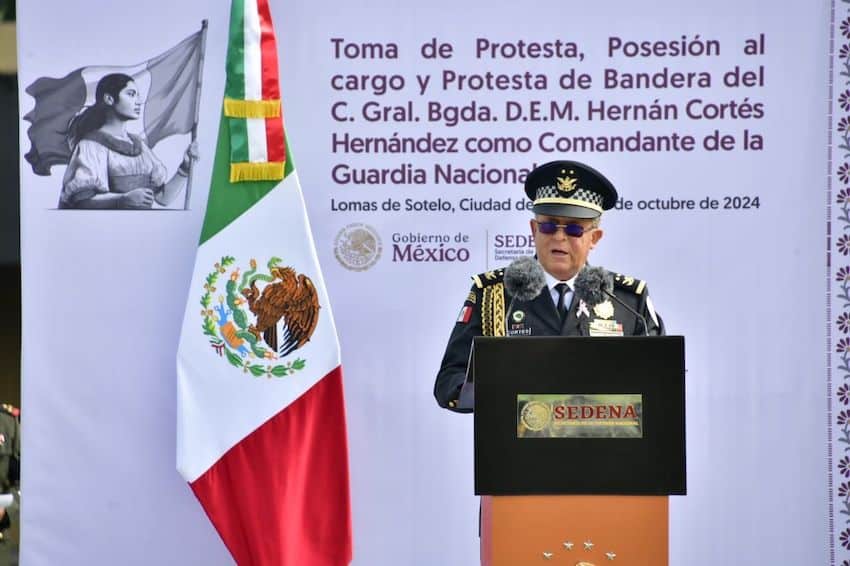
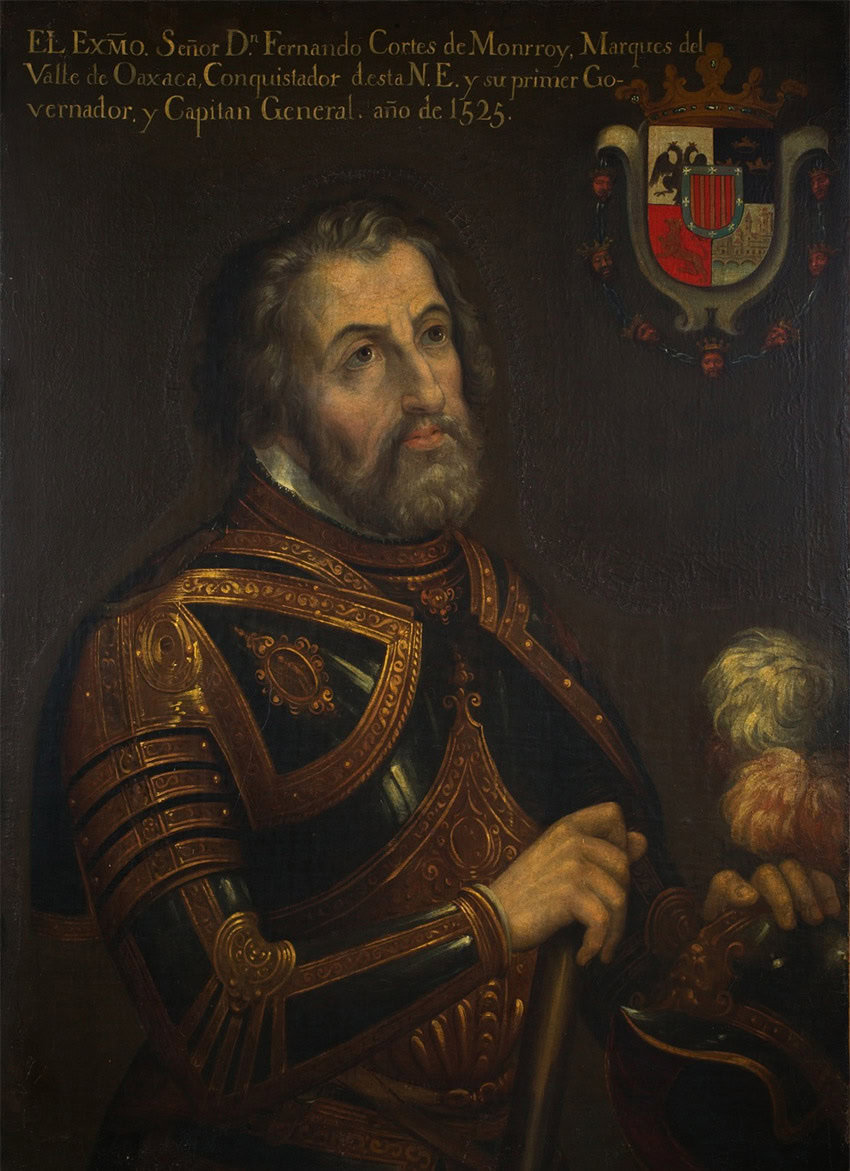
More than 500 years ago, Spanish conquistador Hernán Cortés led the expedition that overthrew the Aztec Empire. Now his namesake is leading the National Guard (GN).
Hernán Cortés Hernández, a 60-year-old Guadalajara native, was sworn in as the interim commander of the GN on Saturday.
“From the conquest to the 4T?” asked a headline in the El Financiero newspaper, referring to the so-called “fourth transformation” political project initiated by former president Andrés Manuel López Obrador and now led by President Claudia Sheinbaum.
“Hernán Cortés ‘rides’ again in the National Guard,” said the headline of a column published by Spanish newspaper El País.
Social media users were also quick to offer commentary on the appointment of the conquistador’s tocayo (namesake in Spanish).
“The general in command of the National Guard — the militarized arm of the [López] Obrador regime … — is called, listen carefully: Hernán Cortés,” journalist Pablo Majluf wrote on X.
Such a thing could not even have occurred to Mexican writers such as satirical novelist and playwright Jorge Ibargüengoitia, he added.

“I wonder if he asked for forgiveness before he was sworn in. You can’t make this shit up,” Salvador Mejía, another journalist, wrote on X.
His post referred to López Obrador’s request in 2019 for the king of Spain to issue an apology for the indignities suffered by the native peoples during the period of the Spanish conquest.
Sheinbaum didn’t invite King Felipe VI to her inauguration last week, saying that he wasn’t on the guest list because he ignored AMLO’s request for an apology.
Who is Hernán Cortés Hernández?
Although he shares his name and first surname with the famous (or infamous) Spanish conquistador, Cortés Hernández is not a descendant of Hernán Cortés de Monroy y Pizarro Altamirano. At least he doesn’t appear to be.
Born in Guadalajara on Oct. 4, 1964, the new National Guard commander joined the military in September 1981 when he was just 16, according to the Ministry of National Defense (Sedena).
Cortés previously served as an army commander in various states including Querétaro, Veracruz and Campeche. Among other positions, he was a military attaché for the Mexican Embassies in Germany and France, and director of the Center for Research and Development of the Mexican Army and Air Force.
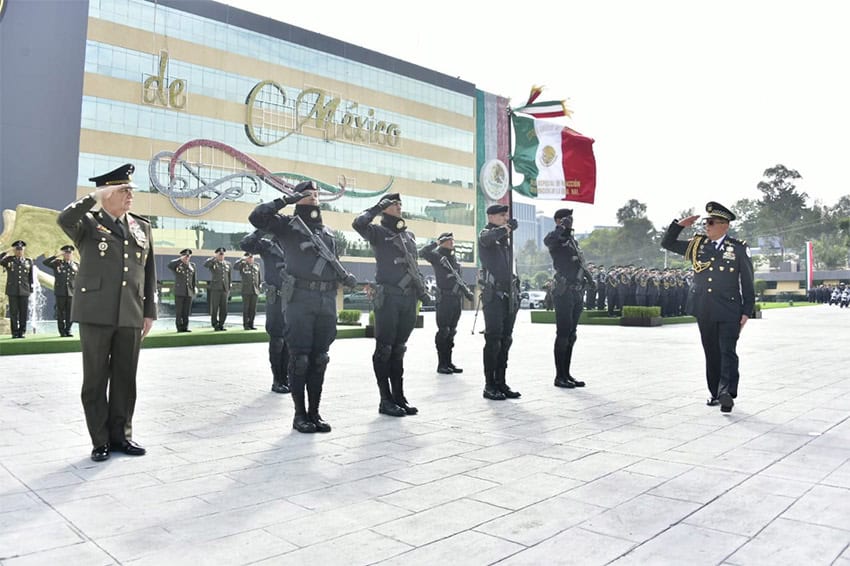
He now leads a security force with some 130,000 members that was last week placed under the control of Sedena after both houses of federal Congress passed a constitutional bill aimed at giving the military responsibility for the GN.
The National Guard is set to play a central role in the security strategy of the Sheinbaum administration. After she was sworn in last week, the president said that strengthening the security force was one of four core tenets of her strategy.
The GN was created by the previous federal government and inaugurated by López Obrador on June 30, 2019. Cortés is the security force’s third commander after Luis Rodríguez Bucio and David Córdova Campos.
With reports from El Financiero and Eme Equis