Mexico City has inaugurated a new bike route that connects the Historic Center with the Huipulco area in the south, near the Banorte Stadium where World Cup games will be played this summer.
Dubbed the Great Tenochtitlán Bike Path, the cycling corridor covering 15 kilometers (eventually 17) in each direction runs along Calzada de Tlalpan, the major north-south route since Aztec times.
The project is part of Mexico City’s sustainable mobility strategy for the 2026 World Cup and beyond, as it seeks to prioritize bicycles and pedestrians over cars, and improve connectivity between the center and the south of the capital.
The new cycling path was inaugurated by Mexico City Mayor Clara Brugada in an event that included more than 10,000 cyclists riding along the new corridor. Prior to the mass ride, hundreds of cyclists formed the image of a monumental bicycle at the Zócalo.
During her speech, Brugada said the new bike path is part of a wider project that seeks to add 300 kilometers of bike lanes across Mexico City.
“Every bike ride is a way to resist inequality in the use of public space and to affirm another way of experiencing the city with a bicycle; closer, more human, more just,” she said. “The bicycle is the most democratic vehicle; anyone can use it, a girl, a boy, young people or older people.”
The cycle path features rehabilitated sidewalks to improve pedestrian comfort and safety along the same route. More than 5,000 new lights will allow for nocturnal rides.

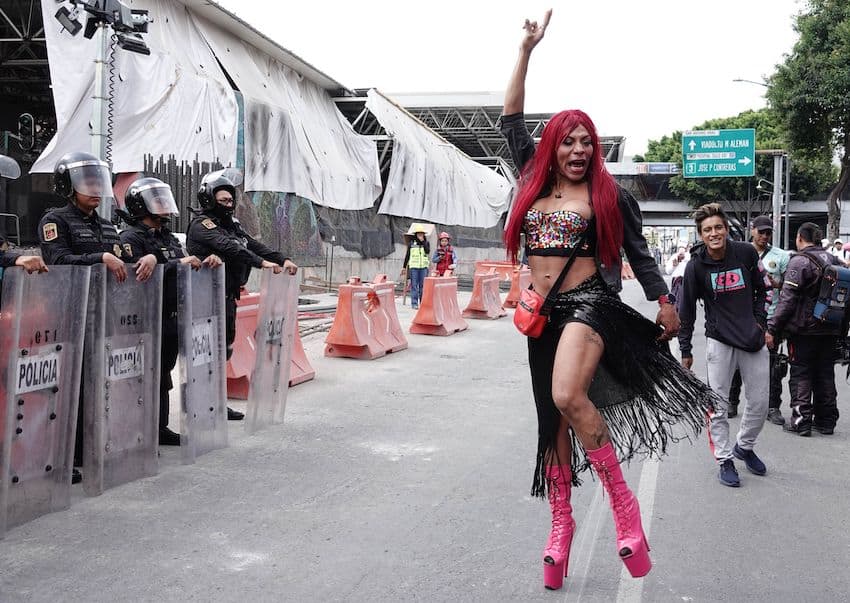
Not everyone in the city is celebrating the initiative. Some groups say the bike lane is part of a “social cleansing” in the lead-up to the World Cup, claiming it is designed for tourism and not for residents.
The event saw protests from sex workers, merchants and residents, who expressed concerns about the impact on their activities, saying they were not consulted on the changes.
Meanwhile, independent sex workers who work on Calzada de Tlalpan — a road that has historically been known by different names for being a prostitution hotspot — claim that the bike path has generated “displacement,” both for them and for merchants in the area.
Protesters also complained about the reduction of vehicle lanes, changes to pick-up and drop-off zones and obstruction of pathways used by pedestrians, including parents and children who attend nearby nurseries and schools.
With reports from El Financiero, La Silla Rota, Proceso and Record