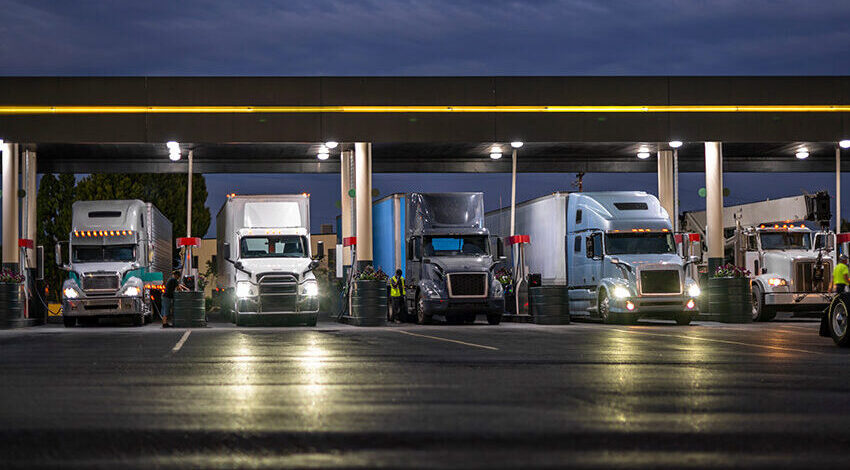
Another tariff threat hangs over Mexico’s automotive after U.S. President Donald Trump on Thursday announced a 25% tariff on heavy truck imports. The measure, set to go into effect Oct. 1, will have a significant impact on Mexico unless some or all Mexican products receive exemptions based on the USMCA free trade agreement.
It is unclear, however, if the duties will apply to Canada- or Mexico-made trucks that are compliant with the United States-Mexico-Canada Agreement (USMCA). Without that exemption, Mexico will be severely affected.
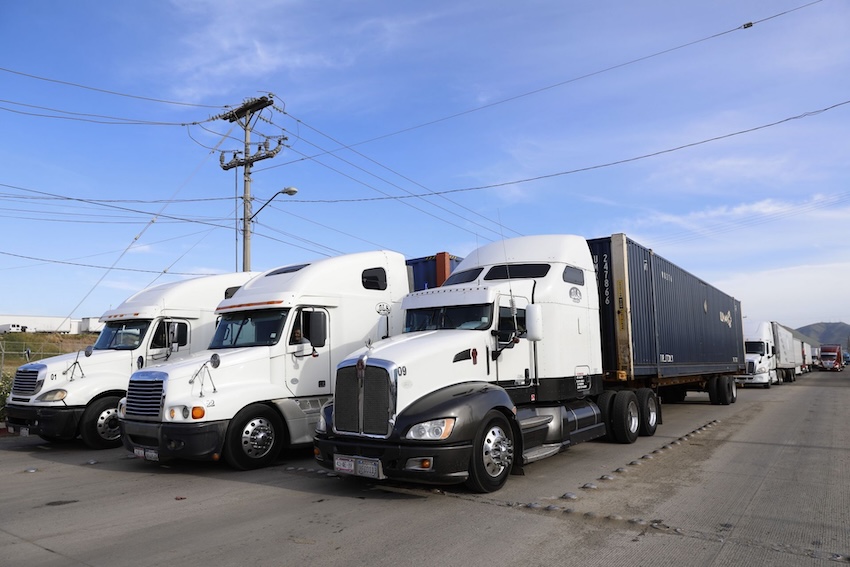
Mexico was the largest exporter of medium- and heavy-duty trucks to the U.S. last year (78% of the market), followed by Canada, Japan, Germany and Turkey, according to the International Trade Administration.
Claiming the sweeping new tariffs are designed to protect U.S. manufacturing and national security, Trump said they also include 100% duties on branded drugs and 30% levies on furniture.
Mexico is home to 14 manufacturers and assemblers of buses, trucks and tractor trucks, and two manufacturers of engines, NBC News reported. It is also the leading global exporter of tractor trucks, 95% of which are destined for the United States.
Juan Carlos Baker, CEO of Ansley Consultants, told transportation industry publication T21 that the immediate effect is that Mexican trucks and tractor-trailers will be more expensive when exported to the United States, though the direct impact on competitiveness and future investments remains to be seen.
Tariffs would likely affect Chrysler-parent Stellantis, which produces its popular heavy-duty Ram trucks as well as commercial vans in Mexico. Sweden’s Volvo Group is building a US $700 million heavy-truck factory in Monterrey that is set to start operations in 2026.

Trump said the new tariff on heavy trucks imported into the United States is designed to level the playing field for the U.S. truck-making industry which has suffered “from the onslaught of external disruptions” and “unfair foreign competition.”
CNN reported that U.S. truckmakers have been hit relentlessly by the White House’s compounding tariff.
Steel and aluminum tariffs applied in June have raised the price of all metals — both imported and domestic. As a result, some U.S.-built trucks are more costly than trucks made by foreign manufacturers.
Thursday’s announcement came about after a U.S. Commerce Department (DOC) investigation which Trump ordered to determine whether medium-duty and heavy-duty truck imports pose a national security threat.
Mexico voiced opposition to the investigation, telling the DOC in May that all Mexican trucks exported to the United States have on average 50% U.S. content, including diesel engines.
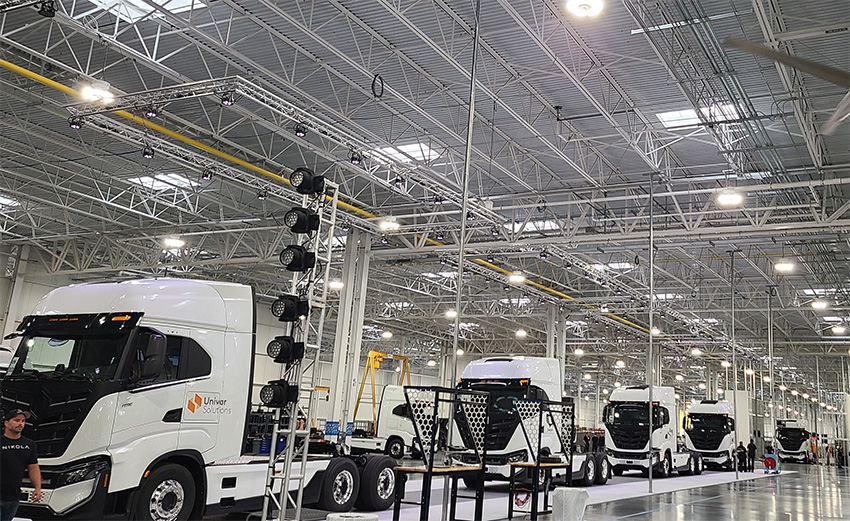
Trump insisted the tariffs will protect the U.S. truck-making industry, adding that “we need our truckers to be financially sound and healthy, for many reasons, but above all, for national security.”
The U.S. Chamber of Commerce questioned that claim, saying that imports of commercial trucks and parts used in their manufacture are sourced overwhelmingly from U.S. allies, “posing no threat to U.S. national security.”
The Chamber said manufacturers should not be penalized with tariffs on imports from Mexico and Canada after making significant investments and adjustments to overcome [supply chain] challenges.
Last year, the United States imported almost US $128 billion in heavy vehicle parts from Mexico, accounting for approximately 28% of total U.S. imports, Mexico said.
Truck sales in the U.S. have been sluggish for most of the year, however.
The U.S. imported US $32.41 billion worth of trucks, buses and special-purpose vehicles from around the world from January to July 2025, a 15.4% decrease compared to the same period in 2024.
Mexico dominated those shipments, exporting US $25.86 billion, a year-over-year decrease of 13.8%, according to data from the DOC.
With reports from El Economista, T21, CNN, Reuters, NBC News, Freight Waves and BBC