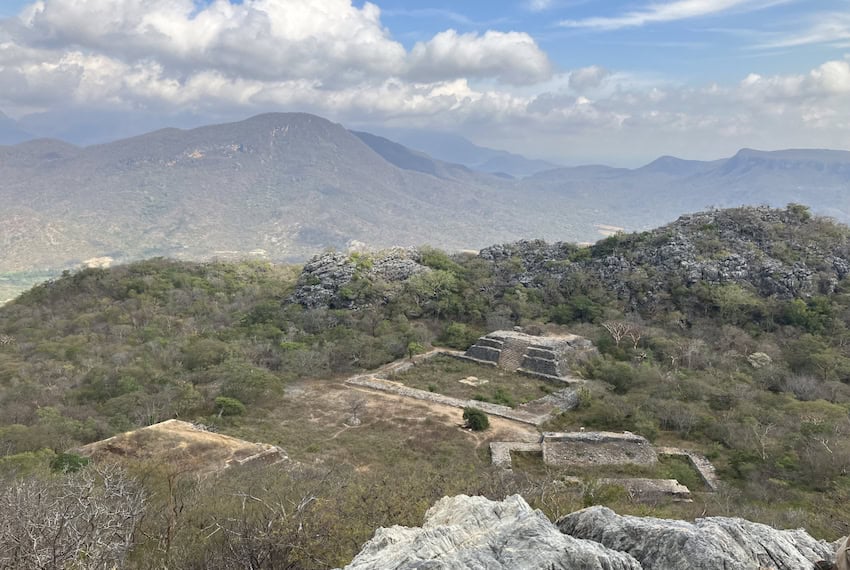
A coalition of Mexican biologists and environmentalists is working to transform the Guiengola archaeological zone in Oaxaca into a protected natural reserve, citing the area’s rich fauna and flora as both motivation and evidence for urgent conservation efforts.
Located in the southern part of Oaxaca state on the Isthmus of Tehuantepec — Mexico’s narrowest strip of land between the Pacific Ocean and the Gulf of Mexico — Guiengola is known for its ancient Zapotec ruins and unique landscapes.
It was a sprawling enclave before being abandoned shortly before the Spanish conquest in 1521.
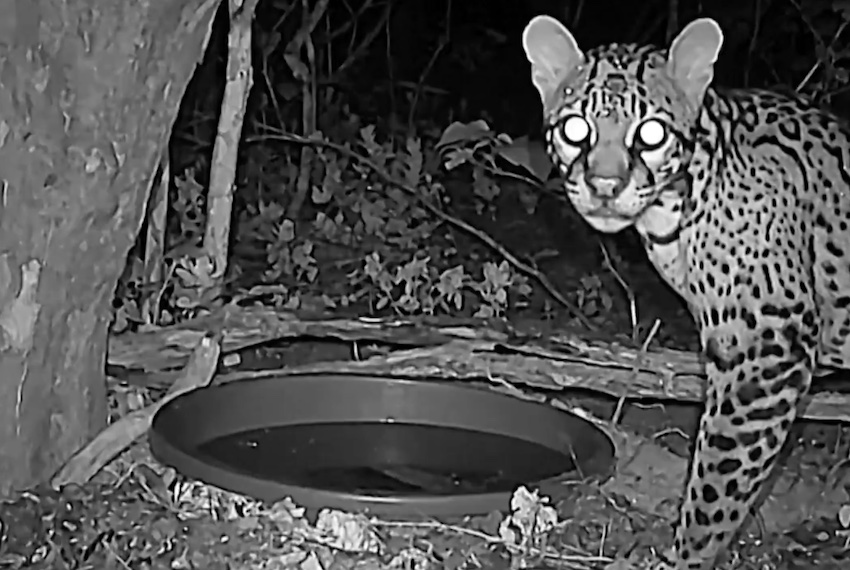
In recent weeks, 23-year-old biologist Eduardo Nicolás Michi Bautista has deployed camera traps across more than 300 hectares to document local fauna and promote awareness in nearby communities.
The devices have captured video of coatis, rabbits, squirrels and ocelots, plus a variety of birdlife including owls, doves, chachalacas and magpies.
A coati is a playful, diurnal creature said to look like a cross between a raccoon, a monkey and an anteater; an ocelot is a small- to medium-sized wildcat with a distinct spotted coat; a chachalaca is a social, noisily chattering bird that usually travels in groups of six to 12.
“If this area is declared a protected area, all these species will also be under that protection,” said Michi Bautista, who is affiliated with Benito Juárez Autonomous University of Oaxaca. Press and social media reports do not indicate if he is a student or on staff.

His monitoring initiative aims to spark conservation action and inspire local support for Guiengola.
This push comes amid ongoing legal and civil efforts to safeguard the archaeological zone from threats like urbanization and unauthorized land sales, as well as calls to clarify and strengthen its legal protection.
Archaeologists and explorers have known of the area since the 1800s, but its significance as a major Zapotec city has only recently emerged due to new technology. Before, it was regarded as simply a fortress or defensive outpost.
While activists have appealed to, first, the National Institute of Anthropology and History (INAH), and, then, the nation’s courts to officially decree the site as a cultural and environmental asset, Michi Bautista’s team is focusing on scientific documentation and grassroots partnerships with ecotourism guides.
The tough-to-reach area is about 14 kilometers from Tehuantepec, a municipality of 67,000.
“With a wildlife monitoring project on our enigmatic Guiengola Hill, we will be able to implement actions for its conservation,” the municipality posted on Facebook. “It is a source of pride to have this initiative by young biologist Eduardo Michi Bautista, a Tehuano” (a person from Tehuantepec).
“This is just getting started,” Michi Bautista added.