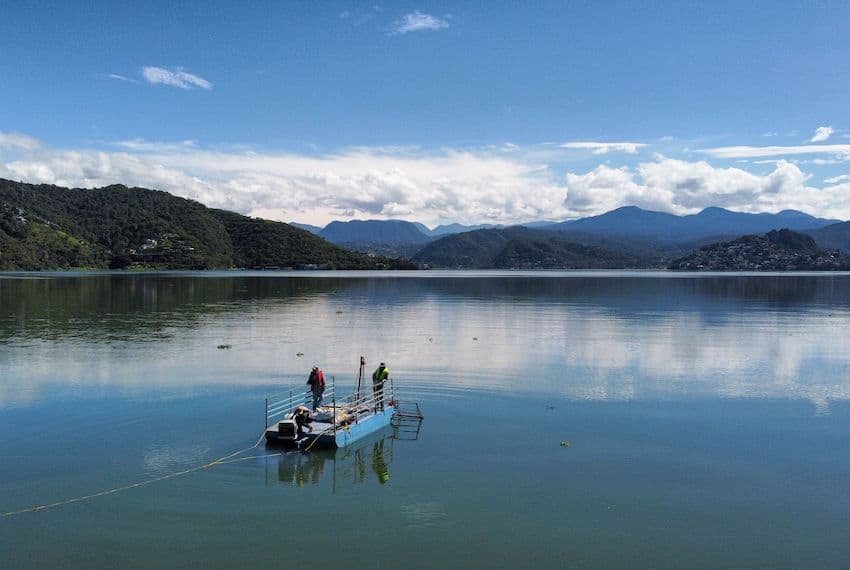
After exceptionally abundant rain over the summer, only 7.5% of Mexican territory is affected by drought, according to the Oct. 15 report from the National Meteorological Service (SMN) and the National Water Commission’s (Conagua) Drought Monitor.
That figure represents a notable decrease compared to other periods of the prolonged dry spell that began approximately five years ago. In mid-2025 (before the rainy season), nearly half the country was facing some level of drought, which highlights this season’s rapid environmental recovery thanks to extraordinary rainfall.
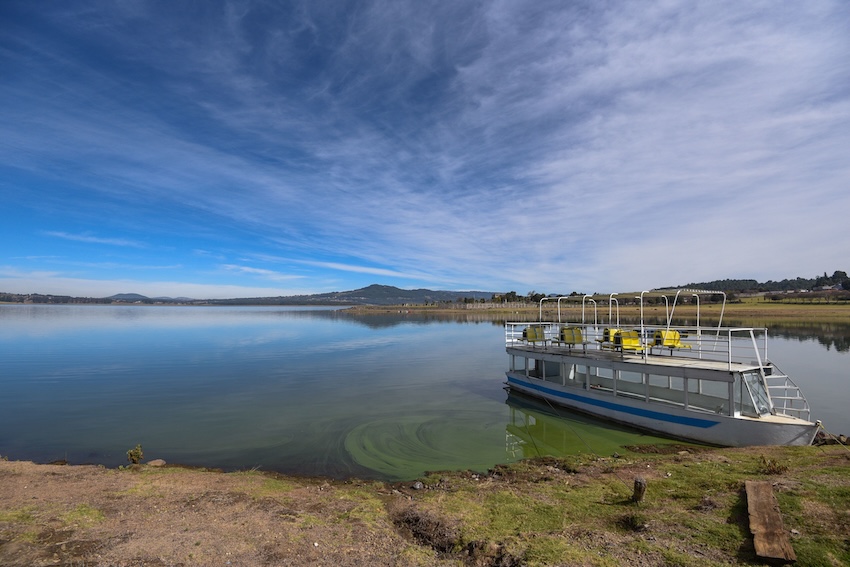
Starting in mid-2021, drought became a severe problem in Mexico, affecting sometimes 75% to 85% of the territory and creating a water crisis for crops and reservoirs.
Even towards the end of last year’s rainy season, on Oct. 15, 2024, 27.68% of Mexico’s territory was experiencing drought conditions, nearly four times what it is today at the same time of year. And that figure was considered good news at the time, after the percentage had soared to 73.79% in June 2024 at the start of the rainy season.
The year 2023 was exceptionally dry, with 75% of the nation undergoing drought at the beginning of October. That percentage dropped to 59% by the end of the month, but it still dwarfs today’s 7.5%.
According to the Drought Monitor, abnormally dry conditions are still impacting the border area between Chihuahua and Sonora.
Meanwhile, in northern Baja California, Sonora, Chihuahua and Coahuila, as well as in Quintana Roo and Yucatán, severe and extreme drought conditions are affecting just 2.5% and 0.3% of the area, respectively, while most of the northern and northwestern regions have largely alleviated their drought conditions.

Notably, Baja California Sur, Sinaloa and Durango are completely drought-free.
The rest of the country, particularly the center, south and southeast, has experienced abundant rainfall in recent weeks, and shows no signs of drought.
Several meteorological phenomena have influenced this year’s rainy season, such as hurricanes, tropical waves and cold fronts. For instance, Hurricane Narda and several tropical storms in September brought above-average rainfall, leading to a swift decrease in the areas experiencing moderate and severe drought. Authorities are continuing to monitor watersheds and reservoirs, particularly in the northern states where the risk persists.
While intense rainfall has helped reduce drought conditions, it’s also caused severe damage to dozens of communities. The recent torrential rains between Oct. 6 and 11 have left a catastrophic scenario in the states of Veracruz, Hidalgo, Puebla, Querétaro and San Luis Potosí, where the death toll stands at 78 with 23 individuals still reported missing, as of Oct. 22.
With reports from Meteored