The peso fell this week in response to concern about the cancellation of Mexico City’s new airport and a warning from the credit rating agency Fitch that it could downgrade Mexico’s debt rating.
But there ought to be better news for the currency based on “burgernomics.”
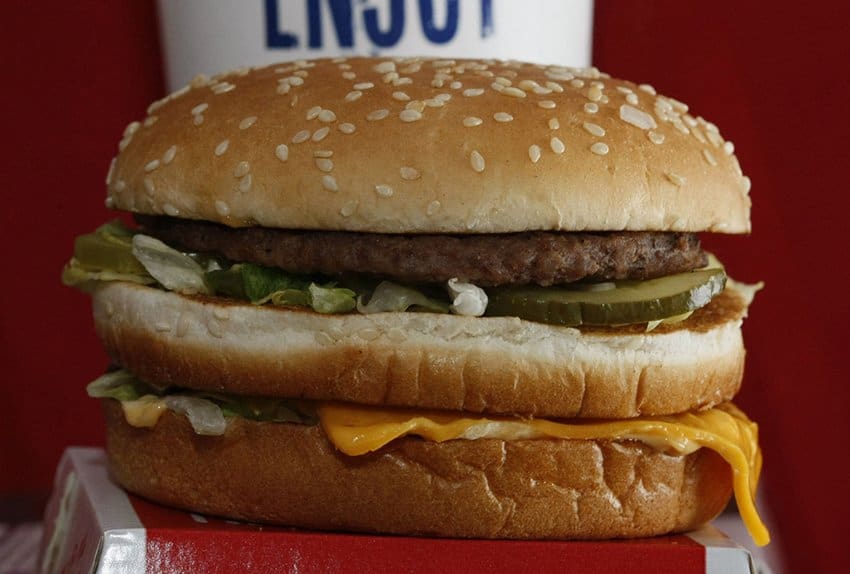
According to the Big Mac Index — an indicator created by The Economist newspaper that compares prices of the McDonald’s hamburger as an informal way to measure the purchasing power parity (PPP) between currencies — the peso is undervalued by 44.48 % against the US dollar.
In other words, one US dollar should buy just over 11 pesos, not 20 as is currently the case.
The price of a Big Mac is 50 pesos (US $2.50) in Mexico, less than half the US $5.51 it costs in the United States.
With the exchange rate at around 20.1 pesos to the dollar, the price of the hamburger should be 111 pesos.
On Monday this week, the peso dropped to its lowest level against the US dollar in four months after president-elect López Obrador confirmed that the 285-billion-peso (US $14 billion) airport project will be canceled.

While, the currency regained some ground, it fell by 2% on Wednesday after Fitch issued its warning due to concern about the incoming government’s policies.
All told, the peso lost more than 8% against the US dollar in October, with the slide starting in the second half of the month.
Charles Seville, Fitch’s primary analyst for Mexico, said the decision to scrap the airport, which followed a public consultation on the future of the project, “came as a shock to the markets.”
Alfonso Esparza, an analyst at online forex broker OANDA, said “the airport announcement came at a really bad moment for the peso because it basically clouded big investments and flows in uncertainty, erasing all the good will of the peaceful election in Mexico and the successful renegotiation of NAFTA.”
Two days after López Obrador’s announcement, Fitch revised its rating outlook for Mexico to negative.
“There is the suggestion that other projects could be put to a popular vote, which would introduce more uncertainty,” Seville said, adding that a referendum to repeal the energy reform introduced by the current government is the most worrying possibility.
The negative outlook on Mexico meant that there was a “50-50” chance of a credit rating downgrade over the next two years, he said.
Source: El Economista (sp), Reuters (en)