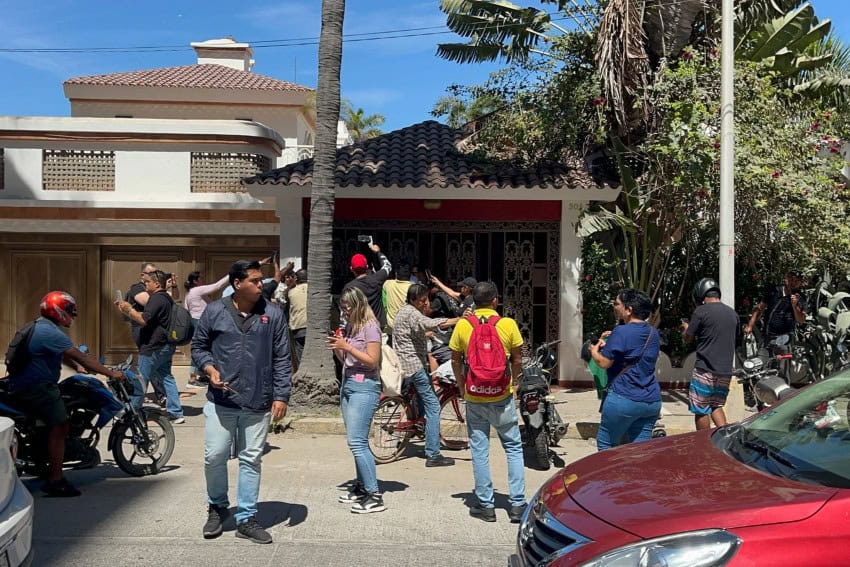
A viral video showing an encounter between a homeowner and a construction worker in Mazatlán has escalated into public protests and a heated debate over urban tensions, misinformation and the power of social media.
The incident, initially described as a case of a gringo (American) harassing a Mexican laborer, has since been clarified: The homeowner, José Ignacio Lizárraga Pérez, is a lifelong Mazatlán local — a Mazatleco — not an American, Canadian or other foreign national.
@mayrifrancoJusticia!! @Mexico 🇲🇽 #libertad #mezicolindoyquerido♬ sonido original – Mayri Franco
What happened earlier this week reportedly was this: Lizárraga, a 78-year-old lawyer, asked construction workers, eating lunch on a public sidewalk outside his home, to move because they were blocking his entrance and garage.
He said his house is on Cruz Lizárraga Avenue, a well-known street one block from the beach named not for him but for clarinetist Don Cruz Lizárraga, the founder of the famous music group Banda El Recodo.
Being built right there, near the intersection with Hamm Street, is Stelarhe, a luxury residential complex of two 30-floor towers offering ocean views and high-end amenities.
“All I asked of the workers who were blocking the entrance to my home on Monday was that they move to another side to clear the way,” Lizárraga told Noroeste in a phone interview, adding, “I’m not a gringo nor do I want to be. I’m from Mazatlán, and my family has been here for generations.”

A video of the encounter was shared by a bystander who believed Lizárraga was a foreigner and labeled him as such. Shortly after being posted Tuesday, it went viral.
Social media outrage followed, with users accusing him of racism and classism and the harassment of a Mexican citizen in his own territory.
On Wednesday, dozens of protesters gathered outside Lizárraga’s home, chanting, waving Mexican flags, throwing eggs and banging on his doors, while passing cars honked in support. The rhythm of the song “Por Mi México” blared in the background.
“Look, they’re destroying my garage doors,” Lizárraga recounted as the protest unfolded.
Despite the commotion, no police intervened until after damage was done, he said, adding that his wife called authorities out of concern for their safety.
Lizárraga explained that the ongoing construction of the tower has brought daily disruptions for years, including blocked entrances, noise and debris — a common experience for Mexicans in many urban locations, made especially irritating when the construction is being driven by tourism and creating more rental units for foreigners.
🔵🔴 Se le armó al gringo en #Mazatlán 🤣 Decenas de personas se reunieron afuera de la casa del extranjero que quitó de su banqueta a un trabajador, solo por estar comiendo. Hicieron carnita asada, pusieron música y hasta le aventaron huevos a su casa 😱🤣 #SVNNoticias pic.twitter.com/BGb48Cg9r3
— Sonora Visión Noticias (@SVNNoticias) April 24, 2025
“At lunchtime, between 15 and 20 people come here to eat on average daily … I have no problem with that. … What I do have a problem with is when … they block the garage and they block the entrance door.”
The worker involved, named as Jorge, described feeling “attacked” but said he did not wish to escalate the situation. His colleagues, however, voiced anger at what they perceived as disrespect toward local workers.
The episode has reignited debates over gentrification, urban development and the impact of tourism-driven construction, which many locals feel has eroded community cohesion and strained public spaces.
Authorities, including Jaime Othoniel Barrón Valdez, secretary of public security in Mazatlán, eventually confirmed Lizárraga’s local status — a day or two after the incident — and cautioned against mob justice fueled by social media rumors.
“It’s hard to imagine that a lie can have such a reach,” Lizárraga said.
Although this incident proved to not involve a foreigner, gringo-versus-locals incidents are not uncommon in Mazatlán, a Sinaloa port city of 442,000.
About a year ago, a video sparked a fiery debate between people supporting the right of musicians to play loud banda music on or near the beach and backers of an anti-noise ordinance. Those seeking to prohibit such music included hotel owners, business leaders and politicians — allegedly in an attempt to cater to the desires of tourists and non-Mexican residents.