Restoration work proceeds at 18th century Querétaro mission

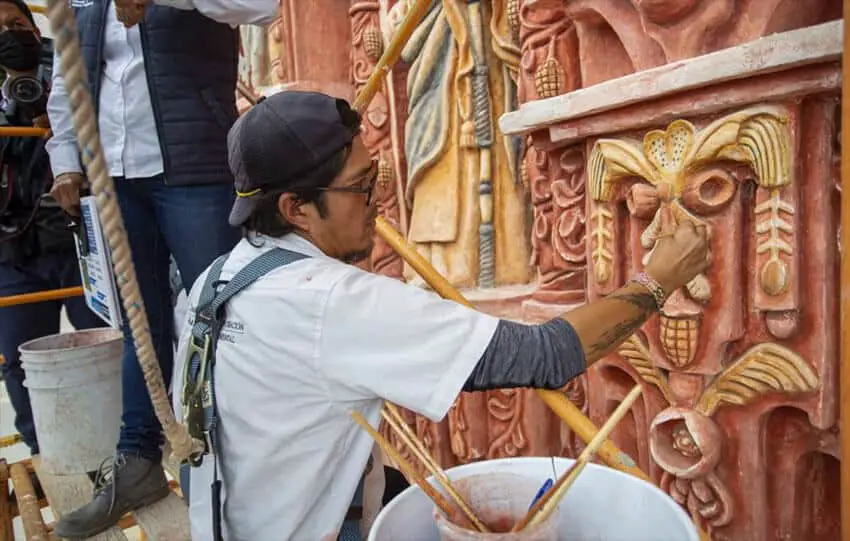
Restoration work is under way that the Santa Maria del Agua Mission in the town of Landa de Matamoras, Querétaro. The Franciscan mission was one of a series of five Catholic missions built between 1750 and 1770 as part of a grand plan to evangelize the native peoples of the hard-to-access region.

By the time the missions were built, the Spanish colonizers had had several setbacks with local populations destroying any structures or settlements they managed to establish in the region. Franciscan monk Junípero Serra is generally credited with the idea to build the five consecutive missions even though other monks, including Miguel de la Campa de Landa, were involved in their construction and management.

Serra is also said to have invested himself in the well-being of the local populations, their issues, and their health as a kind of early liberation theologist, but the historical record shows that most of the local communities were never fully subjugated by the colonialists or by the Catholic Church.

The Santa María del Agua Mission consists of a complex of buildings surrounded by an outer wall that encircles an open-air atrium with a raised cross at its center. The church itself, like its fellow missions, is known for its Mexican Baroque style and has an impressive facade that includes images of the angels, cherubs, apostles, and martyrs, as well as St. Michael the Archangel vanquishing the devil.
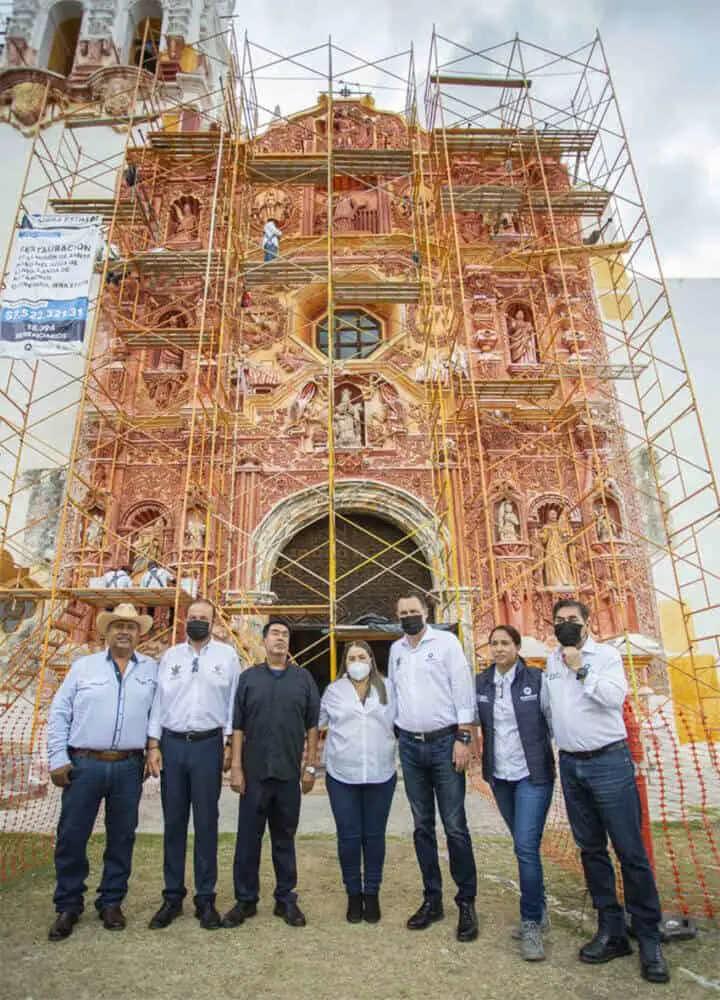
A front view of the mission under restoration in Landa de Matamoros.

The 7.5-million-peso (US $376,000) government-funded restoration project required a particular amount of care and attention as the collection of missions was named a World Heritage Site by UNESCO in 2003. Local officials are hoping that the newly restored mission will draw even more religious tourists to this part of Querétaro state.

The area is also well known for the La Joya de Hielo, an area inside local communal lands that is home to 100-million-year-old marine fossils on public display.

With reports from Agencia Informativa de México

Have something to say? Paid Subscribers get all access to make & read comments.
Manzanillo, Colima, México, 13 de marzo de 2026. La doctora Claudia Sheinbaum Pardo, presidenta Constitucional de los Estados Unidos Mexicanos en conferencia de prensa matutina, “Conferencia del Pueblo” desde Colima. La acompañan Indira Vizcaíno Silva, gobernadora Constitucional del Estado de Colima; Omar García Harfuch, secretario de Seguridad y Protección Ciudadana (SSPC); Raymundo Pedro Morales Ángeles, secretario de Marina (Semar); Bulmaro Juárez Pérez, divulgador de lenguas originarias, presentador de la sección “Suave Patria”; Ricardo Trevilla Trejo, secretario de la Defensa Nacional (Sedena); Jesús Antonio Esteva Medina, secretario de Infraestructura, Comunicaciones y Transportes; Bryant Alejandro García Ramírez, fiscal general del Estado de Colima; Fabián Ricardo Gómez Calcáneo; Rocío Bárcena Molina, subsecretaria de Desarrollo Democrático, Participación Social y Asuntos Religiosos de la Secretaría de Gobernación; Efraín Morales López, director general de la Comisión Nacional del Agua (Conagua); Marcela Figueroa Franco, secretaria ejecutiva del Sistema Nacional de Seguridad Pública (SESNSP) y Guillermo Briseño Lobera, comandante de la Guardia Nacional (GN). Foto: Saúl López / Presidencia

Mexico’s week in review: Congress deals Sheinbaum her first legislative defeat

1
The week of March 9 in Mexico was marked by standoffs between allies in Congress and adversaries at the airport. Here's what you missed.
A soldier displays seized handguns

The US and Mexico, growing together and growing apart: A perspective from our CEO

1
From a historic drop in homicides to opposite bets on electric vehicles, Mexico News Daily's CEO breaks down where the U.S. and Mexico are converging — and where they're not.
Veracruz Gov.

Veracruz governor blames private vessel for 200-kilometer Gulf Coast oil spill

1
The spill, which has spread to over 200 kilometers of Mexico's Gulf Coast beaches, has been traced to a private oil tanker off the coast of Tabasco.
BETA Version - Powered by Perplexity