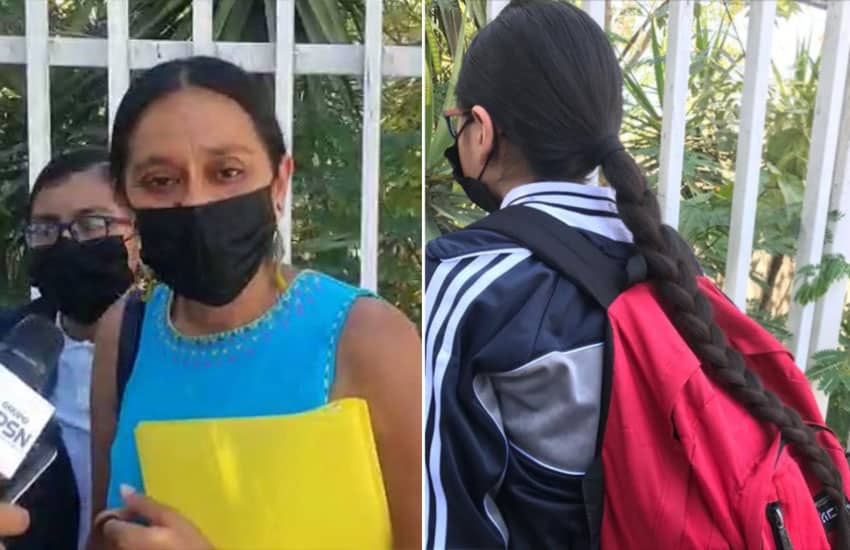
A school in Baja California briefly barred an indigenous boy from school this week for having long hair, before reversing its position in the face of human rights complaints.
On Thursday, staff at the Secundaria Número 4 Ricardo Flores Magón school in Tijuana said that Acoyani, a 12-year-old student whose dark, braided hair reached all the way down his back, wouldn’t be allowed to continue attending classes. The reasons they gave were that he could be confused for a girl or that his long hair might encourage other male students to come to school with long hair.
María Isabel Castillo Díaz, the boy’s mother, explained that as part of the family’s Mexica traditions, it’s important for men to have long hair for ritual dances. She also said that in a year, when the boy turned 13, he was allowed to decide for himself if he wanted to keep his long hair, as part of his transition from childhood to adulthood.
Castillo filed a complaint against the school with the National Council for the Prevention of Discrimination (Conapred) citing a violation of the right to an education in the case of her son. The following day the school recanted its decision and allowed the boy to continue attending.
Members of the Baja California state government, including state Education Minister Gerardo Arturo Solís Benavides, insisted that discriminatory practices against indigenous students, or any other student, will not be tolerated in the state’s school system.
With reports from El Imparcial and Uniradio Informa