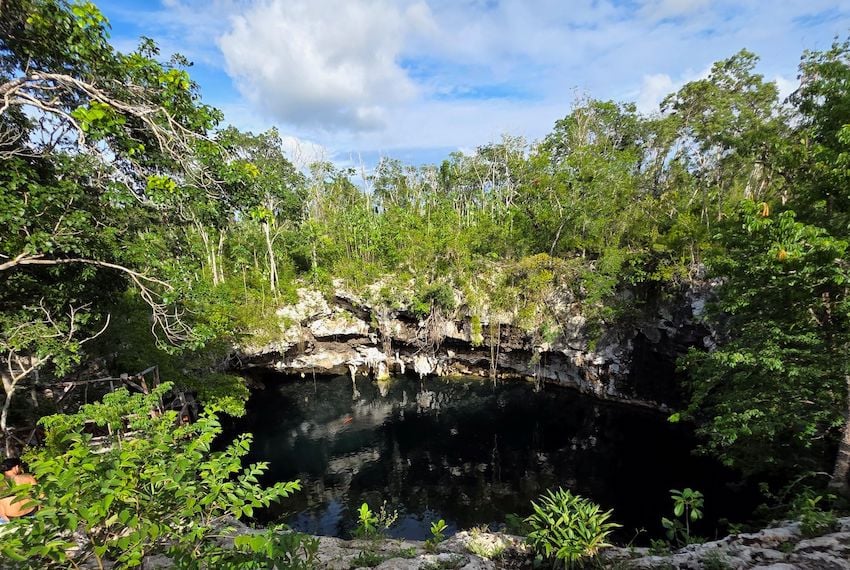
Deep in the underground waters of a cenote in Quintana Roo, divers have documented the skeletal remains of a young woman who may have lived in pre-Columbian times, Mexican authorities revealed last week.
Mexico’s National Institute of Anthropology and History (INAH) said custodians of the Yaakun cenote near Playa del Carmen reported the find after technical divers spotted submerged materials in late 2025.
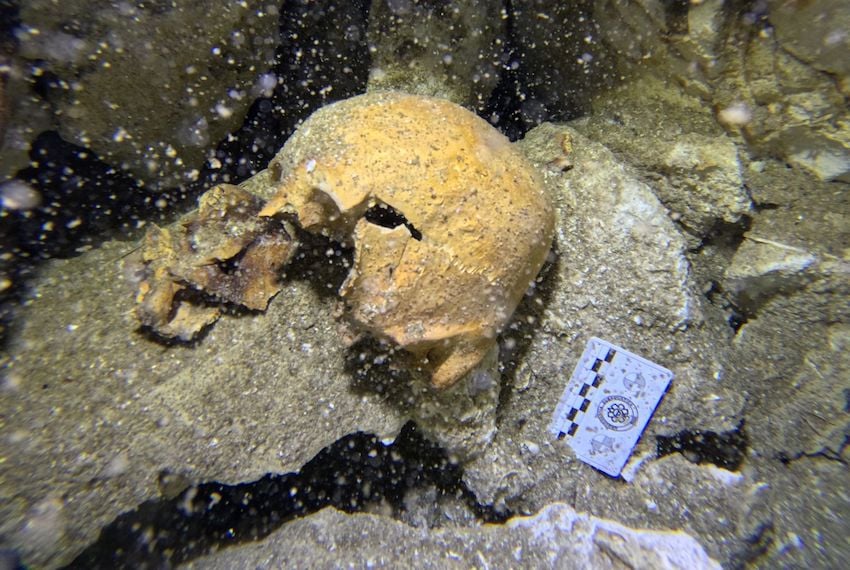
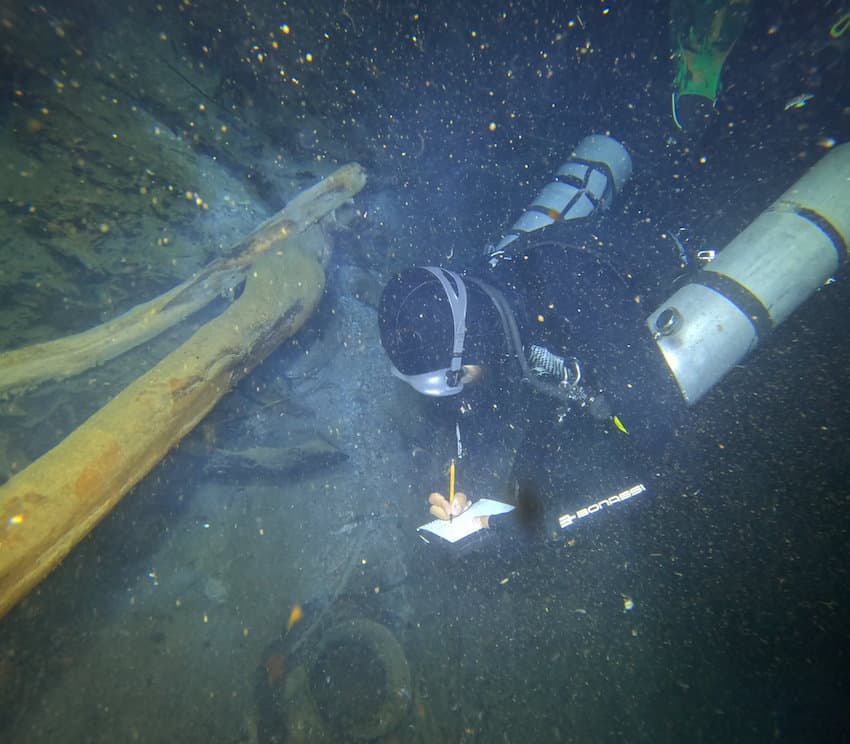
Within months, underwater archaeologist Gustavo García García led a five-day survey, conducted at depths of 42 to 53 meters (138 to 174 feet), that confirmed a cluster of human bones and, about 30 meters away, ceramic vessels.
Preliminary analysis indicates the individual — who has been named Yatzil — was between 18 and 25 years old, based on skeletal features and limited dental wear.
Researchers have identified long bones, the pelvis, a cranium and part of a mandible with three molars.
Her remains, still submerged in a sloping chamber about 45 meters below the surface, are considered well preserved due to stable underwater conditions, including low light and temperature.
The ceramics — mostly globular pots likely used domestically in the eastern Maya region — may date to the Late Postclassic period (1200–1521 AD), according to INAH.

However, researchers are being cautious about assigning a precise date or cultural affiliation to Yatzil’s remains, noting that her chronology is still unknown despite the ceramics likely dating to the pre-Columbian period (before the Spanish conquest in the early 1500s).
INAH specialists say they will wait for DNA from a tooth scheduled to be removed in a second field session in 2027 before drawing firmer conclusions.
Authorities have launched the Cenote Yaakun Research Project to document and protect the site. A perimeter has been established, and divers are urged not to disturb the materials.
Culture Minister Claudia Curiel de Icaza emphasized the importance of working with the local communities on discoveries such as this one.
“Each archaeological find that we manage to protect,” she said in a press release, “strengthens our knowledge about the cultures that inhabited this territory and reaffirms that heritage is a shared responsibility.”
The Yaakun project is the latest underwater discovery on Mexico’s Caribbean coast, where at least 11 prehistoric skeletons were found in flooded caves and cenotes between Playa del Carmen and Tulum in recent decades. One of them, reported earlier this year, may be around 8,000 years old.
With reports from Infobae and Informador