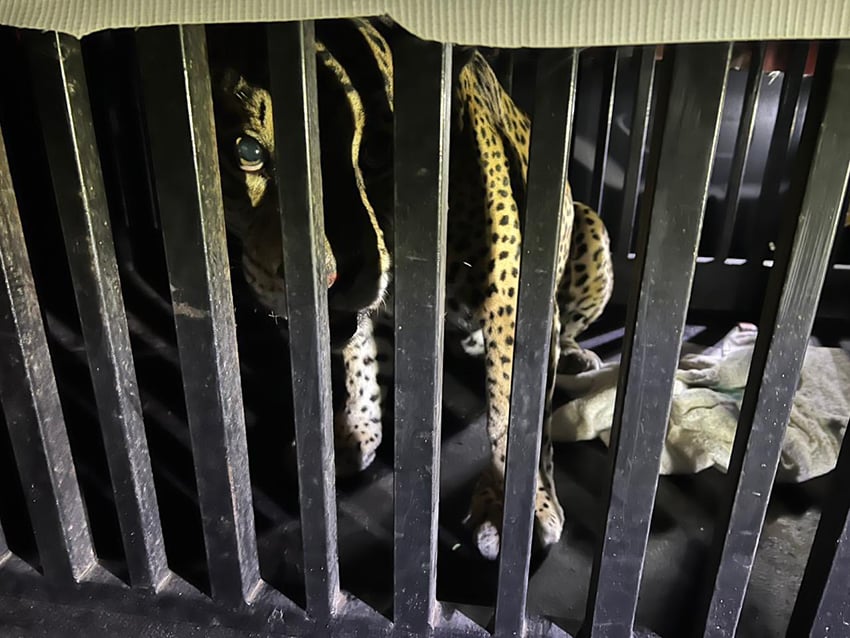
A jaguar has been rescued in the mountains near the state capital of Tamaulipas after becoming trapped in a wild boar snare located on private property, state officials said this week.
The presence of the jaguar was reported to the authorities by local residents, and the government immediately dispatched wildlife management specialists to secure the animal.
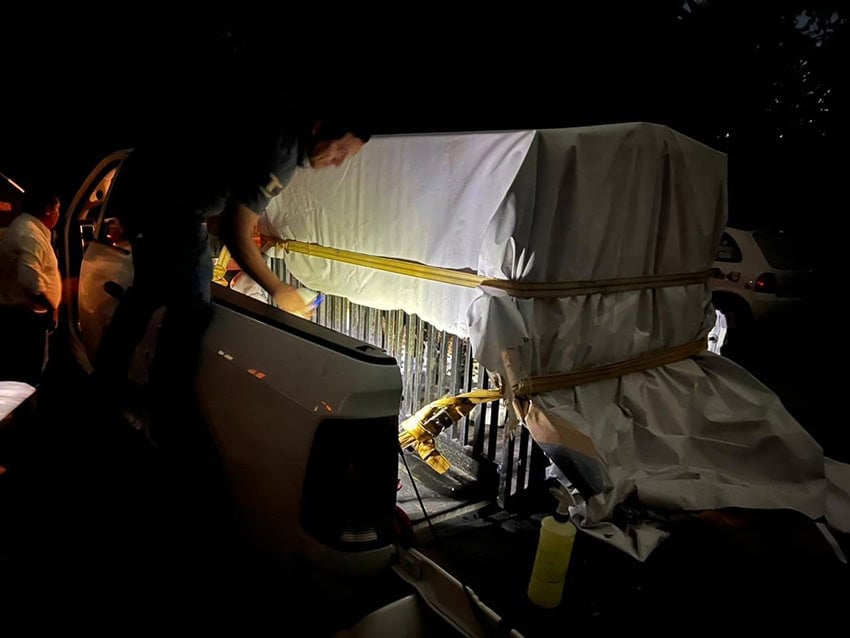
According to officials from the Tamaulipas Parks and Biodiversity Commission, the jaguar sustained injuries from the snare and is now receiving care from veterinarians at the Tamatán Zoo in Ciudad Victoria.
Eduardo Rocha Orozco, the director of the parks commission, said the priority is to ensure the animal’s recovery and monitor its physical condition before considering whether it can be released back into its natural habitat.
Once the specimen is deemed to be in optimal health, a technical evaluation will be carried out to determine the most suitable site for its release, he said.
Wildlife specialists warn that boar snares and similar traps pose a risk to protected species, including the jaguar and the ocelot, as they can accidentally get caught up in them and suffer serious injuries.
Authorities reiterated their call for the public to immediately report any situation that endangers wildlife, so as to facilitate timely intervention and contribute to the conservation of native species in Tamaulipas.

Tamaulipas represents the northernmost limit of the jaguar’s continuous range in the Americas.
According to a report published in the newspaper Milenio in November, there are an estimated 54 jaguars inhabiting the state’s protected areas, such as the El Cielo Biosphere Reserve and the Sierra de Tamaulipas.
Earlier this year, however, The Wildlife Society reported that jaguar density is rapidly declining in northeastern Mexico. It said that researchers believe ongoing development and construction of a new highway are contributing to the declining health of jaguar populations in the region.
Fortunately, research indicates that many local residents demonstrate appreciation for the cats, particularly as they help attract nature tourists to the area.
“People in these areas don’t see jaguars as a threat anymore, but as a source of things people can get to know,” Zavdiel de la Rosa, a PhD candidate in natural resource management at the Autonomous University of Tamaulipas, told The Wildlife Society.
With reports from Hoy Tamaulipas, Milenio and The Wildlife Society