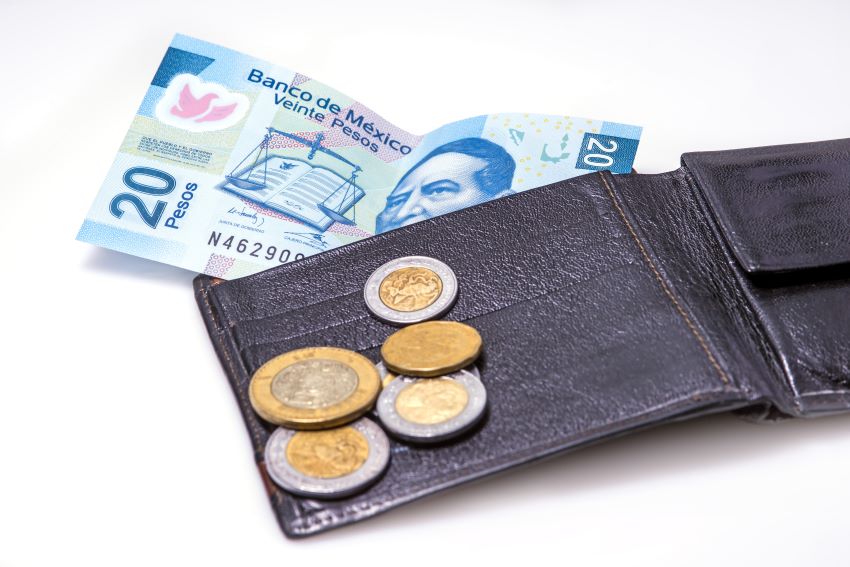
The Bank of Mexico (Banxico) has begun withdrawing the blue 20-peso banknote bearing the image of President Benito Juárez, ending nearly 20 years of circulation for one of the country’s most recognizable bills.
The move took effect Oct. 10, according to a notice published in the Official Gazette of the Federation.
All credit institutions must stop recirculating the note and return it to the central bank.
Its successor — a green-and-reddish horizontally oriented 20-peso bill from the “G family” — was introduced in 2021 to commemorate the 200th anniversary of Mexican independence.
That note depicts the moment when the rebel army entered Mexico City in 1821 (Mexican independence was declared the next day) on one side, and the Sian Ka’an Biosphere in Quintana Roo, a UNESCO Natural World Heritage Site, on the other.
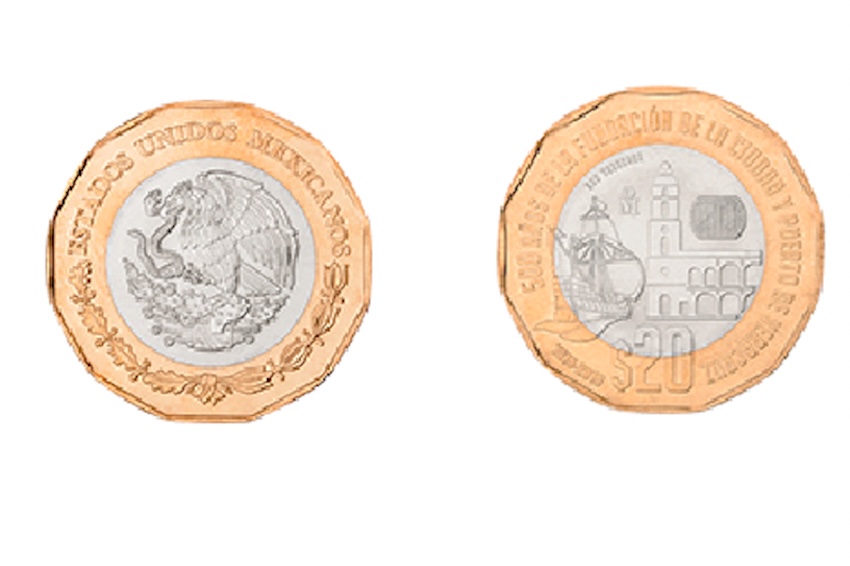
Additionally, Banxico has been promoting a 12-sided, commemorative 20-peso coin that it introduced in 2021.
Juárez hasn’t been forgotten; his portrait is on the blue 500-peso note, which debuted in 2018. Its reverse side features a gray whale and her calf in the El Vizcaíno Biosphere Reserve in Baja California Sur — as representative of Mexico’s coasts, seas and islands ecosystem.

As for that time-worn blue 20-peso still in your possession — don’t worry.
The note remains legal tender for the time being. Holders can continue to use them for payments or deposit them in banks, which must then forward them to the central bank for destruction.
The polymer (durable plastic) bill, introduced in 2007, was the first in its series and distinguished by its small size (120 by 66 millimeters) and predominantly blue color.
Its obverse features Juárez, the popular 19th-century president who enacted Mexico’s Reform Laws in 1859, alongside a scale of justice. The reverse depicts Monte Albán, a Zapotec archaeological site in Oaxaca recognized by UNESCO as a World Heritage Site.
For many, this bill became a fixture of daily life and a cultural reference, representing everyday commerce as much as national identity. Its vivid blue tone, transparent security window and tactile surface made it instantly recognizable.
The decision to do away with it is part of a long-term modernization plan.
“The main reason for this decision lies in Banxico’s strategy of replacing lower denominations in paper currency with coins,” which last longer and cost less to produce, the newspaper El Informador reported.
The Juárez note belongs to the “F family” — a generation of banknotes released between 2006 and 2008 that incorporated improved colors, security features and distinctive sizes for each value.
Mexico’s new-generation banknotes include the 50-peso bill introduced in 2021.
With the ancient Aztec capital of Tenochtitlán on the front and a Xochimilco wetlands scene on the back that includes an axolotl (a rare type of salamander), it won an international Bank Note of the Year award for 2021.
A year earlier, Mexico’s 100-peso bill depicting the self-educated nun and intellectual Sor Juana Inés de la Cruz, with the monarch butterfly biosphere reserve on its reverse, was voted the winner for 2020.
With reports from El País, El Informador and N+