Mexican posadas — those traditional Christmas parties that bring family, friends and neighbors together for an evening of holiday cheer — are in full swing these December days. But like so many other traditions, the cost of hosting a posada has gone up. Way up.
While the government is struggling, with some modest success, to keep Mexico’s annual inflation rate between 2% and 4%, a typical posada will be almost 20% more expensive this year than last year, according to a survey conducted by the National Alliance of Small Businesses (ANPEC).
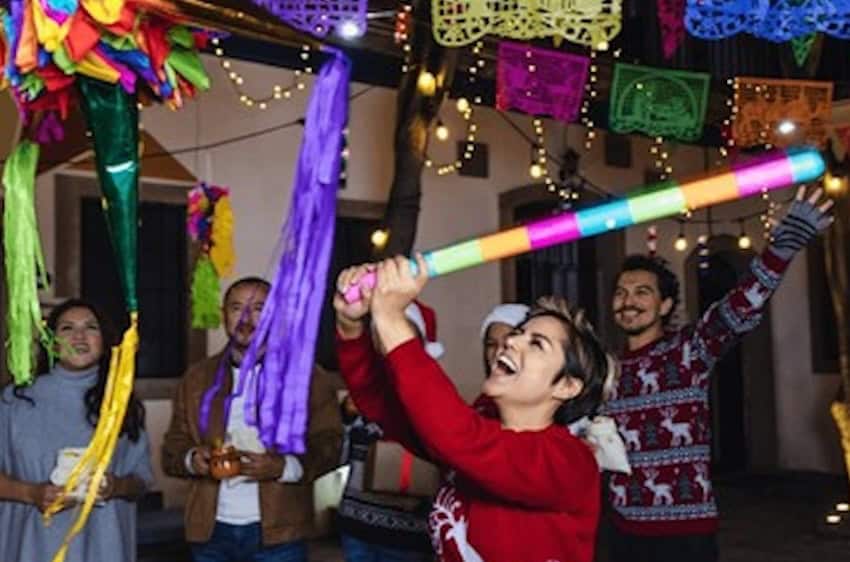
The survey’s data revealed that organizing a posada for 10 people can cost around 10,000 pesos (US $549), compared to the 8,400 pesos (US $461) of 2024.
ANPEC shows that the overall price increase is primarily driven by the rise in food and beverage costs, with food expenses alone amounting to approximately 8,400 pesos – 84% of the total posada budget.
According to ANPEC, the 10,000 pesos needed for a posada break down as follows:
- Dinner: 3,500 pesos (US $192)
- Drinks, including alcohol: 3,000 pesos (US $164)
- Snacks: 1,300 pesos (US $71)
- Decorations: 900 pesos (US $50)
- Candles and sparklers: 700 pesos (US $38)
- Piñata: 600 pesos (US $32)
Even though inflation has remained relatively controlled, at around 3.5–3.8% annually, it experienced an uptick last month. In November, annual inflation accelerated to 3.80%, up from 3.57% in October, mainly affecting the food and non-alcoholic beverage industries, which saw a 3% increase compared to the 2.64% recorded in 2024.
According to ANPEC, this rise in prices has prompted friends, family members and even companies to reconsider how they celebrate the holidays. In the past, a government office or company of any size would host a “brindis,” which was usually far more elaborate than its name (meaning a “toast”) would imply, with dinners, music and other entertainment. Today, many have opted for more modest celebrations.

“The current economic situation has forced many organizations to scale back their celebrations to simpler formats such as breakfasts, in an effort to keep the spirit of gratitude and togetherness without compromising their finances,” ANPEC said.
But even hosting a Christmas breakfast is more expensive than last year. An average breakfast buffet can cost up to 500 pesos (US $27) per person, also reflecting a 20% increase from the 400 pesos (US $21) it cost last year, according to ANPEC.
Still, families don’t have to forgo their traditional posadas. ANPEC recommends setting a realistic budget, simplifying the menu with economical dishes, balancing alcohol consumption with less expensive options, avoiding impulsive purchases of festive snacks and sweets, and considering a cooperative approach where each attendee chips in.
With reports from El Economista and NMás