A three-millennia-old farming method still used today in the central Mexican state of Tlaxcala has been recognized as a world agricultural heritage site by the United Nations.
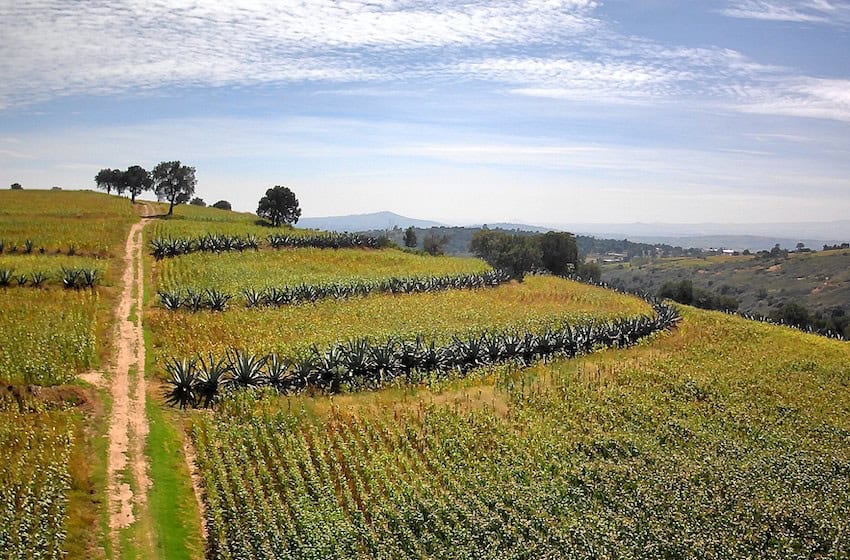
The metepantle agricultural system, developed by Indigenous farmers over centuries, is an ecologically sustainable method of growing corn, agave, beans, squash and other Mexican staples in challenging mountainous terrain while preserving water and native species.
The recognition of the metepantle system came from the UN’s Food and Agriculture Organization (FAO), whose director-general, Qu Dongyu, visited Españita, one of many Tlaxcala communities that practice metepantle. Dongyu called metepantle “a powerful example of long-term agricultural resilience in fragile mountain environments.”
Metepantle is based on creating a mosaic of terraces where the crops are planted alongside succulents that nourish the soil and hold water. In so doing, it conserves over 140 native species, including 40 local varieties of corn, thanks to a sophisticated system of seed conservation, exchange, and community networks.
“It’s a living museum,” said Mexico’s Agriculture and Rural Development Minister Julio Berdegué.
As Dongyu put it, “More than an agricultural system, metepantle is a philosophy that teaches us to produce with respect, to live in harmony with the Earth, and to build the future on the wisdom of the past.”
Junto a la gobernadora de #Tlaxcala, Lorena Cuéllar (@LorenaCuellar), y el director general de la @Fao, Qu Dongyu (@FAODG), participé en el reconocimiento al Sistema Importante del Patrimonio Agrícola Mundial (SIPAM) Metepantle.
El metepantle, como sistema de cultivo ancestral,… pic.twitter.com/Jfg2wdI1AU
— Julio Berdegué (@JulioBerdegue) October 26, 2025

The FAO’s designation of metepantle as what’s officially known as a Globally Important Agricultural Heritage System (GIAHS) positions Mexico as “a regional leader in agricultural sustainability,” according to a press statement from the Agriculture Ministry.
The FAO has to date designated a total of 102 GIAHS across 29 countries, including two others in Mexico — the chinampas in Mexico City’s Xochimilco borough and the Maya milpas (cornfields) in the Yucatán Peninsula.
During his visit, Dongyu met with Mexican government officials and some 500 farming families and community leaders. He also carried out field visits to local institutions, including the International Maize and Wheat Improvement Center (CIMMYT).
The FAO is collaborating with the CIMMYT on several projects, including the Vision for Adapted Crops and Soils, Recarbonizing Global Agricultural Soils and the flagship One Country, One Priority Product initiative.
“In these challenging times, we must work together to transform our agri-food systems, preserve traditional knowledge and promote new technologies that improve the lives of farmers,” Dongyu said.
With reports from Milenio, López-Dóriga Digital and La Jornada