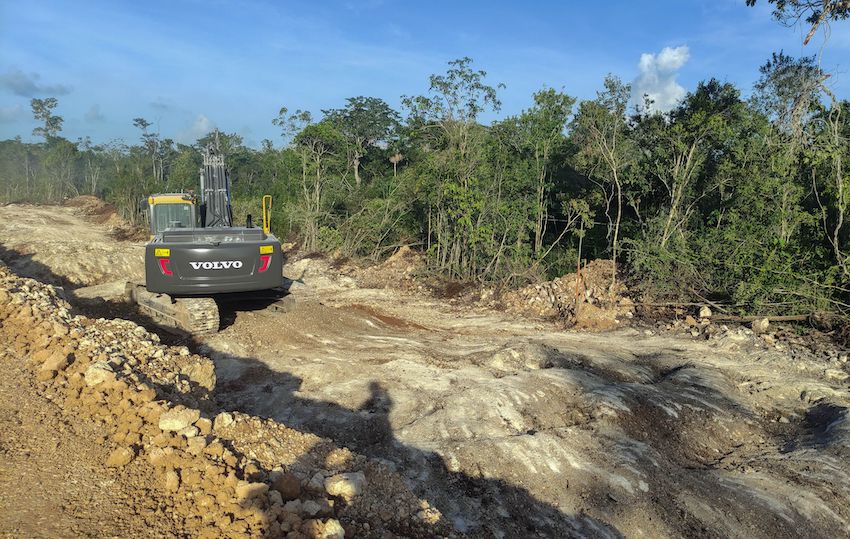
The Secretariat of the Commission for Environmental Cooperation (CEC) has recommended an investigation into the environmental impact caused by the construction of the Maya Train.
The CEC is the watchdog group established by the North American Agreement on Environmental Cooperation, a NAFTA-era side treaty between Mexico, the United States and Canada that was absorbed by the US-Mexico-Canada Agreement (USMCA) in 2020. The Commission for Environmental Cooperation’s investigation seeks to assess the procedure by which the Mexican government evaluated the Maya Train’s environmental impact.
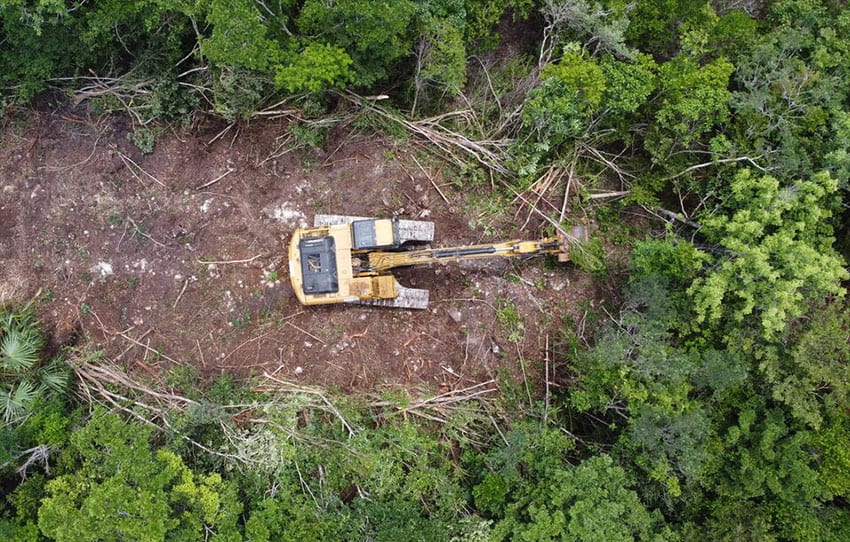
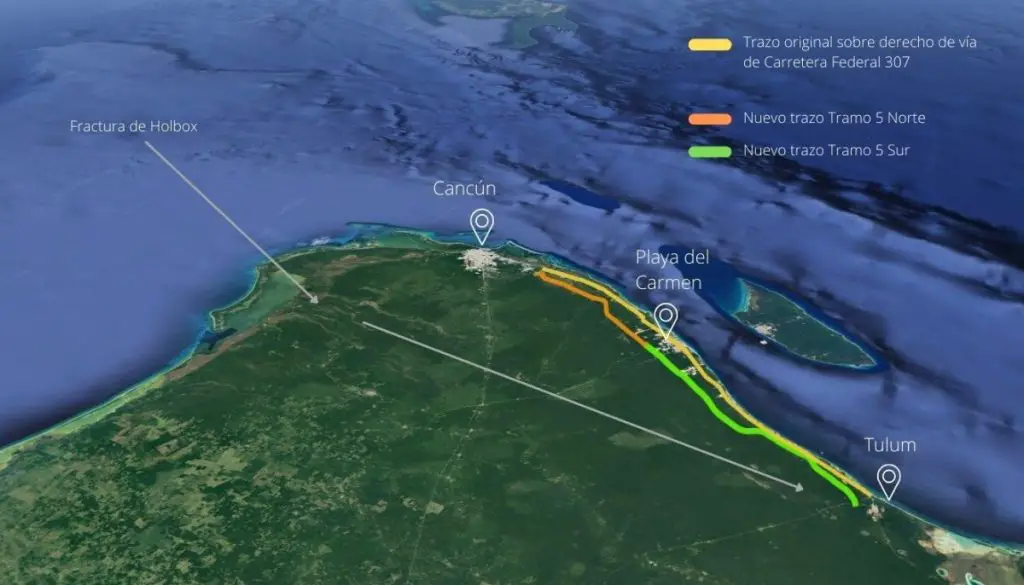
The recommendation was given after Moce Yax Cuxtal, an environmental group from Quintana Roo, and other local campaigners submitted a petition to the CEC in 2022. Moce Yax Cuxtal claims that the construction of Section 5-south of the Maya Train breaches environmental requirements laid out in the USMCA.
The section runs through the municipalities of Solidaridad and Tulum, Quintana Roo, where there are significant areas of geological interest, including cenotes (underground caverns) and surface streams – including the Sac Actun-Dos Ojos underwater system, which forms an essential resource for the local ecosystem.
Failure to protect the ecosystem is a breach of the Mexican constitution, as well as a breach of water quality, land use and wildlife protection laws. Environmental campaigners in the southeast region have claimed that the infrastructure project will cause irreversible damage to one of the most fragile ecosystems in the country.
The assessment aims to provide “a factual record [that] will help the public to understand the procedure behind the impact study…and the measures implemented [by the Mexican government] to protect the environment,” the CEC said in a statement.
A full impact report will be prepared by the CEC if at least two members of the three-person council instruct it to do so. The panel is composed of one member from each of the three countries in the treaty.

Mexico claims that the project has met all legal requirements and has properly conducted an environmental impact study. It has denied breaching any legislation, saying that the relevant permits had been granted prior to the commencement of construction.
This setback is the latest in a string of problems for the controversial train. Earlier this month, a judge issued an injunction against the import of ballast for the railroad, after a cargo ship damaged a protected coral reef near Puerto Morelos.
When complete, the 1,460-kilometer (907-mile) Maya Train will have 18 stations and will run through the states of Chiapas, Tabasco, Campeche, Yucatán and Quintana Roo.
With reports from El Economista and CEC